

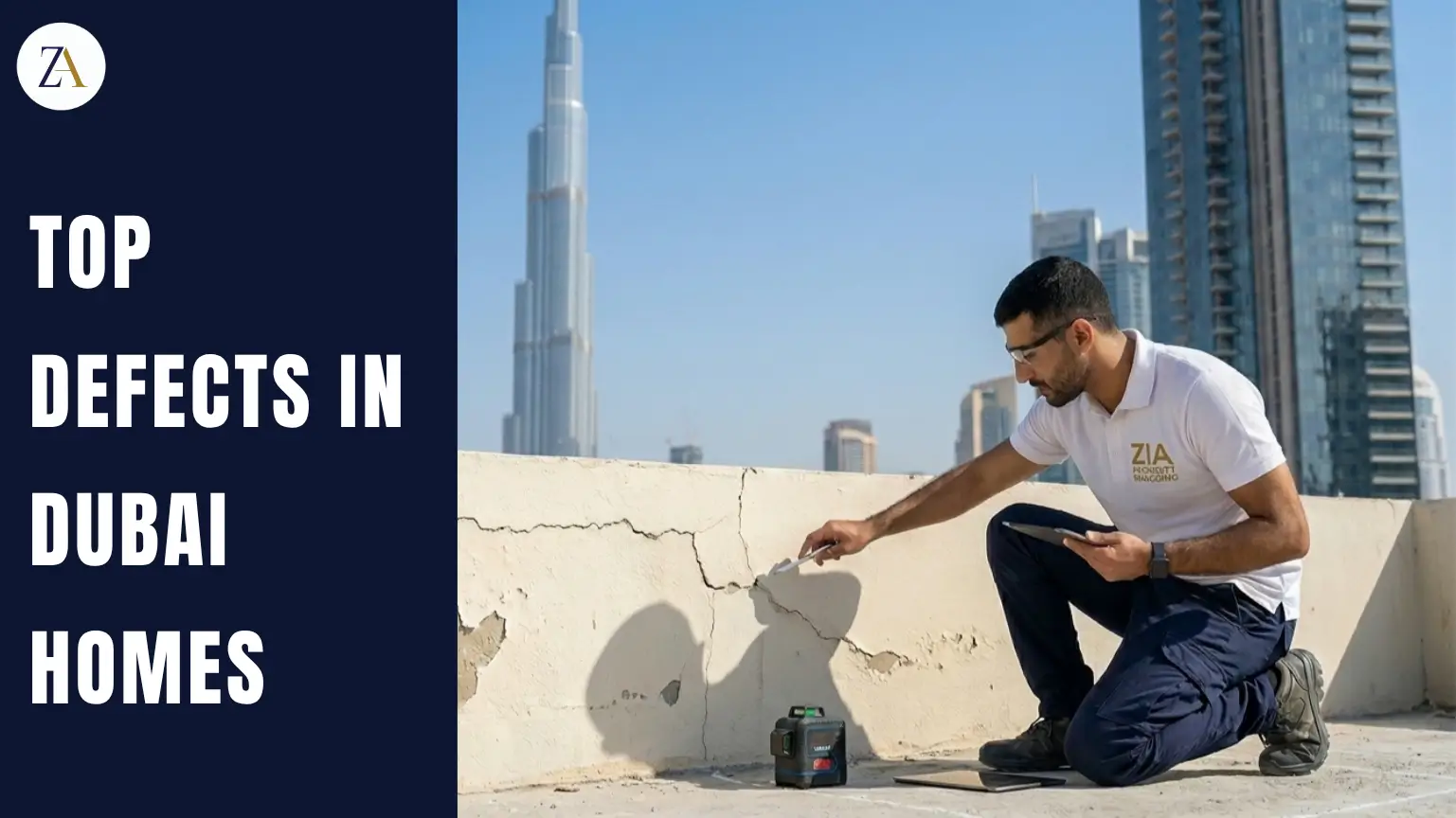
Top Defects in Dubai Homes: Common Issues Every Buyer Should Know
Dubai’s real estate market is booming, and thousands of off-plan properties reach handover every year. But that speed comes at a cost — developers under deadline pressure often rush construction, skip quality checks, and leave behind defects that a standard walkthrough will never catch.
Dubai’s extreme climate makes things worse. Summer temperatures above 45°C put enormous stress on waterproofing, insulation, AC systems, and structural joints. A small defect that stays hidden elsewhere can turn serious within months here.
This is why RERA introduced the Defect Liability Period (DLP) — a legally protected window where developers must fix structural and finishing defects at their own cost. But once that window closes, every repair bill is yours.
A professional snagging inspection before handover is not optional. It is the single most important step you can take as a Dubai property buyer.
Top Defects Found in Dubai Homes During Snagging Inspections
Over the course of many inspections across Dubai, Zia Property Snagging certified civil engineers have identified the same defects appearing again and again across luxury apartments in Downtown, villas in Dubai Hills, and mid-range units in JVC alike. Here are the top ten.
This is the number one hidden defect in Dubai’s new builds, and it is completely invisible at handover. The tiles look perfect. The grout is clean. The silicone is neatly applied. But behind that finished surface, the waterproof membrane may be incorrectly applied, incomplete, or already failing at a joint.
Balconies are even more vulnerable because waterproofing is often rushed at the final stage of construction. You will not see the failure until the first significant rainfall, by which point water has already penetrated the slab and is working into the ceiling of the unit below.
Zia Property Snagging use moisture meters and thermal imaging cameras to detect elevated moisture levels behind tiled surfaces—something no visual inspection can catch. If found within the DLP, the developer must fix this at their cost. If missed, you are looking at AED 15,000 to 40,000 in repair costs.
Leave your phone, We’ll call you in 15 min
Concealed Water Leaks Behind Tiles and Walls
Among the most harmful flaws of a Dubai property are hidden water leaks. They cannot be seen on top but eventually lead to the growth of mold, decrease the structural strength of walls, and diminish the resale value of your property.
Common leaks arise behind tiles in the bathroom, below cabinets in the kitchen, within the ceiling, and in joints of pipes that were not properly sealed in the process of construction. Mould will form inside a few weeks of a leak beginning in the humid climate in Dubai, and by the time it appears, it is often too late.
Certified inspectors use thermal imaging technology to identify temperature differences that indicate moisture presence behind walls and ceilings. This is a defect that purely visual inspections will never catch.
Air conditioning is not optional in Dubai — it is essential for living. However, one of the most prevalently cited faults in residential and commercial buildings in the UAE is faulty AC installation.
Problems that are common are a lack of airflow in some rooms, improperly sized units to fit the space, refrigerant lines that are leaking, improperly connected ductwork, and improperly calibrated thermostats. The bad AC system in a property will mean having to live in rather hot rooms, paying much more to DEWA, and paying more money to repair it, which would have been prevented with a pre-handover inspection.
Zia Property Snagging includes a full functional test of every AC unit, duct connection, and airflow measurement — not just a visual check that the unit is present.
Electrical defects are not just inconvenient — they are dangerous. Exposed wiring, loose sockets, incorrectly earthed circuits, and overloaded distribution boards create direct fire hazards. In Dubai’s fast-paced construction environment, electrical installations are sometimes completed by subcontractors who cut corners to meet deadlines.
Common electrical defects found during snagging inspections include loose or non-functional power outlets, light switches that control the wrong fixtures, circuit breakers that trip under normal load, and wiring that does not comply with UAE electrical safety standards.
Zia Property Snagging test every single outlet, switch, and circuit in the property — not just a random sample. Compliance with DEWA and UAE safety standards is verified as part of every inspection report.
Plumbing defects are extremely common in off-plan properties, particularly those handed over in high-volume developments in areas like JVC, Dubai South, and Al Furjan. Issues include low water pressure in bathrooms and kitchens, slow-draining or completely blocked floor drains, improperly installed toilet cisterns, and pipe joints that were not properly sealed during installation.
These defects may not be visible during a quick walkthrough, but they will become very obvious on the first day of full usage. Zia Property Snagging includes running water in every wet area, checking drainage gradient, pressure testing, and checking all visible pipe connections for signs of seepage.
Not every crack is a crisis — but every crack needs to be assessed by someone who knows the difference. Hairline surface cracks in plaster are relatively common and often cosmetic. However, cracks that run through structural elements, appear at load-bearing wall junctions, or widen over time can indicate serious settling issues or construction flaws that will only get worse.
Dubai’s temperature extremes cause significant thermal expansion and contraction in building materials, which can accelerate crack development in properties where construction joints were not correctly placed. Zia Property Snagging civil engineers are specifically trained to distinguish cosmetic from structural damage—a distinction that only a qualified engineer can make with confidence.
Poor Finishing — Tiles, Paint, and Flooring Defects
This category includes the defects that are most visible but most often dismissed by buyers as “minor.” Uneven tiling, inconsistent grout lines, paint that missed sections of wall, loose floor tiles, scratched surfaces, and mismatched finishes all fall under this category.
While these may seem cosmetic, they matter for two reasons. First, they indicate the level of care taken during construction — if finishing was rushed, hidden systems may have been rushed too. Second, they directly affect the resale and rental value of your property. A property with poor finishing will consistently attract lower rental offers and lower secondary market valuations.
Every defect, no matter how small, is documented in Zia Property Snagging report with photographs and severity ratings so developers cannot dismiss them.
Thermal Insulation Gaps in External Walls
It is a defect that is technically detectable and is the least probable to be detected by the buyer. Dubai has external walls that are exposed to temperatures of 45 o C + months. When the insulation layers within those walls are not completed, installed improperly, or not installed at all, the results do not go to waste.
Insulation voids increase the cooling load on your AC system, push up DEWA bills, and in some cases create condensation conditions inside wall cavities that lead to mold growth—all of this completely hidden behind a perfectly painted interior wall.
Thermal imaging cameras are the only reliable way to detect insulation voids without opening the wall. This is a service that Zia Property Snagging includes as standard in every inspection — and it is a defect that virtually no self-inspection or basic walkthrough will ever catch.
Misaligned Windows and Doors
Poorly fitted windows and doors are more serious than they appear. Misaligned frames create gaps that allow hot external air, dust, and occasionally water to enter the property. In Dubai’s dusty desert environment, even a small gap around a window frame will result in constant dust infiltration, higher AC costs to compensate for the heat gain, and reduced security.
Door alignment issues also affect fire safety — fire doors that do not close and seal properly fail their most critical function in an emergency.
Zia Property Snagging includes opening and closing every door and window, checking seal integrity, frame alignment, and gap measurements against acceptable standards.
Safety and Regulatory Non-Compliance
Dubai has defined building codes that regulate fire safety, structural integrity, and people protection. Failure to follow these codes poses a legal threat to property owners and, more so, occupants.
Some typical compliance issues that are identified during snagging inspections are the absence or inoperability of smoke detectors, inadequately installed fire suppression systems, railings on balconies that are of a non-conforming height, lack of emergency lighting in common areas, and safety glass specified in the SPA but replaced with ordinary glass in the process of construction.
These are not cosmetic issues. A property that fails safety compliance can face issues with occupancy certification, insurance claims, and resale—and the owner, not the developer, will carry that liability if the DLP has expired.
Which Dubai Communities Report the Most Defects?
- JVC (Jumeirah Village Circle): Highest defect rate due to high-volume off-plan handovers, especially in waterproofing and plumbing
- Dubai South & Al Furjan: Finishing and electrical defects are very common because of the rapid construction pace
- Business Bay: AC and insulation failures are frequently reported in both residential and commercial properties
- Dubai Marina: Structural cracks and window alignment issues regularly appear in several towers
- Dubai Hills & Palm Jumeirah: Luxury properties are not safe either; waterproofing membrane failures and safety compliance issues are found here, too
- DAMAC Hills & Downtown Dubai: Despite premium finishing, thermal insulation gaps and concealed leaks are regularly reported
- General Rule: The faster the development was built, the higher the defect count. Zia Property Snagging has inspected properties across all 7 Emirates and this pattern is consistent everywhere
Which Dubai Communities Report the Most Defects?
Only Certified Civil Engineers
Every Zia Property Snagging is conducted exclusively by qualified civil engineers, not technicians or trainees. This means every defect is assessed with real engineering knowledge, not just a visual checklist
Thermal Imaging Cameras
Used on every single inspection to detect insulation voids, concealed water leaks, and moisture infiltration behind walls, ceilings, and tiled surfaces that are completely invisible to the naked eye
Moisture Meters
Applied behind all wet area surfaces including bathrooms, kitchens, and balconies to identify waterproofing failures before they escalate into expensive structural damage
Pressure Testing on Plumbing Systems
Every pipe connection, drain, and water supply line is tested under pressure to identify weak joints, slow drains, and leaks that only appear under full usage conditions
Individual Electrical Circuit Testing
Every single outlet, switch, circuit breaker, and distribution board is tested individually, not just sampled. Compliance with DEWA and UAE electrical safety standards is verified for every point
400-Point Structured Checklist
Built specifically around Dubai’s construction standards and climate conditions, covering structural elements, MEP systems, finishing quality, safety compliance, and SPA specification verification
Every Door, Window, Tile and Finish Physically Checked
Nothing is assumed to be fine. Every surface is touched, opened, tested, and photographed as part of the standard process
Photographic Report Delivered in 24 Hours
Every defect is documented with timestamped photographs, severity ratings, and clear repair recommendations in a format that developers cannot dispute
Free Re-Inspection Included
After the developer completes remediation, Zia Property Snagging returns to verify that every fix has actually been done properly, not just claimed on paper
RERA-Aligned and InterNACHI Certified
Zia Property Snagging operates in full compliance with Dubai’s regulatory framework, giving your inspection report the credibility and legal standing it needs if disputes arise with the developer
What Happens If You Skip Snagging Before Handover?
- You lose your DLP window: Once the Defect Liability Period expires, the developer has zero legal obligation to repair anything, even if the defect existed from day one
- Developer can dispute liability: Without a professional inspection report, the developer can argue that damage occurred after handover due to your own usage
- Repair costs are extremely high: Bathroom waterproofing failure: AED 15,000–25,000, insulation repair: AED 20,000–50,000, electrical rewiring in a 2-bed apartment: AED 30,000+
- Mould and structural damage keep growing: Hidden leaks and waterproofing failures turn into serious damage within weeks in Dubai’s humidity
- Resale value drops: A property with undocumented defects always sells for less in the secondary market
- Insurance claims become difficult: Without proof of a pre-existing defect, insurance providers can refuse to cover the damage
- Zia Property Snagging starts from just AED 999: The single most cost-effective investment you can make as a Dubai property buyer
Frequently Asked Questions
What are the most common defects in Dubai's new-build homes?
The most common defects are waterproofing failures in bathrooms and balconies, concealed water leaks, faulty AC installations, plumbing issues, electrical non-compliance, and poor finishing quality. Many of these are invisible without specialist equipment.
Who is responsible for fixing defects in Dubai — buyer or developer?
During the Defect Liability Period, the developer is legally responsible for repairing structural and workmanship defects. Once the DLP expires, all repair costs fall to the property owner. This is why documenting defects before or at handover is critical.
When should I book a snagging inspection in Dubai?
The ideal time is before you sign the handover form and accept the keys from the developer. This gives you maximum leverage to demand repairs before taking legal possession of the property.
How long does a snagging inspection take?
A standard apartment inspection takes two to four hours depending on the size of the property. Villas typically take four to six hours. ZIA delivers the written report within 24 hours of the inspection.
What is the Defect Liability Period (DLP) in Dubai?
The DLP is a legally defined period during which the developer is obligated to repair defects identified in the property. Under UAE law, finishing defects are typically covered for one year and structural defects for up to ten years from the handover date.
Conclusion
Buying a property in Dubai is one of the biggest financial decisions of your life — and that decision is only truly safe when you know the real condition of what you are buying. Behind beautiful finishes and luxury brochures, waterproofing failures, hidden leaks, faulty wiring, and insulation gaps can be waiting to cost you hundreds of thousands of dirhams in repairs down the line.
Zia Property Snagging is Dubai’s most trusted and fully independent inspection partner—RERA-approved, InterNACHI Certified, and backed by 1,200+ successful inspections. Our certified civil engineers conduct a 400-point inspection of your property and deliver a complete, photographic report within 24 hours.
