

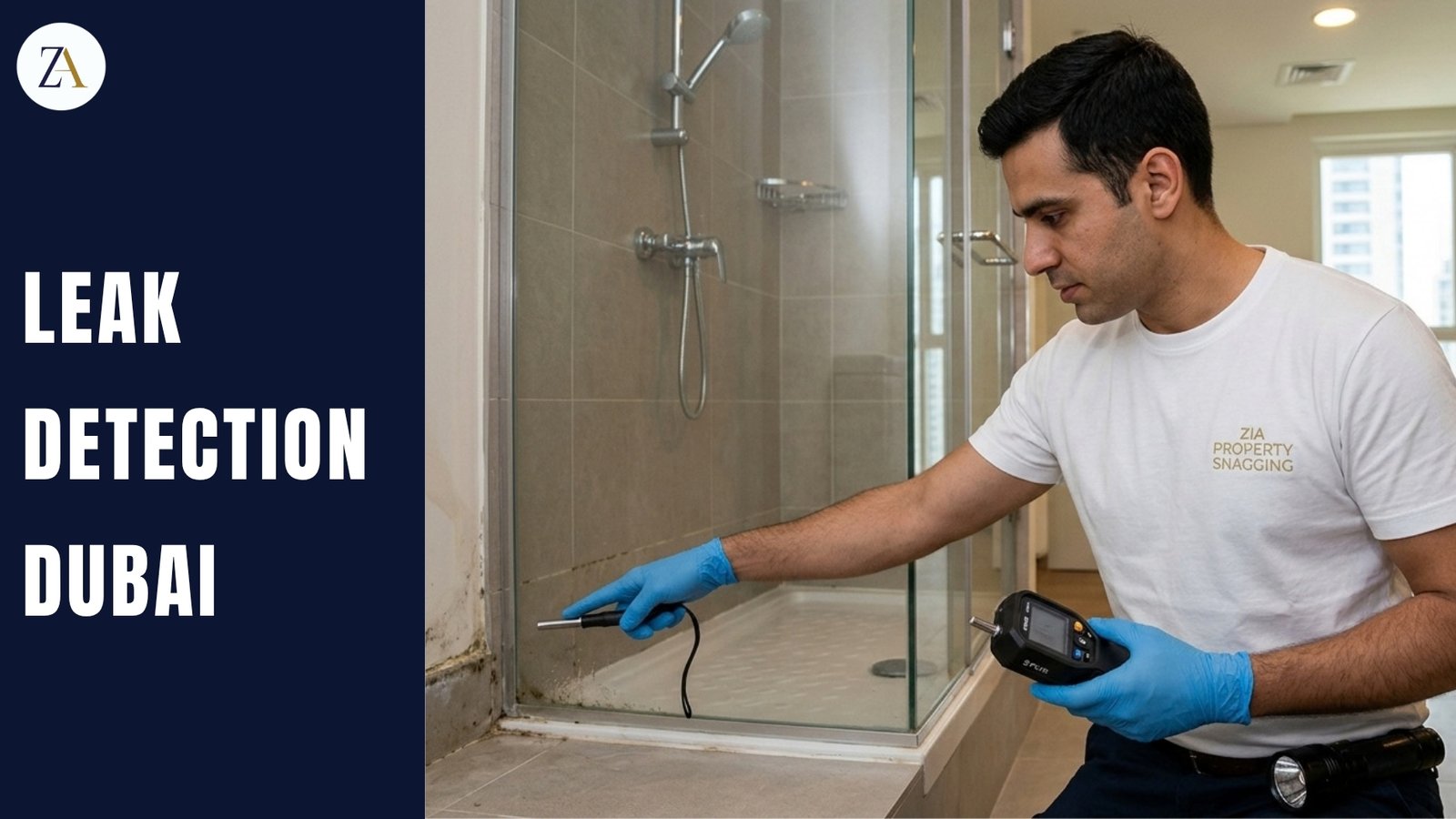
Leak Detection Dubai: Find Hidden Water Damage Fast
The electricity bill you get from DEWA increased by AED 300 this month, but nothing has changed in your lifestyle. You can’t point to it, you don’t have a dripping tap, and you don’t have a puddle on the floor. After a few weeks, you see a slight musty odor in the area around your bathroom wall or maybe a little brown ring on your kitchen ceiling beneath you. This is the way most Dubai apartment concealed water leaks make themselves known; quietly, and often after damage has already been done.
A hidden leak is not under the floor tiles or under the floor screed, and it’s not under a wall—it’s in a wall or hidden in a shared riser that you will never see, and you won’t see a leak in the wall behind the tiles or floor screed. The water has been seeping for months before it becomes visible. This guide will help you understand the early warning signs, what to do if you think you have a leak and what you cannot do on your own, and how the professionals at a leak detection company can do the work.
Why Hidden Leaks Are So Common in Dubai Apartments
Dubai’s apartment buildings run dense networks of concealed plumbing — supply lines behind bathroom walls, drainage stacks shared between units, and AC condensate lines routed through ceiling voids. A few local factors make leaks more likely and harder to spot early:
- Pipes and joints expand and contract year-round due to extreme heat, stressing fittings over time.
- Drainage lines and risers are shared with adjacent apartment units, so the cause of a leak may not be in your unit.
- Bathroom and kitchen waterproofing will be underneath the tiles and will not be visible on the surface for months if the membrane fails.
- No visible pipe to inspect, as high-rise plumbing is installed in the wall and floor slabs.
This does NOT apply to every apartment leaking. It implies that leakages in Dubai apartments are likely to occur out of sight, which is why it’s important to know the early signs.
Early Warning Signs of a Hidden Water Leak
The signs and symptoms should all be present together, not one at a time; one sign could have another cause, but two or three at the same time is a good sign that there is a problem with a leak somewhere:
- If your water bills are up but you haven’t used more water—even a small unnoticed leak can lead to a large water bill in a billing cycle.
- Any damp areas or staining on ceilings or walls (particularly under bathrooms or kitchens)
- Odors that are musty, damp, and related to no water found in a room.
- Peeling paint or blistering of walls on interior walls, especially those adjacent to plumbing walls
- Warm or unexplained hot patches on flooring, which can point to a hot water line leak
- A running sound behind walls when no taps are open
- Mould growth in corners, behind furniture, or around skirting boards
- A moving water meter even when every tap and appliance is off
Leave your phone, We’ll call you in 15 min
DIY Checks You Can Do Yourself
Before calling in equipment, there are a few simple checks any resident can safely run at home.
- Do the water meter test. Turn off every tap, appliance, and irrigation line in the unit. Note the meter reading, wait 1–2 hours without using any water, and check it again. If the number moved, water is escaping somewhere in the system.
- Check under sinks and around toilet bases. Look and feel for dampness, discolouration, or a musty smell in cabinets and around fittings.
- Inspect ceilings and walls room by room. Look for staining, bubbling paint, or soft patches, paying particular attention to the ceiling below any bathroom.
- Watch the DEWA bill trend. Compare the last 2–3 months against the same period last year. A steady, unexplained rise is a red flag.
- Smell-test enclosed spaces. Storerooms, wardrobes on external walls, and AC closets are common spots for a leak to go unnoticed the longest.
These checks tell you whether something’s wrong. They rarely tell you where the leak actually is — and that’s where DIY reaches its limit.
Where DIY Checks Stop Working
A hidden leak inside a wall cavity, under floor screed, or within a shared riser can’t be located by sight or smell alone. Opening walls to search for it is expensive, disruptive, and often wrong the first time, since water travels along the path of least resistance and can surface far from where the leak actually started. This is the point where a plumbing inspection Dubai specialist brings the right equipment to pinpoint the source without guesswork or unnecessary demolition.
How Professional Leak Detection Actually Works
Non-destructive tools are employed during the leak detection process by certified inspectors to identify leaks without breaking tiles or cutting through walls:
- Water-saturated materials leave a signature of temperature differences on the thermal image, which can be seen with a thermal imaging camera and is not visible to the human eye, and can detect leaks behind walls and below floors.
- Moisture meters are used to detect moisture behind tiled walls, under screed, and in ceiling substrates, which detect membrane damage before it shows signs of staining.
- Pressurized water leaks produce a noise that can be detected by an acoustic leak detector, and consequently, the precise location of the leak along a pipe can be determined.
- CCTV drain cameras are used to check drainage stacks and floor drains to look for slow leaks over time caused by blockages, cracks, or pipe-slope problems.
- Pressure testing on hidden lines determines if the plumbing is holding the pressure to which it is supposed to hold and helps to determine if there is a leak in the system prior to further testing and verification.
When used together, these tools can enable an inspector to establish not only a leak, but its location, helping to save repair expenses and prevent unnecessary damage to walls or floors.
DIY Detection vs. Professional Detection
Factor | DIY Checks | Professional Leak Detection |
Cost | Free | From AED 999 |
Finds leaks behind walls/under floors | No | Yes |
Pinpoints exact location | No | Yes |
Equipment used | None | Thermal imaging, moisture meters, acoustic sensors |
Risk of unnecessary damage | High if you start opening walls | Low — non-destructive methods |
Confirms cause vs. just symptoms | Rarely | Yes |
Suitable for DLP/developer claims | No documentation | Yes, with a dated report |
The Real Cost of Waiting
A leak left undetected doesn’t stay small. Bathroom waterproofing remediation alone can run AED 15,000–40,000 once tiles need to come up, and a roof or terrace membrane replacement can exceed AED 100,000 in severe cases. Against that, a professional inspection starting from AED 999 with a same-day or 24-hour report is a fraction of the potential repair bill — and it catches the problem while it’s still small enough to fix cheaply.
Hidden Leaks and Other Common Apartment Defects
Water leaks rarely appear alone. In our experience across 1,200+ inspections, they’re frequently found alongside other build-quality issues — hollow floor tiles, poor grouting in wet areas, and AC drainage faults that mimic plumbing leaks. If you’re buying or have recently moved into a new build, it’s worth reviewing the common defects buyers should know about so you know what else to check alongside plumbing.
Your Rights If It's a Construction Defect
If your apartment is still within its Defect Liability Period (DLP), a hidden leak caused by poor waterproofing or plumbing installation is the developer’s responsibility to fix — but only if you can document it. A dated, photographed inspection report is what turns “I think there’s a leak” into a claim the developer can’t dispute. For the full legal picture on waterproofing-related leaks and DLP timelines, see our waterproofing failure and DLP guide.
Common Mistakes Owners and Tenants Make
- Waiting for visible damage before investigating — by then, the leak has usually been active for months
- Opening walls without locating the source first, causing damage that didn’t need to happen
- Assuming a high water bill is a billing error instead of checking for a leak
- Reporting a leak to the developer without documentation, weakening any DLP claim
- Ignoring musty smells in storage areas or wardrobes because there’s “nothing to see”
Frequently Asked Questions
How do I know if I have a hidden water leak in my apartment?
Watch for rising water bills, damp patches on walls or ceilings, musty smells, or a moving water meter with all taps off. Two or more signs together usually confirm it.
Can a hidden leak be found without breaking tiles or walls?
Yes. Thermal imaging, moisture meters, and acoustic detectors locate leaks accurately without any demolition.
How much does leak detection cost in Dubai?
Inspections typically start from AED 999, depending on property size and scope, far less than the cost of undetected water damage.
Is the developer responsible for fixing a hidden leak?
If it’s caused by a construction or waterproofing defect and you’re within the DLP, yes — but you need a documented report to support the claim.
How long does a leak detection inspection take?
Most apartment inspections take 2–4 hours, with a full report delivered within 24 hours of the visit.
Ready to Detect a Hidden Leak Before It Costs You?
A hidden leak only gets more expensive the longer it goes unnoticed. If you’ve spotted any of the warning signs above, don’t wait for a ceiling stain to confirm it. Zia Property Snagging uses certified, non-destructive equipment to find leaks fast and document them properly for any developer claim.
Book a plumbing inspection today and get your full report within 24 hours.
