

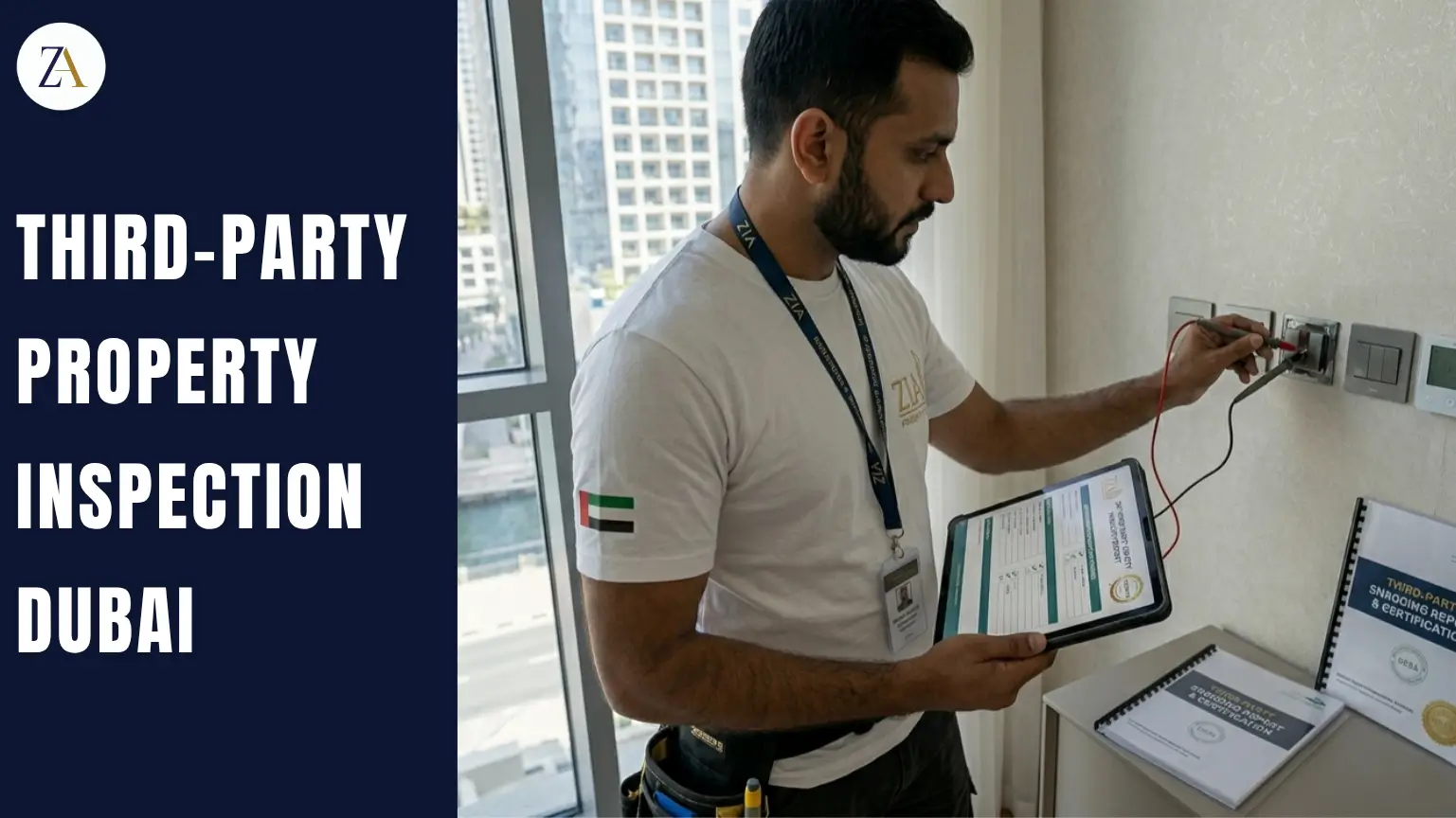
Third-Party Property Inspection Dubai 2026 | RERA Certified
Buying a property in Dubai is one of the biggest financial decisions of your life. Whether you are purchasing a brand-new off-plan apartment, a ready villa, or a resale property, the excitement is real. But here is what many buyers find out too late—just because a property looks finished does not mean it is ready.
Cracked tiles, faulty wiring, leaking pipes hidden behind walls, poor waterproofing on balconies — these are not rare problems. They are found in thousands of properties handed over every year in Dubai. And if you accept your property without a proper check, fixing these issues becomes your responsibility and your cost.
That is exactly why professional third-party property inspection dubai services in Dubai have become a must for every smart buyer, investor, and landlord. An independent inspection gives you the full picture of your property’s condition before you sign anything or accept the keys.
What Is a Third-Party Property Inspection Dubai?
A third-party property inspection dubai is an unbiased report conducted by a certified engineer who works on your behalf, not the developer’s, not the seller’s, and not the real estate agent’s.
An inspector examines your property in every room, every wall, and every system with a professional tool. They identify areas that you might not detect during a regular inspection, areas that have not been checked and unsafe areas that have defects. Last but not least, you receive detailed coverage with pictures, descriptions of the defects, and repair recommendations.
This report gives you real leverage. You can present it to the developer and demand that all issues be fixed before you accept handover. You can use it to negotiate the price on a resale property. Or simply use it to make a fully informed decision before committing your money.
Why Third-Party Inspection Is Essential in Dubai
The Dubai real estate industry is extremely busy. New properties are being delivered by developers like EMAAR, DAMAC, Nakheel, Sobha, and Binghatti at the rate of thousands per month. At this rate, the quality of the buildings can often be sacrificed.
Worth noting, RERA rules stipulate that the developer has a legal obligation to rectify the defects within the Defects Liability Period, which is usually for a period of one year from handover. However, if the defect is not recorded at the time of handover, proving that it existed at the time of acquisition is very difficult if the property is accepted without recording the defect.
A third-party assessment provides a time-stamped and complete record of all defects. It ensures you are legally protected, won’t have to pay for repairs you didn’t expect, and will have peace of mind knowing you are entering into something and you know what you’re dealing with before you spend your money.
When Do You Need a Third-Party Property Inspection?
Pre-Handover for Off-Plan Properties
This is the most important type of inspection. Before accepting keys to a newly completed property, get an independent inspection done. The developer’s own team works to close the handover quickly — not to protect you. A third-party inspector works only for you and will document every defect the developer is legally required to fix at their own cost. Do not sign the handover documents until this is done.
Leave your phone, We’ll call you in 15 min
Resale or Secondary Market Purchase
If you purchase from a private individual, you may not see the problems, such as water damage, mold behind walls, or an outdated electrical system, in a standard viewing. Problems may have been hidden for years by the previous owners’ painting over the damage. Before you commit to buying, you can get a pre-purchase inspection, which will protect your investment and provide you with powerful leverage if there are problems.
Defects Liability Period Inspection
Book an inspection a few months before your one-year DLP expires. Any defects identified during this period must be fixed by the developer for free. Once the DLP ends, those repairs become your financial responsibility. A timely inspection ensures you do not miss this window.
Post-Renovation or Fit-Out
An independent inspection verifies that all renovations and/or contractor work have been done safely and to proper standards. It also safeguards you in case there is a disagreement between the contractor and you over the work completed.
What Does a Professional Inspection Cover?
A thorough third-party inspection covers over 400 individual checkpoints across the entire property. Here is what is included.
Inspection of walls, ceilings, floors, and columns for cracks and structural movement.
Finishing Quality
Poorly done or unfinished work or products in paint, plastering, tiling, grouting, kitchen cabinets, wardrobes, and all finishes are checked.
All sockets, switches, and light fittings are polarity tested to check for safe and proper wiring.
All taps, showers, toilets, and drainage points are tested for leaks, water pressure issues, and improper installations.
Inspection of air conditioning units, ducting, and vents to ensure their proper operation and efficiency.
Waterproofing
The waterproofing of balconies, bathrooms, and wet areas is tested for failure and is among the most costly repairs if not detected.
Thermal Imaging
Inspectors can locate moisture and see water leaks and heat problems within walls and ceilings that are invisible to the naked eye using FLIR thermal cameras.
Moisture Detection
Digital moisture detectors detect moisture in walls or floors, which may cause significant structural damage in the long term and mold.
Windows and Doors
All windows and doors are tested for fitting, sealing, and locking to make sure there are no gaps or issues with security.
Every finding is photographed, described, and rated by severity in the final report, providing a clear and complete picture of everything that requires attention.
Third-Party Inspector vs Developer's Handover Team
Many buyers wonder whether they really need to pay for a separate inspection when the developer already has their own team. Here is the honest answer.
Developer’s Handover Team | Third-Party Inspector | |
Works for | Developer | You |
Independent | No | Yes |
Uses thermal cameras | Rarely | Always |
Covers 400+ checkpoints | No | Yes |
Provides a detailed photo report | Usually basic | Full report with severity ratings |
RERA-approved | Not always | Yes |
Main goal | Close the handover | Protect your investment |
The difference is straightforward. A developer’s team and a third-party inspector have completely different goals. One is trying to get the handover closed. The other is making sure you do not receive a defective property.
How the Inspection Process Works
Getting a professional inspection done is simple and quick.
Book: Contact the company with your property details and preferred date. It only takes a few minutes to book on the phone or WhatsApp.
Preparing: Make sure that DEWA electric power, air conditioning, and water are on before the inspection. It is essential for the proper testing of electrical, plumbing, and cooling systems.
Inspect: A thorough inspection of your property by a certified engineer with industry-standard equipment, including moisture meters, electrical testers, and thermal cameras. The majority of inspections require 2 – 4 hours.
Report: A comprehensive digital report is created in 12 hours or less, including photos and annotations, descriptions of the defects, severity, and repair recommendations.
Submit: Hand the report over to the developer/contractor and request that he or she correct all the issues that have been identified. Developers listen and treat formal inspection reports seriously and are legally obliged to respond to them.
Areas We Cover
Property inspection firms in Dubai can be found in all key property areas, such as Dubai Downtown, Business Bay, Dubai Marina, Palm Jumeirah, Jumeirah Village Circle, Dubai Hills Estate, Arabian Ranches, Damac Hills, Dubai Creek Harbour, Al Furjan, Emaar Beachfront, and Dubai South. They also have seven emirates of the UAE, including Abu Dhabi, Sharjah, Ajman and Ras Al Khaimah, where they operate.
Why Choose ZIA Property Snagging?
- InterNACHI Certified: Inspectors are certified as the world’s most recognized standard of home inspection professionals, the International Association of Certified Home Inspectors.
- RERA Approved: Complies with the Real Estate Regulatory Agency (RERA) in the official framework of the real estate market in Dubai.
- Qualified Civil Engineers: Every inspection is carried out by a certified civil engineer. Not a technician or trainee; a qualified professional with knowledge of construction and building standards.
- 400+ Inspection Checkpoints: No stone is left unturned.
- All inspections are carried out using professional tools such as FLIR thermal cameras, digital moisture meters, and socket polarity testers.
- Rapid Report Delivery: speedy turnaround to allow you to proceed with confidence without needless delay.
- Fully Independent: No commercial tie-up with any developer in Dubai. Each answer is 100% accurate and sincere.
- Doors open all across the UAE: The team is available throughout the country in all seven emirates, so you can get them wherever your property is.
Frequently Asked Questions
How much does a third-party property inspection cost in Dubai?
Prices typically start at AED 999 for apartments, with villa inspections priced according to size. Considering what hidden defects can cost to repair after handover, a professional inspection is one of the smartest investments you can make as a property buyer.
Can I attend the inspection?
Yes, and it is strongly recommended. Being present allows the inspector to walk you through every finding in real time, explain the severity of each issue, and answer your questions directly on site.
What if the developer refuses to fix the defects?
You can escalate the matter through RERA. A formal inspection report from a RERA-approved company serves as strong documentation to support your case, and most developers take prompt action when presented with a professional report.
How long does the inspection take?
A standard one- or two-bedroom apartment takes around one and a half to two and a half hours. A villa or larger property takes three to five hours. The inspector takes the time needed to do the job properly.
Do I need an inspection even with a well-known developer?
Absolutely yes. Even top developers like EMAAR, DAMAC, and Nakheel hand over properties with defects. Large-scale construction makes perfect quality control impossible. An independent inspection is simply smart buying, regardless of who built your property.
Conclusion
A Dubai property inspection by a professional third-party property inspection dubai ensures that you have a clear picture of the property you are purchasing. It helps preserve your investment, provides you with legal grounds to request repairs, and ensures that you are given a truly livable home rather than a home on paper.
ZIA Property Snagging offers one of the most comprehensive and dependable third-party inspection services in Dubai and the UAE, with certified civil engineers, 400+ inspection checkpoints, FLIR thermal imaging, and 12-hour report delivery.
An independent inspection should be performed before signing any documents or accepting the keys. This is the best thing any buyer of a property in Dubai can do.
