

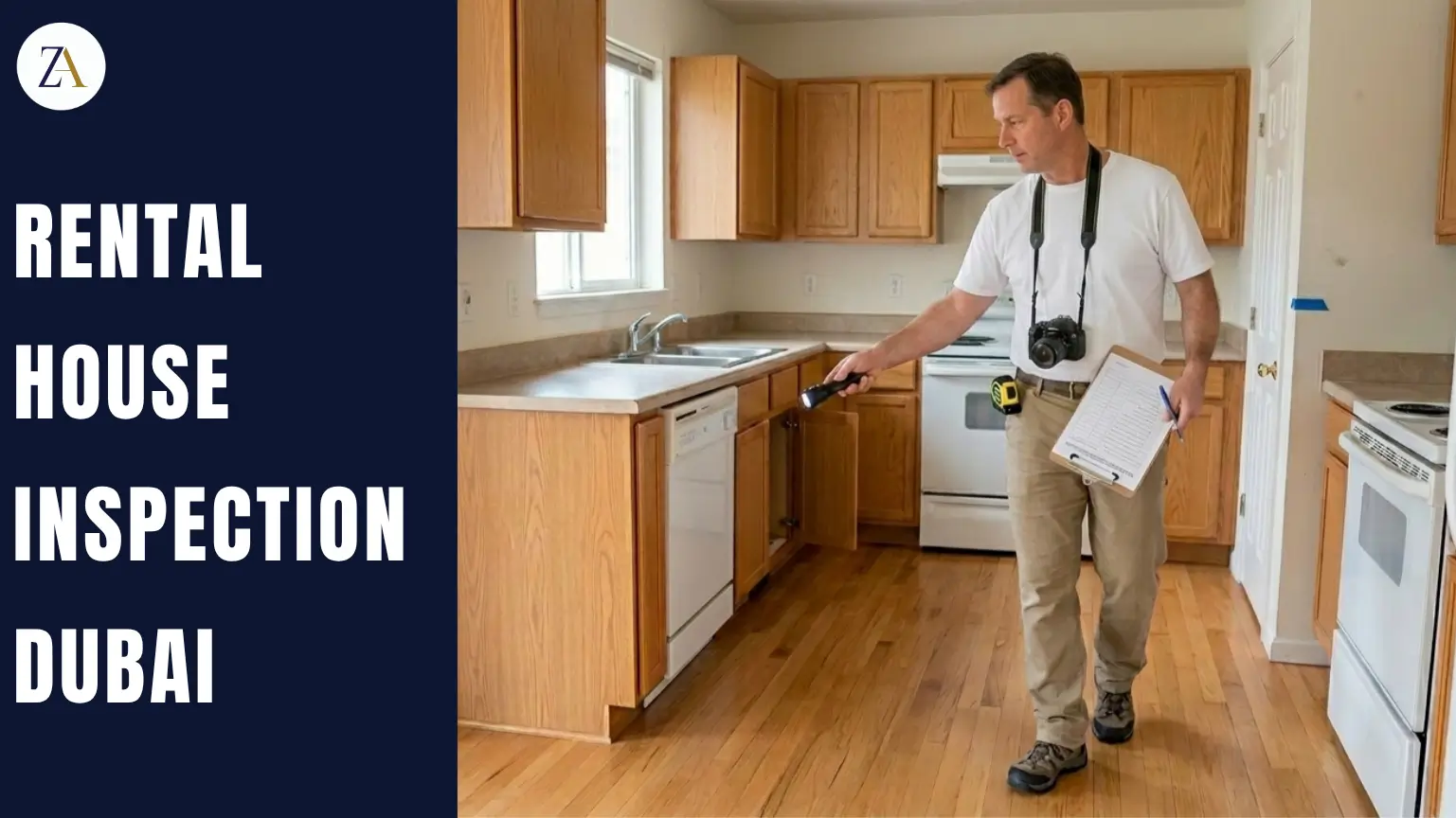
Rental House Inspection Dubai 2026 | RERA-Standard Checklist
Renting a place in Dubai is genuinely exciting—new city, new apartment, new chapter. However, if you rush through the process and skip the inspection, you are setting yourself up for problems you really didn’t need. Whether you are moving into a flat in Business Bay or handing over a villa in Jumeirah after two years, that one walkthrough — done properly — can save you from arguments, unexpected bills, and, honestly, a lot of sleepless nights.
Dubai’s rental market is not cheap. And the laws here are specific. Tenants need to prove what the place looked like before they touched it. Landlords need proper paperwork to make a fair claim when someone moves out. Without that, both sides end up in a back-and-forth that goes nowhere good.
This guide covers the whole picture—move-in to move-out, tenant rights, landlord responsibilities, and yes, the legal side of things too. Because no one should be surprised by something they could have easily known beforehand.
What Is a Rental House Inspection?
Simply put, it is a detailed walkthrough of a property to record its condition —done once when a tenant moves in and once when they leave. The whole point is to have a clear, honest record so that neither side can make claims that are not backed up by anything real.
In Dubai, where deposits can be tens of thousands of dirhams and the rental market moves fast, this is not just good practice. It is genuinely necessary. A proper inspection covers everything—wall cracks, paint condition, plumbing, electrical fittings, appliances, AC units, all of it.
Think of it as a health record for the property. It shows what was working, what was already damaged, and what needed sorting before anyone called it home.
Why Rental Inspections Are Non-Negotiable in Dubai
Dubai has a proper legal structure around tenancy — managed by RERA and enforced through the Rental Dispute Center. These laws do protect both sides, but only when there is actual documentation to support whatever you are claiming.
A few things worth knowing about Dubai law:
- Ejari registration is not optional — it is legally required for all rental contracts. Without it, you cannot set up DEWA, apply for a visa, or file anything with the RDC.
- Under Law No. 26 of 2007 and its amendment Law No. 33 of 2008, both landlords and tenants have clearly defined responsibilities when it comes to property maintenance and condition.
- As of 2026, landlords are required to return security deposits within 14 days of move-out. The old rule was 30 days — this is a meaningful change.
- Also updated in 2026: landlords must fix AC breakdowns within 48 hours during summer. If they miss that window, there is a penalty of AED 200 per day.
- And any deductions from a security deposit need to be backed by real evidence — photos, inspection reports, receipts. Without those, the RDC simply will not allow the deductions.
If you skip a proper inspection, you are taking a financial risk that is completely avoidable.
Leave your phone, We’ll call you in 15 min
Why You Should Inspect a Rental House
Before you sign anything or hand over your deposit, do a proper walkthrough. Not a glance — an actual, careful look. The move-in inspection is your proof that whatever damage exists was already there when you arrived.
What to Check
Walls and Ceilings: Look for cracks, water stains, damp patches, and peeling paint. Sometimes damage hides under a fresh coat of paint, so actually run your hand across surfaces.
Flooring: Tiles, wooden floors, carpets—check for chips, scratches, and uneven areas. Press down on tiles. A hollow sound means they are already loose.
Plumbing: Turn on every single tap. Test water pressure, check under sinks for any leaks, flush every toilet, and make sure drainage is actually clear.
Electrical: Test every power socket, switch, and light fixture. Look at the distribution board too — breakers should be labelled and working.
Air Conditioning: Run each unit for at least 10 minutes. It should cool properly, drain without leaking, and not make any strange noises.
Kitchen: Built-in appliances, cupboard hinges, countertop condition, exhaust fan—check all of it.
Bathrooms: Grouting, sealant, shower screens, taps, flushing systems. Water damage almost always starts somewhere in a bathroom.
Doors and Windows: Open and close for everyone. Locks should work, seals should be intact, and there should not be gaps letting heat or dust in.
How to Document Everything
Take timestamped photos and videos of every room and every detail—even things that look perfectly fine right now. Share them with your landlord over WhatsApp or email and get written acknowledgment back. If you spot problems, push to have them fixed before you move in. At the very least, get it confirmed in writing that those defects were already there.
Do this walkthrough with the landlord or property manager actually present. A joint inspection with signed paperwork is far more solid than anything you did alone if things ever end up in a dispute.
Move-Out Inspection: How to Protect Your Security Deposit
This is where most rental disputes actually happen. The landlord notices damage. The tenant says it was there before. No one has the paperwork to prove either story. And without documentation, it is just one person’s word against another’s—which is rarely a fair situation.
Dubai law says tenants must return the property in the same condition it was when they moved in, allowing for fair wear and tear. Normal aging—small scuffs, minor fading—is expected. But broken fixtures, serious wall damage, or missing fittings are a different conversation entirely.
Steps for a smooth move-out:
- Go back to your original move-in inspection report and photos. Compare them honestly with what the property looks like now.
- Handle minor things yourself before the inspection—a scuffed wall, a dripping tap, a missing door stopper. Small issues like these can be used to justify much larger deductions, so just fix them.
- Give proper notice. Check your lease and let your landlord know as required — usually one month before the contract ends.
- Request a joint inspection. Do not skip this step. If you are not there for the walkthrough, it becomes very difficult to dispute anything later.
- Take new photos and videos on the day you hand the keys back.
Get a written handover acknowledgment and keep copies of absolutely everything.
Under the updated 2026 rules, your deposit must come back within 14 days of move-out. If the landlord misses this, you have every right to escalate to the RDC.
Rental House Inspection Checklist for Landlords
If you are a landlord in Dubai, property inspections are not just about protecting your asset — they are about maintaining a fair and transparent relationship with your tenants. A well-documented inspection process also strengthens your legal position if a dispute ends up at the RDC.
Pre-Tenancy Inspection
- Inspect all rooms, fittings, and systems before the new tenant moves in
- Repair anything that is broken or worn — a clean handover reduces future complaints
- Create a written inspection report with photos and ask the tenant to sign it at move-in
- Confirm that Ejari registration is complete and the lease aligns with current RERA guidelines
Mid-Tenancy Inspection
You are entitled to inspect the property during the tenancy, but Dubai law requires you to give reasonable notice first. The notice period is usually specified in the tenancy contract. Entering without notice is a violation of tenant privacy and can lead to legal trouble — so always communicate in advance, preferably in writing.
End-of-Tenancy Handover Checklist
- Check walls, ceilings, floors, and all painted surfaces
- Test all electrical sockets, switches, and lighting
- Run all taps and check plumbing for leaks or damage
- Test AC units and review service records
- Verify all keys, remote controls, and access cards are returned
- Take date-stamped photos of the entire property
- Keep copies of the final report and any deduction justifications for at least two years
Common Issues Found During Rental Inspections in Dubai
Certain problems come up over and over again across Dubai properties. Knowing what to actually look for means you are not missing things that are easy to overlook on a quick walkthrough.
Wall and ceiling cracks — Usually caused by building settlement or moisture. Very common in older buildings and anything that has recently been renovated.
Water leakage and damp patches — Typically near bathrooms, kitchens, and external walls. Left unattended, these cause serious structural damage.
AC faults — Poor cooling, leaking water, or units that just stop working. In Dubai’s climate, this is not a minor inconvenience. It is a real health concern.
Electrical issues — Dead sockets, flickering lights, unlabelled distribution boards. These come up more often than most people expect.
Kitchen fitting wear — Broken cupboard hinges, damaged countertops, malfunctioning built-in appliances. All very common findings.
Door and window seal failure — Especially in high-floor or seafront apartments, where weather exposure takes a real toll.
Why You Should Hire a Professional Inspection Service in Dubai
A DIY walkthrough is better than doing nothing at all — but it has real limitations. Most people simply do not know what hidden defects look like. Things behind walls, inside AC systems, or under flooring are easy to miss if you do not know what you are looking for.
A professional inspection service in Dubai goes beyond just looking around. You get a proper snagging report — a formal document with photographs, identified problems, and clear recommendations. That report becomes your legal evidence if you ever need to take something to the Rental Dispute Center.
For tenants, a pre-move-in snagging inspection gives you real negotiating power. You hand the report to the landlord and ask for defects to be addressed before signing. For landlords, that same pre-tenancy report protects your property’s value and removes any ambiguity when it is time to hand back the keys.
Zia Property Snagging provides certified property inspection services across Dubai, covering everything from studio apartments to large villas. Their qualified engineers put together clear, professional reports that hold up under scrutiny — and help both tenants and landlords move through the rental process without second-guessing every detail.
Frequently Asked Questions
Can a landlord enter a rental property without notice in Dubai?
No. Dubai tenancy law requires landlords to give tenants reasonable notice before entering for inspection or maintenance. That notice period is usually specified in the tenancy contract. Walking in without permission violates the tenant’s right to privacy and can be reported directly to RERA.
How much of the security deposit can a landlord deduct in Dubai?
There is no fixed percentage cap, but every deduction has to be backed by documented evidence — inspection reports, photos, and repair receipts. Deductions for fair wear and tear are simply not allowed. Anything unfair or undocumented can be challenged at the Rental Dispute Center.
What happens if a landlord refuses to fix issues found during inspection?
Put your complaint in writing first — WhatsApp or email both work, as long as there is a clear, dated record. If the landlord does not respond or flat-out refuses, you can file a case with RERA or the RDC. For structural or major maintenance issues, the law puts the responsibility squarely on the landlord.
Is a professional rental inspection really worth it in Dubai?
Without a doubt. Security deposits in Dubai can easily reach AED 10,000 to AED 50,000 or more depending on the property. A professional inspection that costs a fraction of that gives you documented proof, legal leverage, and real peace of mind. It is honestly one of the smartest things you can spend money on before renting.
How long does a rental inspection take in Dubai?
It depends on the size of the place. A studio or one-bedroom apartment usually takes one to two hours. A larger villa or duplex can run three to four hours. A professional service will typically deliver your report within 12 to 24 hours after the visit.
Conclusion
A rental inspection is one of those things that feels like extra effort — right up until the moment you actually need it. In Dubai’s rental market, where the stakes are real and the laws are detailed, taking this seriously is just common sense for everyone involved.
Tenants: protect your deposit, document everything, and do not rely on verbal agreements. Landlords: protect your property, follow the legal process, and keep your paperwork tight.
If you want the kind of peace of mind that only comes from a certified, experienced inspection, reach out to Zia Property Snagging. Whether you are moving in, moving out, or handing over a property, their team makes sure everything is properly documented — so you can move forward without any lingering doubts.
