

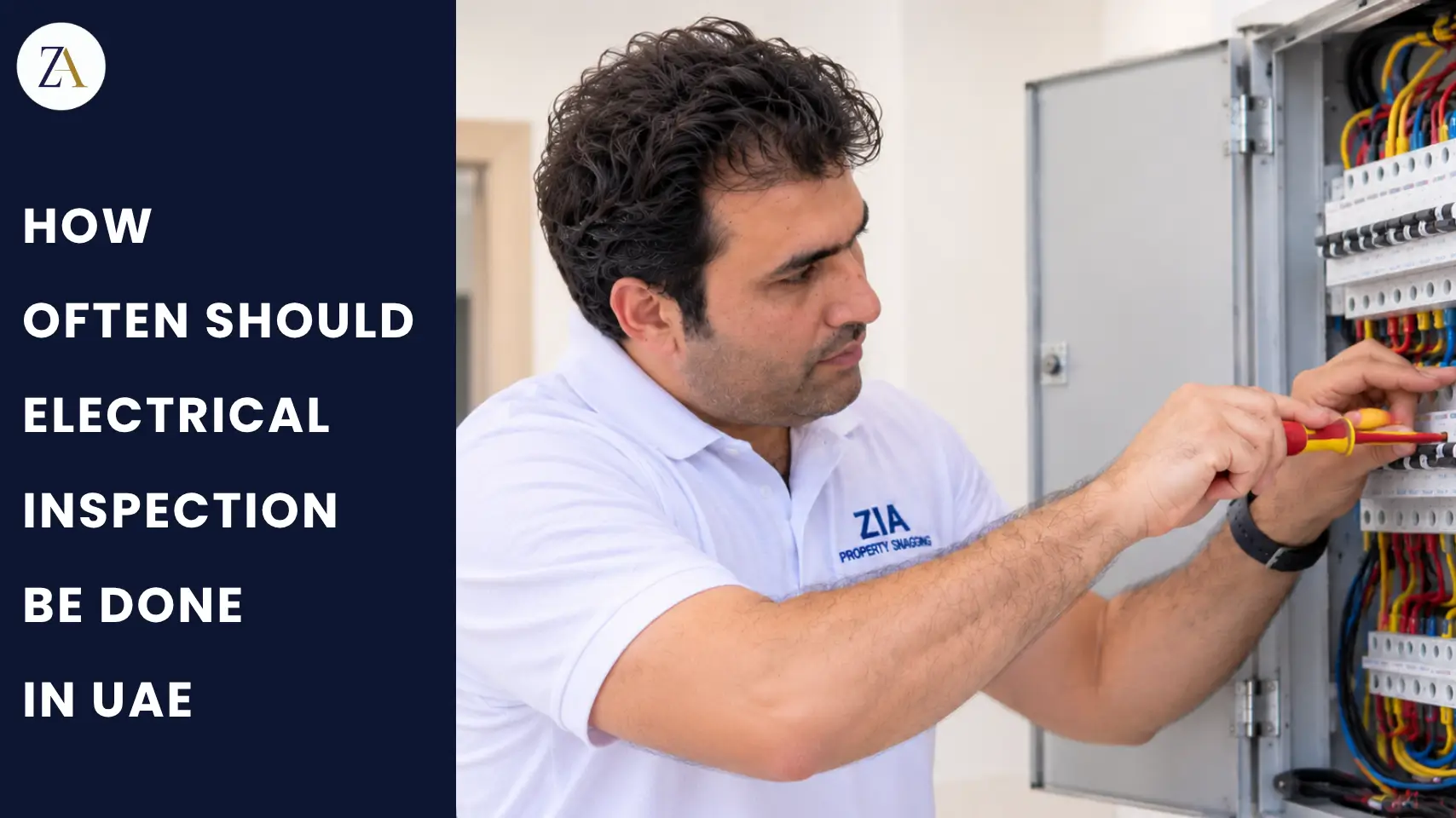
How Often Should Electrical Inspection Be Done in UAE?
How often should electrical inspection be done? UAE homeowners get a different answer from almost every contractor they ask, so here is the short version. Book a full inspection every two years for an apartment or villa. Go once a year for older buildings, offices, and shops, and test a rental every time the tenant changes. Whatever the property, don’t let it go longer than five years. The two-year figure isn’t random: Dubai’s electrical regulations set it as the minimum gap for periodic inspection by an independent contractor.
Treat those numbers as a starting point. Heat, AC load, wiring age, and anything you’ve changed since the last test can all bring the date forward. This guide explains each interval, the situations that call for an early check, and what our electrical safety checks actually test.
How Often Should Electrical Inspection Be Done? UAE Intervals by Property Type
If you only read one part of this page, read this table. It is the schedule we recommend to clients across Dubai, Abu Dhabi, and Sharjah.
Property type | Recommended interval | Why |
|---|---|---|
Owner-occupied apartment | Every 2 years | Matches the DEWA periodic inspection baseline. Loads are steady and you know the history. |
Villa | Every 2 years, plus a yearly visual check | More circuits, plus outdoor sockets, pool pumps and garden lighting exposed to heat and dust. |
Rental apartment or villa | At every change of tenant, and at least every 2 years | You don’t control what tenants plug in, add or change between visits. |
Building older than 10 to 15 years | Every year | Insulation and connections wear faster after a decade of heavy AC use. |
Office, shop or restaurant | Every year | Long daily running hours, kitchen equipment and more people relying on the system. |
Warehouse or industrial unit | Every year, with a thermal scan of the main panels | High loads, motors and long cable runs. Critical boards may need checks every 6 months. |
If nobody can tell you when the electrics were last tested, assume the inspection is overdue. One visit gives you a dated report and a clear next-due date to plan around.
Why online advice ranges from one year to ten
A lot of the longer figures you’ll find come from UK guidance, where the usual advice is a full test every ten years for an owner-occupied home and every five for a rental. That guidance was written for cooler houses with gas heating and far lighter electrical loads. The shorter figures, one to two years, come from contractors who work in Gulf conditions every day. Two years sits sensibly in the middle and lines up with what DEWA asks for.
Leave your phone, We’ll call you in 15 min
What Do UAE Regulations Say About Periodic Inspection?
Dubai: DEWA Regulations for Electrical Installations
DEWA covers maintenance and periodic testing in section 1.13 of its Regulations for Electrical Installations (2017 edition). The rule is that installations are inspected at least every two years by an independent consultant or contractor and that any defects found are reported to DEWA in writing. Separately, new wiring, board changes and rewiring must pass a DEWA inspection before power is connected. If you want the wider picture, our guide on how DEWA’s wiring rules work covers the standards themselves.
Abu Dhabi: Department of Energy wiring regulations
Abu Dhabi follows the Electricity Wiring Regulations issued by the Department of Energy. They are based on BS 7671, the UK wiring standard, and include a full chapter on inspection, testing and certification. ADDC and AADC handle connections and approvals.
Sharjah and the Northern Emirates
SEWA covers Sharjah, and Etihad Water and Electricity covers Ajman, Umm Al Quwain, Ras Al Khaimah and Fujairah. Both work from the same BS 7671 and IEC 60364 principles, so a two-year plan is a safe default across all of them.
Why Does Dubai's Climate Shorten the Interval?
A flat in London can go ten years between tests. A flat in JLT can’t, and the main reason is the air conditioning. Split units and fan coil units run for seven or eight months a year, often all night. That constant load warms cables and terminals, and every heating and cooling cycle loosens connections a little more.
Then add the rest of the local picture. Summer air hits 45°C, and roof spaces run far hotter. Salt and humidity near the coast, in Dubai Marina, JBR and the Palm, corrode outdoor sockets and switch boxes. And plenty of buildings from the 2000s were wired for one or two AC units and a basic kitchen, not the five split units, home office and induction hob many families run today. All of that wears an installation faster than UK schedules assume.
When Should You Inspect Sooner Than Scheduled?
Before you buy, rent or take handover
Get the electrics tested before you sign or move in. New buildings aren’t exempt. At handover, we regularly find loose terminals in the distribution board, reversed polarity at sockets and missing earth connections. Our post on electrical defects in new builds lists the faults we see most often.
After a renovation or new heavy loads
Added AC units, an EV charger, a new kitchen or extra circuits? Book a check once the work is finished. The original board may not be sized for the new load, and it’s better to know the contractor’s work is sound before you pay the final invoice.
When you notice warning signs
Don’t wait for the calendar if you see any of these:
- A breaker that keeps tripping, even after you cut the load
- Sockets or switches that feel warm, or have brown or black marks
- Lights that flicker or dim when the AC compressor starts
- A burning or fishy smell near the board or a socket
- Buzzing or crackling from the distribution board
- A tingle or mild shock from an appliance, tap, or metal fitting
If you smell burning or see sparks, switch off at the main breaker first and call an electrician second.
After water damage
A leak from the flat above, a burst pipe, or rain getting into a villa can reach wiring quicker than you’d expect. Have the affected circuits tested before you switch them back on fully.
How Often Should Landlords Check a Rental Property?
Test between every tenancy, and keep the report on file. You can’t see what the last tenant plugged in, overloaded, or “fixed” themselves, and a dated report shows you handed the property over in safe condition. It also helps if a tenant later blames you for a fault or an insurer asks for proof of maintenance. In the UK, landlords must test at least every five years. In Dubai’s climate, two years is the safer gap even if your tenant stays put.
What Does a Periodic Electrical Inspection Include?
A proper periodic inspection goes well beyond looking at sockets. Ours follows four steps:
- Visual check and board review. We look at every accessible socket, switch, and fitting for heat damage and check that the breakers in the distribution board are rated for the cables they protect.
- Testing with instruments. Insulation resistance, earth continuity, polarity, and RCD trip times, circuit by circuit.
- Thermal scan of the board. With the system under load, a thermal camera shows hot connections before they fail.
- Written report. Every fault is photographed, rated by urgency and listed with a fix. The report also gives the date your next inspection is due.
Zia’s engineers go through the report with you before they leave, so you know what needs fixing now and what can wait.
How Long Does It Take and What Affects the Fee?
Expect one to two hours for a typical apartment and two to four hours for a villa, depending on how many circuits need testing. The fee depends on the size of the property, the number of distribution boards and whether you want a thermal scan. You get a fixed quote before the visit, and it covers the testing and the full report.
FAQ's
How often should electrical inspection be done in UAE homes?
Every two years for most apartments and villas. Move to once a year if the building is more than 10 to 15 years old, if it’s a rental with frequent tenant changes, or if you’ve added heavy loads like extra AC units or an EV charger.
Is periodic electrical inspection mandatory in Dubai?
DEWA’s Regulations for Electrical Installations call for periodic inspection at least every two years by an independent consultant or contractor. On top of that, any new wiring, board change or major alteration must be inspected and approved by DEWA before power is connected.
Does the inspection have to be done by a DEWA-approved contractor?
The testing should be done by a qualified, licensed electrical engineer or contractor. Any repairs that follow on the distribution board, new circuits or rewiring must be done by a DEWA-approved contractor.
How often should offices and commercial buildings be inspected?
Once a year is a good rule for offices, shops and restaurants, ideally with a thermal scan of the main panels. Warehouses and sites with heavy machinery may need their critical boards checked every six months.
What is the difference between a visual check and a full electrical inspection?
A visual check picks up obvious damage like scorched sockets, loose fittings or exposed wires. A full inspection uses test instruments to measure insulation, earthing, polarity and RCD response, which finds faults you can’t see. A quick visual check each year between full inspections is a good habit.
Plan Your Next Inspection
So, how often should electrical inspection be done in UAE properties? Two years is the baseline. Go yearly for older buildings, commercial spaces and rentals at each tenant change, and straight away if you spot warning signs or finish a renovation. If you don’t know when your electrics were last tested, start now and you’ll have a date to plan from. Book a visit and we’ll test your apartment, villa or office and leave you with a clear, dated report.
