

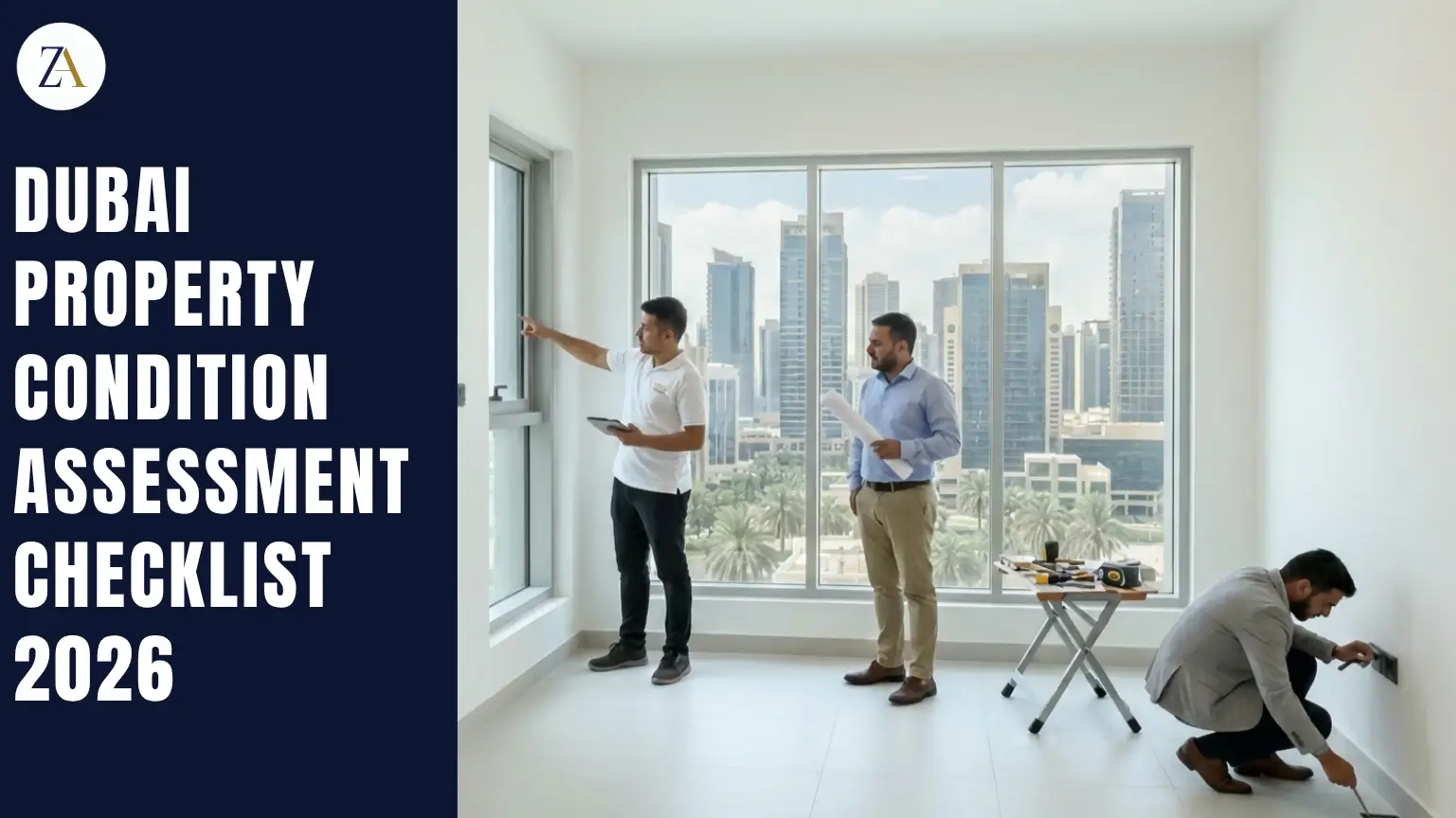
Dubai Property Condition Assessment Checklist 2026
Buying a property in Dubai is one of the biggest financial decisions you will ever make. Whether it is a luxury apartment in Downtown Dubai, a villa in Arabian Ranches, or a townhouse in Jumeirah Village Circle, you want to be sure that what you are paying for is actually what you are getting. That is where a proper Property Condition Assessment Checklist comes in — and why skipping it can cost you far more than the inspection itself.
A Property Condition Assessment (PCA) is a detailed physical inspection of a property, covering everything from the building structure down to the smallest finishing details inside your unit. Without it, buyers regularly discover expensive defects after handover — at which point fixing them becomes their problem, not the developer’s.
Dubai’s real estate market moves fast. Thousands of units are handed over every year, and not all of them are delivered in perfect condition. A proper assessment before you sign anything is not optional — it is just smart.
What is a Property Condition Assessment Checklist in Dubai?
A Property Condition Assessment Checklist is a professional evaluation of a property’s current physical state. In Dubai, it is often referred to as a snagging report. The goal is straightforward: find any defects, unfinished work, poor workmanship, or safety issues before you take possession.
Under Dubai’s Real Estate Regulatory Agency (RERA), buyers have the right to inspect their property before handover. Developers are legally required to fix defects identified during the Defect Liability Period (DLP) — typically one year for finishing issues and up to ten years for structural defects under UAE construction law.
A PCA is not a casual walkthrough. It is a room-by-room evaluation conducted by certified engineers using professional tools to detect problems that are not visible to the naked eye. You get a written report with photographs and clear recommendations that the developer is legally obligated to act on.
When Do You Actually Need One?
This is the most important moment. When your developer invites you to collect the keys, do not sign anything until a professional inspection has been done. Any defects found at this stage are the developer’s responsibility to fix — at no cost to you.
Leave your phone, We’ll call you in 15 min
During the Defect Liability Period
Even after you have moved in, you can still report defects during the DLP. A mid-DLP or end-of-DLP inspection helps you catch issues before your warranty window closes for good.
When Buying Resale
Secondary market properties can hide problems that are not obvious during a quick viewing. A proper assessment protects you from inheriting damage that the previous owner was not upfront about.
After Renovation
Had your property renovated? A post-renovation inspection confirms the work meets quality standards and that no new defects were accidentally introduced during the process.
The Complete Dubai Property Condition Assessment Checklist
Structural and Exterior
Start with the structure — everything else sits on top of it.
- Cracks in walls (hairline or deeper structural)
- Uneven or bulging walls and ceilings
- Water stains or damp patches indicating moisture infiltration
- Roof condition, particularly for villas and townhouses
- Foundation settling or visible movement in the structure
- External cladding and facade quality
- Balconies, terraces, and railing condition
- Waterproofing of roof areas and terraces — critical in Dubai’s climate
Plumbing and Water Systems
Water damage is among the most expensive things to fix after handover. Check everything.
- All taps, showers, and bathtubs for proper flow and pressure
- Under sinks and behind walls for any signs of leakage
- Drainage speed in bathrooms, kitchens, and utility areas
- Hot water system and water heater condition
- Pipe quality and any signs of corrosion
- Toilet flushing and cistern water levels
- Waterproofing in wet areas like bathroom and kitchen floors
Electrical and Mechanical Systems
All properties in Dubai must comply with DEWA (Dubai Electricity and Water Authority) standards.
- Every light switch and socket in the property
- Main distribution board (DB board) — labeling and safety
- All air conditioning units, whether split or central
- Ventilation in bathrooms and kitchens
- Built-in appliances are included in the handover
- Doorbell, intercom, and video entry systems
- DEWA connection and meter installation
Doors, Windows, and Glazing
These are frequently overlooked but are a major source of defects.
- Every door — alignment, smooth operation, and frame condition
- Door handles, locks, and hinges
- Window sealing — gaps here directly hurt your AC efficiency and energy bills
- Glazing quality — scratches, chips, or damaged seals
- For floor-to-ceiling windows, signs of water ingress around the frames
Interior Finishes
The quality of finishes directly affects the property’s value and your day-to-day experience.
- Walls and ceilings — uneven paint, drips, or missed areas
- Floor tiles — cracks, hollow tiles, uneven laying, or mismatched grout
- Kitchen cabinets, countertops, and built-in units
- Bathroom tiles and fixtures — quality and alignment
- Wardrobes and built-in storage — installation quality and smooth operation
- Skirting boards, cornices, and wall trims
- Marble or premium flooring — properly sealed and polished where required
Modern Dubai properties increasingly include smart features. Test all of them.
- Smart lighting controls and automation systems
- CCTV and security camera installations
- Smart locks if included
- Centralized control panels
- Fire alarm systems and smoke detectors
- Building an intercom and access control
Outdoor and Common Areas (Villas and Townhouses)
Do not stop at the front door.
- Driveway and external pathways condition
- Garden and landscaping quality
- Swimming pool — structure, tiling, and filtration system
- Boundary walls, gates, and fencing
- Outdoor lighting and irrigation systems
- Outdoor drainage — properly installed and functional
Professional Inspection vs. DIY — What's the Difference?
Most buyers walk through their property during handover and feel reasonably confident. The problem is that most defects are not visible without the right tools and training. Moisture behind tiles, incorrect wiring, insufficient waterproofing, weak structural joints—none of these announce themselves during a casual walkthrough.
By the time these problems become obvious, the developer’s liability period has often expired. At that point, the repair cost is yours.
A professional inspection gives you a comprehensive written report with photographic evidence — in a format that developers and contractors recognize and are legally required to respond to. It also means you walk into the handover negotiation with documentation, not just a verbal complaint.
Professional inspectors also understand local building standards, common shortcuts developers take, and the specific defects that show up repeatedly across different communities in Dubai.
How Zia Property Conducts Property Condition Assessment Checklist
At Zia Property Snagging, our certified engineers carry out a thorough room-by-room inspection using advanced professional tools. We check every system, every finish, and every structural element against Dubai’s quality standards. Your detailed report — complete with photographs of every defect and clear recommendations — is delivered within 48 hours.
We are completely independent. No affiliations with any developer or repair contractor. Our only job is to protect your investment.
Frequently Asked Questions
What does a property condition assessment cost in Dubai?
Prices typically start from AED 999, depending on the size and type of the property. It is a small amount compared to what you could lose by missing hidden defects at handover.
How long does the inspection take?
An apartment usually takes two to four hours. A villa can take up to six hours. Your written report is delivered within 24 to 48 hours after the inspection.
Is a property condition assessment legally required in Dubai?
It is not mandatory, but it is strongly recommended. RERA supports buyers’ right to inspect before handover, and developers are legally obligated to fix defects reported during the Defect Liability Period.
Can I get an inspection for an off-plan property?
Yes — and the pre-handover stage is actually the best time to do it. The developer is still fully responsible for fixing everything at no cost to you.
What happens if defects are found?
Your inspector documents everything in a formal report. Present it to your developer before signing the handover documents. If they fail to act, you can escalate through RERA or the Dubai Land Department.
Conclusion
A proper Property Condition Assessment Checklist is not just a checklist — it is the difference between moving into the property you paid for and spending months chasing a developer to fix things that should have been right from day one.
At Zia Property Snagging, our certified engineers are ready to inspect your property with the precision and independence your investment deserves. Book your assessment today.
