
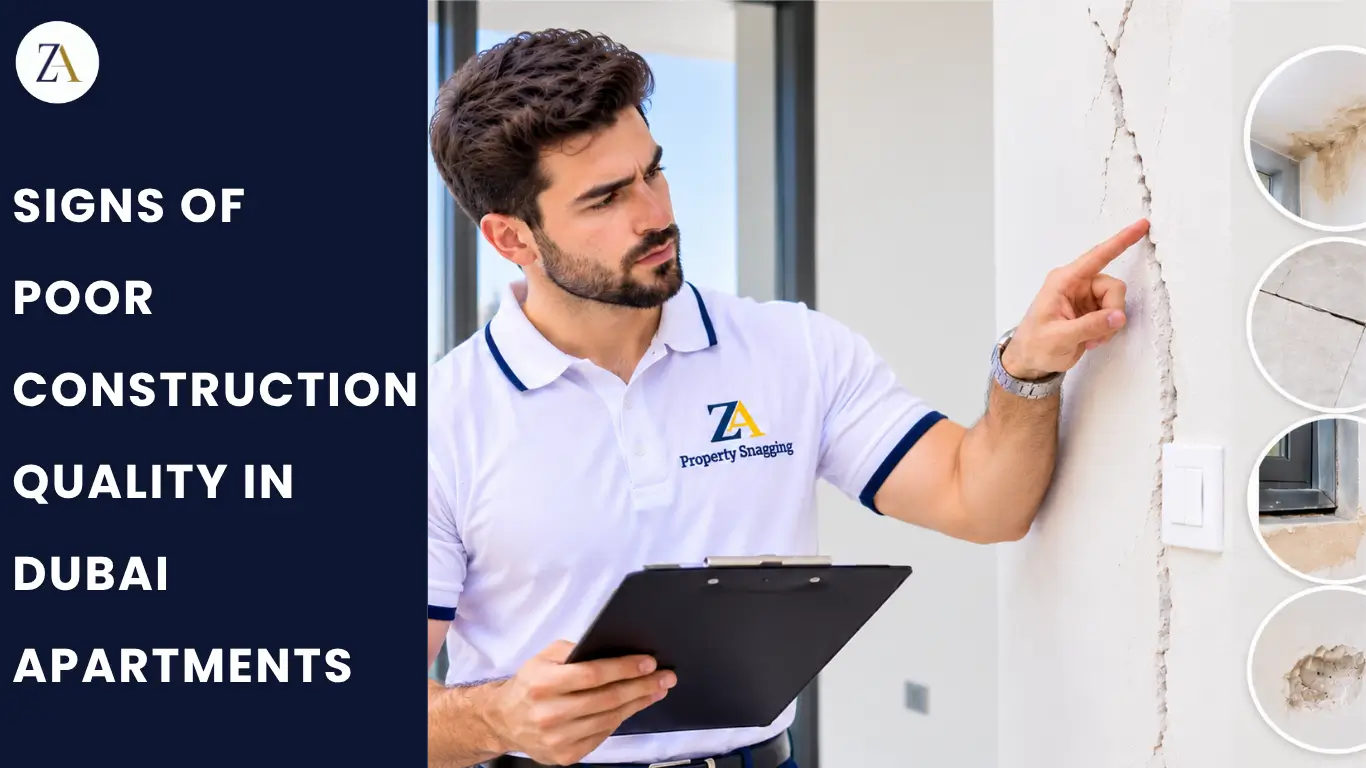
12 Signs of Poor Construction Quality in Dubai Apartments
You’re on a viewing, you tap a floor tile with your shoe, and it sounds hollow. It could be nothing. It could also be the first of many problems the seller hasn’t mentioned. This guide lists the signs of poor construction quality in Dubai apartments that you can spot yourself, how to test each one, and which ones need an engineer. If you want an expert to confirm what you’ve found, see our civil inspection by RERA-certified engineers.
Quick answer: Look at four areas. Floors and walls (hollow tiles, cracks, uneven surfaces), water (stains, weak waterproofing, slow drains), doors and windows (misalignment, gaps) and systems (AC, sockets, water pressure). Cosmetic faults are fixable under the defect liability period. Cracks, damp and electrical faults should be checked by an engineer.
What Counts as Poor Construction Quality?
Every new building has a few small snags, like a scratched frame or uneven paint. Poor construction quality is different. It means faults that come from weak workmanship, materials, or design that keep coming back or get worse. A scuffed skirting board is a snag. Water coming through a balcony ceiling isn’t.
The law gives you some cover. As far as the sources we read show, developers usually fix defects at their own cost during a defect liability period of about one year from handover. Under Dubai Law No. 6 of 2019 (Article 40), the developer is also liable for structural defects for 10 years, as a legal summary from Chambers explains. Report anything you find in writing and keep the dates.
12 Signs of Poor Construction Quality in Dubai Apartments
Leave your phone, We’ll call you in 15 min
Hollow-sounding tiles
Tap tiles lightly with a coin or your knuckle. A dull, hollow sound means the adhesive didn’t bond, and those tiles often crack or lift later, especially on balconies and in kitchens.
Cracks in walls and ceilings
Hairline cracks are common and often harmless. Wide, stepped or growing cracks are not, because they can point to movement or water. Read more on why cracks appear in new buildings.
Uneven floors and tile lippage
Run your hand across tile joints. If one tile edge sits higher than its neighbour, that’s lippage, and it’s a sign of rushed laying. Uneven floors can also make doors and furniture sit badly.
Damp stains and signs of leaks
Check ceilings near bathrooms, AC vents and balconies for yellow or brown patches. Stains mean water has found a way through, and the source may be far from the mark.
Weak bathroom and balcony waterproofing
Look for mould, discolouration or gaps around the shower tray. One snagging guide suggests running the shower and checking for standing water on the floor after about five minutes, which can point to poor falls.
Doors and windows that don't fit
Doors should close flush and windows should lock without force. Frames that sit off-square, visible gaps or draughts suggest poor fitting, and gaps can let in dust and water.
Poor sealant and grout
Silicone should be even and continuous around sinks, baths and windows. Gaps, thin patches or messy grout let water into walls, and they’re usually a sign that the finishing was rushed.
Uneven plaster and paint
Stand at an angle to a wall and look along it with the light behind you. Waves, patches and roller marks show poor plastering, and nail pops or flaking paint can mean moisture behind the surface.
Weak cooling or leaking AC
Run the AC for ten minutes in each room. Poor cooling, strange noises or water dripping from the unit or ceiling point to a design or installation problem, and Dubai’s heat will test it quickly.
Low water pressure and slow drains
Turn on taps and showers together and see if pressure drops sharply. Slow drains or gurgling sounds can mean undersized or poorly sealed pipes, and these are hard to fix once walls are closed.
Loose sockets and electrical faults
Test every socket and switch, and look for loose faceplates or switches that control the wrong light. These faults can be a safety risk, so ask an electrician to check them.
Weak balcony railings and standing water
Push the railing firmly and look for rust spots and puddles that don’t drain. Some guides flag gaps between balusters wider than 100mm as a safety concern, particularly if children live in the flat.
Found a few of these? Ask an engineer to check what you’ve found and send us photos with the building name.
Which Signs Are Cosmetic and Which Are Serious?
Sign | Usually | Next step |
|---|---|---|
Scuffed paint, uneven grout | Cosmetic | List it as a snag |
Hollow tiles, tile lippage | Fix under the liability period | Report in writing |
Misaligned doors, poor sealant | Fix under the liability period | Report in writing |
Weak cooling, slow drains | Needs a technician | Report and get a check |
Damp stains, weak waterproofing | Possibly serious | Call an engineer |
Wide or growing cracks | Possibly serious | Call an engineer |
Loose sockets, wiring faults | Safety risk | Call an electrician or engineer |
A guide only. An engineer confirms how serious a defect is.
Handover, Resale or Rental: When to Look
The same signs matter at different moments. At handover of a new unit, you can still ask the developer to fix them. On a resale viewing, they’re bargaining points and a warning about how the previous owner kept the place. For a rental, they decide whether you’ll be living with leaks and a weak AC all summer.
Go during the day, with the lights off and the curtains open. Natural light shows uneven walls and stains far better than ceiling lights do, and you can hear the AC and pipes more clearly when the flat is quiet.
Questions to Ask the Developer or Seller
- When was the building handed over, and when does the defect liability period end?
- Have there been leaks or repairs in this unit or the one above it?
- Is there a snagging report or a record of defects already fixed?
- Who services the AC, and when was it last done?
Vague answers are an answer too. If nobody can say when repairs were done or by whom, assume you’ll need to check everything yourself.
Mistakes Buyers Make When Checking Quality
- Judging by the show flat. Show units are finished to a higher standard than the ones you’ll receive.
- Only checking what looks good. Stains and weak pressure matter more than polished floors.
- Signing off first, complaining later. Report defects in writing before you accept the unit, so there’s a clear record.
- Ignoring small leaks. A minor drip often points to a bigger water problem behind the wall.
What to Do If You Spot These Signs
- Photograph each issue with a date, and note the room.
- Report it to the developer or landlord in writing.
- Book an independent inspection for anything involving water, cracks or electrics.
- Keep a note of the defect liability date so repairs are claimed in time.
Why a Visual Check Isn't Enough
You can see a hollow tile, but you can’t see damp behind a wall. Engineers use moisture meters and thermal imaging to find water and cooling gaps that your eyes will miss, and they know which cracks matter. If you’re buying, a professional report also gives you something firm to put to the developer or seller.
What a Zia Inspection Includes
ZIA Property Snagging is RERA-approved, DED-licensed and InterNACHI-certified, and we inspect as an independent party. You get a photographed report within 24 hours, with each finding rated by severity so you know what to push back on first.
Inspections start from AED 999, and you receive a written quote before anything is booked.
Frequently Asked Questions
What are the most common construction defects in new Dubai apartments?
Hollow or cracked tiles, hidden water leaks, weak waterproofing, misaligned doors, AC problems, and loose sockets are the most commonly listed. Most appear in snagging guides again and again, so check these first.
Is a hairline crack a serious problem?
Not always. Fine, stable cracks are common in new buildings and are often cosmetic. Wide cracks, stepped or growing, or that come with damp, should be checked by an engineer.
How long does the developer have to fix defects?
Developers usually fix defects at their own cost during a defect liability period of about one year from handover. Check your sale agreement, because the exact terms can vary.
Can I spot construction defects myself?
Yes, many of them. Tap tiles, run taps, test sockets and look for stains. But hidden damp, wiring and structural issues need tools and training, so use an engineer for those.
What if I find defects after the liability period ends?
The developer’s duty to fix minor defects may have ended, but structural defects are covered for 10 years under Dubai Law No. 6 of 2019. Get a technical report and take legal advice for your case.
Ready to Book Your Inspection?
Tell us the building, the unit type and the signs you’ve noticed, and we’ll reply with a written quote and no hidden extras. You can book your inspection today online or message us on WhatsApp at +971 56 901 9343. Spotting the signs of poor construction quality in Dubai apartments early is the cheapest way to avoid expensive repairs later.