
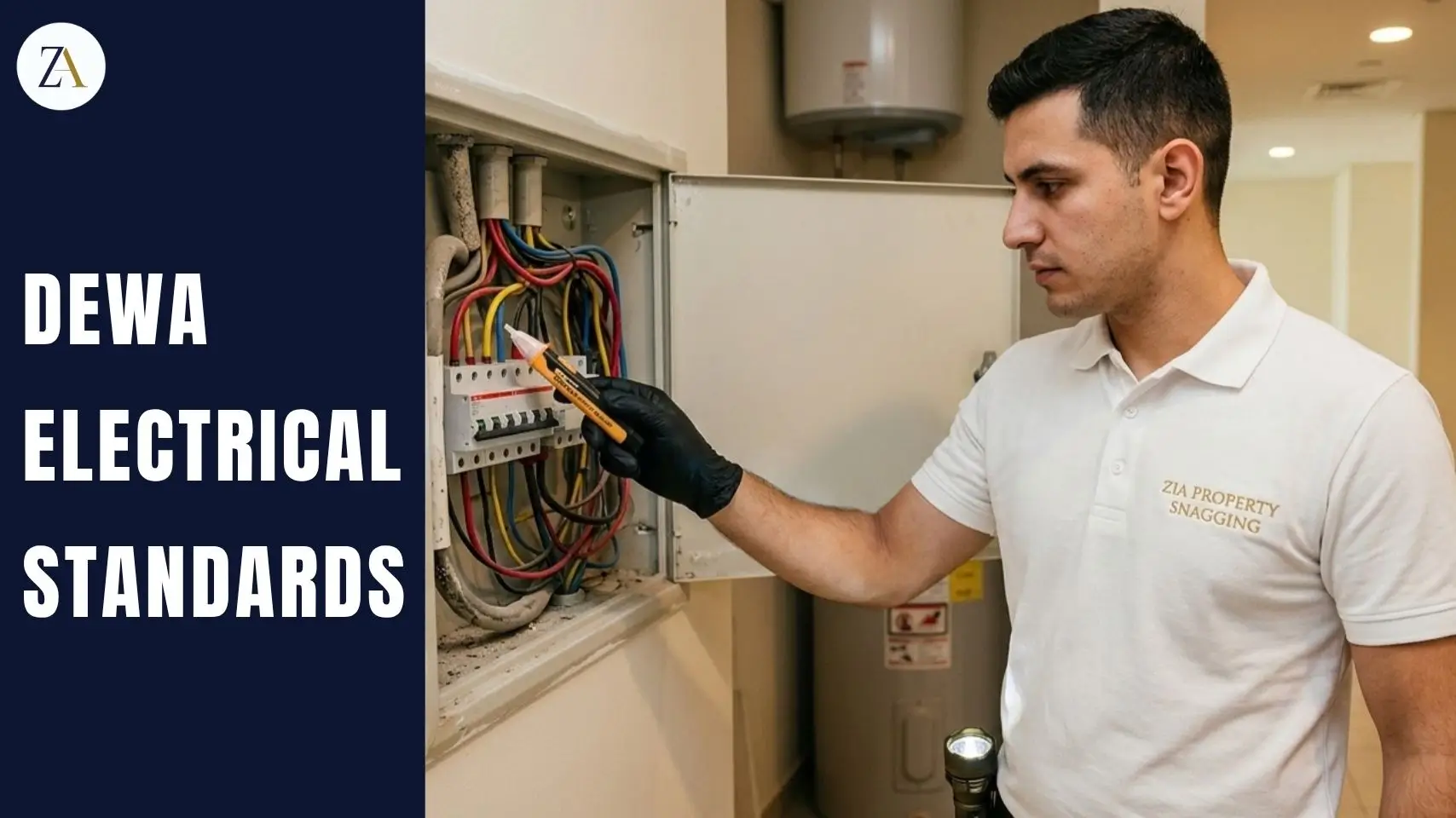
DEWA Electrical Standards: What Every Property Needs
DEWA-compliant wiring is a process in which a home’s electrical system is designed to comply with DEWA’s Regulations for Electrical Installations, which encompass the cable to be installed, the earthing system, circuit protection, and the correct installation of sockets/switches. Early warning signs can be identified by you, but for full compliance, a certified electrical inspection must be carried out.
So, you have just finished moving into your new apartment in Dubai, or you are a couple of weeks away from handover on your off-plan unit. All seems to be completed until one evening the lights flicker as the AC turns on, a switch is warm to the touch, or the breaker trips every time the kettle and washing machine are running at the same time.
These are not to be taken lightly. In Dubai, the electrical system in a home needs to comply with the standards that are enforced by Dubai Electricity and Water Authority (DEWA), which provides water and electricity to your home and also dictates the standards for how your home is protected and wired up. Read on to learn how to tell if there is something amiss and what it takes to be certain that your home is actually compliant.
What Are DEWA Electrical Standards?
DEWA’s Regulations for Electrical Installations outline technical specifications for the design, installation, and maintenance of electrical installations in domestic, commercial, and public buildings within Dubai. Their purpose is to prevent electrical shock, short circuits, fires, and damage to property and to maintain the stability and efficiency of the power grid.
The Regulations themselves cover the following:
Some of the key technical aspects these regulations cover:
- Supply specification — DEWA supplies power as a 3-phase/4-wire system, 50Hz, 230/400 V with a neutral and protective conductor.
- Cable and equipment selection — wiring materials, sizing, and installation methods must match approved standards for the load they carry
- Earthing and earth leakage protection — all installations require suitable earthing of metal fittings and appliances to minimize voltage build-up, which could cause harmful effects.
- Protective devices – circuit breakers and residual current devices (RCDs) must be properly rated and installed to provide protection in the event of a fault by automatically switching off the power.
- How the cables, conduit, trunking, and accessories are physically routed and protected in the walls and ceiling.
Who These Rules Apply To
These rules will apply to homeowners, contractors, developers, and all new installations, renovations, and additions to property before they are connected to DEWA’s network.
Leave your phone, We’ll call you in 15 min
8 Signs Your Wiring May Not Meet DEWA Standards
You don’t need to be an electrician to notice when something’s wrong. Here are the warning signs worth taking seriously:
Signs You Can Spot Yourself
- Flickering or dimming lights, especially when a heavy appliance like the AC or oven switches on
- Warm or discoloured switches and sockets — a sign of overloading or poor connections
- Frequent breaker trips, particularly with everyday appliance use
- A burning smell near outlets, the consumer unit, or behind walls
- Sockets with no earth pin or visible damage, or outlets that don’t match standard UAE socket types
Signs That Need a Professional Check
- No RCD protection on the consumer unit—a critical safety gap
- Exposed or loosely fixed wiring, especially around DIY additions like extra sockets or light fittings
- An old or overloaded consumer unit with mismatched or unlabeled breakers
Any one of these on its own might be minor. Several together usually point to an installation that hasn’t been maintained or was never done to standard in the first place.
What a Professional Electrical Installation Inspection Checks
Visual checks only tell you so much—most compliance issues live behind the walls or inside the consumer unit, where you can’t see them. That’s what an electrical installation inspection is for.
A proper inspection combines:
- Visual examination — surface condition, structural placement, and obvious safety risks
- Electrical testing — circuit integrity, voltage and current checks, and insulation resistance testing
- Protective device testing — confirming breakers and RCDs actually trip and reset correctly
- Compliance review — comparing findings against DEWA’s regulations and UAE safety codes
The result is usually documented in an Electrical Installation Condition Report (EICR)—a record that becomes useful evidence during handovers, tenancy renewals, insurance claims, or disputes with a developer over unfinished work.
DEWA Compliance Checklist by Property Type
What “compliant” looks like in practice shifts a little depending on the property’s age and status:
Property Type | What to Check | Recommended Frequency |
New-build / pre-handover | Full EICR against developer specs, all circuits tested before first use | Before accepting handover |
Owner-occupied home | Visual + functional check, RCD test, consumer unit condition | Every 10 years |
Rented apartment/villa | Full inspection between tenancies, landlord responsibility | Every 5 years |
Commercial unit | Load review, protective device testing, compliance certification | Annually |
If you’re buying off-plan, the pre-handover stage is your strongest position — the developer is still on the hook to fix anything non-compliant before you sign off.
Common Electrical Defects Found in Dubai New Builds
Even in freshly handed-over properties, electrical snags show up more often than buyers expect. Our inspection data points to a recurring pattern of common electrical defects in new-build homes — faulty sockets and switches, incomplete earthing, incorrect breaker labelling and circuits not being load-tested prior to workers completing work positioned them. Often these are not apparent on a walk-through, which is why they are not discovered until they trip or overheat months later.
How Zia Property Snagging Checks DEWA Compliance
At Zia Property Snagging, our RERA-certified engineers check electrical systems as part of every full property inspection and as a standalone service when that’s all you need. We use thermal imaging cameras, voltage testers, and insulation testing equipment to catch faults that aren’t visible to the eye—and we test against DEWA, Trakhees, and Dubai Municipality requirements specifically, not generic international codes.
Every inspection ends with a detailed report—photos, severity ratings, and plain-language explanations of what needs fixing and why—delivered within 24 hours. If you’re buying a DEWA-connected unit and want the electrical side checked alongside the rest of the property, our DEWA-connected inspection guide walks through exactly what that process covers.
DIY Checks vs. When You Need a Professional
There’s a real difference between noticing a warning sign and confirming compliance. You can absolutely do the first part yourself:
- Watch for flickering, warmth, or smells as described above
- Test your RCD using its built-in test button (it should trip immediately)
- Check that sockets aren’t cracked, loose, or missing an earth pin
However, if you want to ensure that your DEWA is actually compliant, you will need equipment and training that you are unlikely to have, such as insulation resistance testing, earth loop impedance testing, and circuit-by-circuit load testing, all of which require calibrated equipment and a certified engineer knowing acceptable values. Don’t rely on DIY checks as your definitive answer!
Frequently Asked Questions
How do I know if my home's wiring meets DEWA standards?
The only reliable way is a certified electrical installation inspection that tests circuits, earthing, and protective devices against DEWA’s regulations. Visual signs like flickering lights or warm switches can flag a problem, but they can’t confirm full compliance on their own.
How often should DEWA electrical compliance be checked?
Owner-occupied homes should be checked roughly every 10 years, rented properties every 5 years, and commercial units annually. New builds should always be checked before handover.
Can I check DEWA compliance myself without an inspector?
You can spot warning signs yourself—flickering lights, warm sockets, frequent trips — but confirming true compliance needs testing equipment and certified expertise you won’t have at home.
What happens if my home's wiring doesn't meet DEWA standards?
Non-compliant wiring is a safety risk and can also cause issues with insurance claims, tenancy renewals, or resale. In a new build, the developer is typically responsible for fixing it before or shortly after handover.
Does DEWA itself inspect home wiring?
DEWA sets and enforces the regulations, but day-to-day compliance checks on individual properties are usually carried out by certified inspection companies, whose reports are then referenced against DEWA’s standards.
Ready to Confirm Your Home Meets DEWA Standards?
Don’t wait for a warning sign to turn into a real problem. Book an electrical inspection with our RERA-certified engineers and get a clear, documented answer on where your home’s wiring stands — delivered within 24 hours.