
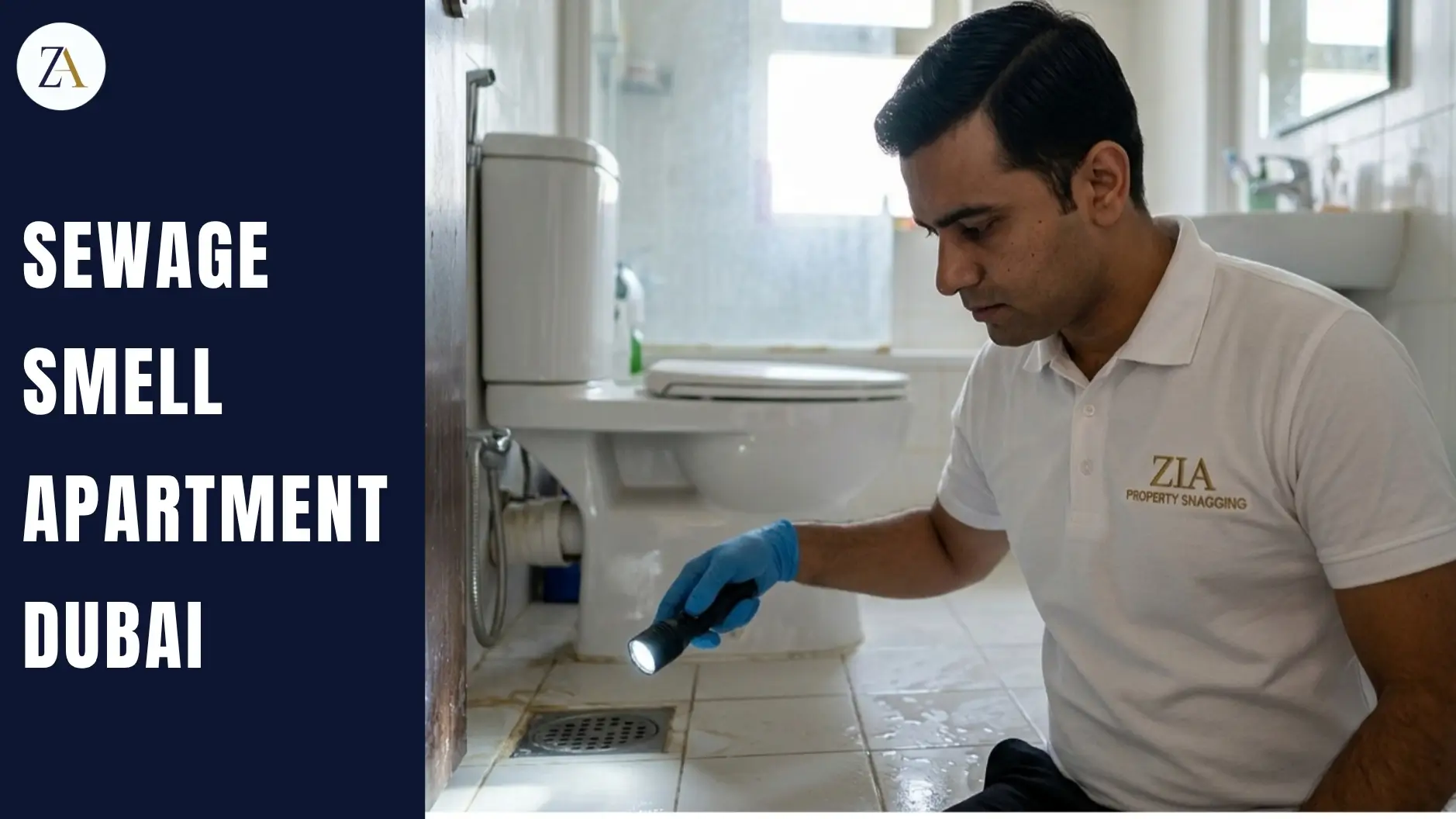
Sewage Smell Apartment Dubai: Causes, Risks & Expert Fixes
After a long day, you arrive at your apartment, and there it is—the unmistakable, faintly rotten smell in the bathroom or kitchen. The first question you’re going to have is likely to be “Is this normal?” and it will be followed shortly by “Is this dangerous? You’re not the only one, and if you’ve just moved into a new build in Dubai or you’ve been noticing the smell increase over the last few weeks, you’re not dreaming. Buyers complain of sewage smells in almost every community that we inspect, from Dubai Marina to JVC, and in every case, the smell is caused by a specific defect that can be easily remedied.
You’ll get through this guide explaining exactly why it occurs, how to determine if it is your unit or the building, and what you must do now and when you should have a professional come in.
Is Sewage Smell in Your Apartment Dangerous?
Yes, a foul sewer odor is one that will not be ignored! Typically, it is an indication that sewer gas, a combination of methane, hydrogen sulfide, and other chemicals, is entering your home rather than being properly released outside.
At low concentrations, this usually consists of a disagreeable smell. It may cause, at high doses or with longer exposure
- Headache, nausea, or dizziness
- Irritation of eyes, throat, or airways.
- Increased symptoms for those with respiratory allergies or sensitivities.
- Flammable gas buildup in poorly ventilated areas in rare and severe cases.
- The smell is a warning sign and not merely a nuisance, investigate the smell, and don’t cover it up with it.
Common Causes of Sewage Smell in Dubai Apartments
There are only a few common plumbing problems in most cases. Here are the common causes and how to actually cure them.
Leave your phone, We’ll call you in 15 min
Dry or Faulty P-Trap
Every drain — under sinks, in floor traps, behind washing machines—relies on a P-trap: a curved section of pipe that holds water and physically blocks sewer gas from rising back up.
- Issue: In guest bathrooms or utility rooms that aren’t used often, the water in the trap evaporates, breaking the seal.
- Fix: Run water in every drain in the apartment for a minute or two, at least once a week—especially in rooms you don’t use daily.
Poor Plumbing Installation (Workmanship Defects)
Another of the most common problems we point out in new homes is this; this is the developer’s responsibility during the Defects Liability Period. Sewer gas can escape from loose pipe connections, pipes not sloped properly, and improper sealing of pipe joints before it ever hits the vent stack.
- Fix: This requires a proper inspection to locate the exact joint or connection at fault — DIY sealing usually just masks the symptom. If you’re still within your handover window, this is exactly the kind of common plumbing defect in new-build properties that your developer is obligated to rectify at no cost.
Blocked or Partially Clogged Drains
Grease, hair, and debris build up over time, especially in kitchen and bathroom drains.
- Signs to watch for:
- Slow-draining water
- Gurgling sounds from pipes
- Odor concentrated around one specific sink or floor trap
- Fix: Professional drain cleaning; recurring blockages in the same spot may point to a deeper pipe-slope issue.
Missing or Improperly Installed Vent Pipes
Drainage systems need vent pipes running to the roof or exterior to equalize air pressure and safely release sewer gas outdoors. Without proper venting, that gas has nowhere to go but back through your drains.
- Fix: This is a structural plumbing fix, not a maintenance one—it needs a qualified engineer to correct the vent installation.
Floor Trap Installation Issues
Bathroom floor traps are frequently installed with poor sealing, incorrect leveling, or substandard materials—a defect we see repeatedly during snagging inspections in newly handed-over units.
- Fix: Reinstallation or proper resealing of the floor trap.
Waterproofing Failures
Sometimes the smell isn’t a direct gas leak but a sign of hidden moisture damage from failed waterproofing behind walls or under flooring in bathrooms, balconies, and utility areas—trapped moisture combined with organic buildup can produce a smell very similar to sewage.
- Fix: Waterproofing inspection using moisture detection tools to locate and correct the failure point.
A quick note — it’s not always plumbing. In some Dubai apartments, especially those with ducted AC systems and false ceilings, a “sewage” smell is actually coming from a stagnant AC condensate drain pan, not the sewer line at all. If the smell is strongest near AC vents rather than bathrooms or kitchens, that’s a strong clue it’s an AC drainage issue rather than a plumbing one—worth ruling out before you assume the worst.
Is It Coming From Your Unit or the Building?
Not every sewage smell originates inside your apartment. Here’s how to narrow it down:
Source | Where the smell is strongest | Typical trigger |
In-unit plumbing fault | Near a specific sink, floor trap, or bathroom | Dry trap, poor seal, blocked drain |
Building/shared drainage | Common corridors, multiple units affected | Shared riser or stack issue, building-wide maintenance gap |
AC condensate drain | Near AC vents or false ceiling | Stagnant drain pan, blocked condensate line |
External/municipal source | Whole community affected, smell varies with wind/weather | Nearby sewage treatment infrastructure or area-wide drainage issue |
If it is smelling the same for neighbors on the same floor, it is probably a building problem and should be discussed with the building management along with your own unit inspection.
What to Do Right Now
- A few basic steps will help to rule out other possibilities before calling:
- Flush all drains in the apartment—even if infrequently used.
- Look for gaps or inadequate sealing around floor drains and sinks.
- Identify the strongest odour source—this will assist an inspector in locating the source quickly.
- Don’t cover up the odor with air fresheners—this does not solve the problem.
- If you’re in the middle of the handover, do not just take a verbal “temporary fix” from the developer, make sure to take photos of the problem and then send a written request.
When to Call a Professional Plumbing Inspection
If the smell persists after basic checks, or you’re dealing with a recently handed-over unit, it’s time for a proper plumbing inspection Dubai buyers can rely on. This matters especially if you’re still within your Defects Liability Period—under RERA regulations, developers are required to rectify legitimate defects reported during this window, but you need documented, professional findings to hold that position.
Booking early also protects your negotiating position: raising a documented issue before you fully move in and settle is far stronger than trying to escalate it months later.
What a Professional Plumbing Inspection Actually Finds
A proper inspection doesn’t just confirm there’s a smell — it identifies the exact source using the right tools:
- Endoscopy cameras to inspect inside pipes and traps without demolition
- Moisture meters to detect hidden leaks behind walls or under flooring
- Thermal imaging to spot moisture patterns invisible to the eye
- Drainage system checks across connected fixtures
In one recent case, a Dubai Marina apartment came in with a persistent odor the owner assumed was a major sewage line issue. The inspection traced it to a combination of a dry floor trap in the guest bathroom and poor sealing under the vanity—both fixed within a day of the developer being notified. That’s a fairly typical outcome: the cause is usually smaller and more fixable than it seems, but only once it’s properly identified.
A full residential property inspection in Dubai — which includes plumbing, as well as structural, electrical, and finishing inspections—begins at AED 999 in apartments and a detailed report is provided within 24 hours and a free reinspection upon completion of the developer’s repairs.
Frequently Asked Questions
Is sewage smell in a new apartment normal in Dubai?
No — it’s not something you should simply accept. It almost always points to a specific, identifiable plumbing defect that’s fixable, especially in units still under the developer’s handover obligations.
Can a landlord or developer be forced to fix it?
The cost varies depending on property size, complexity, and location. Typically, a professional inspection ranges from $300 to $1,000 for residential properties. Costs are an investment compared to potential repair expenses.
How much does a plumbing inspection cost in Dubai?
Inspection pricing typically starts from AED 999 for apartments as part of a full property inspection, varying by unit size and scope.
Can I fix a sewage smell myself?
Simple cases like a dry P-trap can often be resolved by running water regularly. Structural issues like vent pipe faults or poor waterproofing need a professional.
Does sewage smell mean there's a mold or health risk?
It can indicate trapped moisture behind walls, which may lead to mold over time. It’s worth having moisture levels checked alongside the plumbing source.
Ready to Get to the Bottom of That Smell?
Don’t spend another week guessing whether it’s a quick fix or a deeper defect. Zia Property Snagging‘s certified engineers can trace the exact source — plumbing, AC drain, or building-level — and hand you a clear, documented report you can act on.
Book a plumbing check today and get answers within 24 hours.