

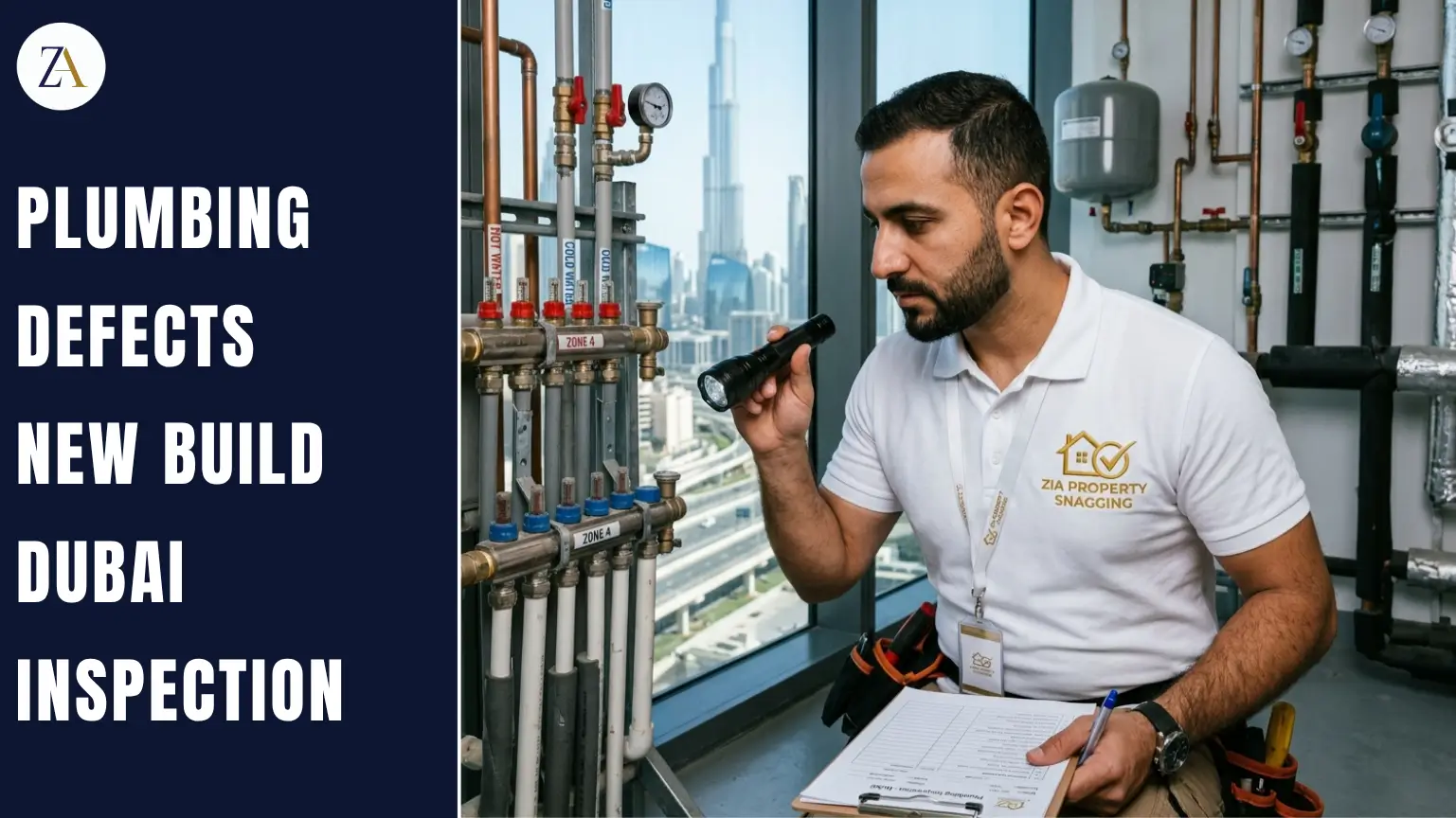
Plumbing Defects New Build Dubai Inspection Guide 2026
Once you have the keys to a brand new apartment or villa in Dubai, the finish line seems to be just around the corner! But in truth, the day of handover is the day of testing the plumbing. Perfect-looking pipes might have pressure problems, seepage, or drainage problems, and these issues may only become apparent a few months after moving in. When you’re buying a new unit this year, it’s important to know about the problems that might be present with the plumbing before you enter into the handover process.
This guide explains what the most common plumbing issues in new developments in Dubai are and why, even in high-end projects, they can be found and the importance of a detailed inspection post-key handover.
Why New Builds Aren't Immune to Plumbing Problems
It’s just a thing that people think that a newly built unit cannot have plumbing problems. Well, that’s not exactly true. Plumbing issues are commonplace in any new construction project and can be particularly prevalent in Dubai due to the unique challenges faced by the region.
There are a few reasons for this:
- Quick construction schedules with insufficient time for thorough testing of systems before handover
- Pipework concealed behind walls and under floors that no buyer ever actually lays eyes on
- Multiple subcontractors on a large project, workmanship inconsistencies between subcontractors
- Eventually, the heat and humidity in Dubai imposed a lot of stress on the joints, seals, and insulation of pipes.
- Problems with pressure and flow only when the building is full and several units are operating at the same time.
None of this means your specific unit is poorly built. It just means plumbing defects are a normal, expected part of the handover conversation, not proof that something went wrong only in your apartment.
Common Plumbing Defects Found in Dubai New Builds
Walk through enough snagging inspections in Dubai and the same handful of plumbing issues keep turning up. Knowing what they are helps you understand exactly what an inspector is looking for when they walk through your unit.
- Lack of or variation in water pressure from taps and showers, which can be caused by a valve that was not fully opened or the incorrect pipe size.
- Minimal leaks behind walls or under floorings that are only noticed when water stains result on the ceiling or your DEWA bill skyrockets.
- Clogged or backed-up drains, sinks, and floor drains are typically due to debris, incorrect pipe slope, or a poorly installed drain.
- That banging or vibrating noise, usually due to trapped air, loose fittings or pipework that isn’t supported, which equals noisy pipes
- Buried shut-off valves and cleanouts in locations that are not likely to be found in an emergency.
- Water heaters installed without the right safety components, like a missing pressure relief valve or unsafe discharge piping
- The absence of a backflow preventer between potable water and greywater pipes to prevent cross-connections.
- Waterproofing problems at transitions where wet areas intersect, like the area where the shower base contacts the floor, in the area surrounding kitchen plumbing penetrations, or around the drainage outlet of balcony and planter boxes
Many of these are plain to see when you turn on a tap. However, other leaks, particularly those that are concealed or leaks in the waterproofing, can lie dormant for months, and then only an outside sign of trouble becomes visible.
Leave your phone, We’ll call you in 15 min
How These Defects Actually Get Detected
A real plumbing inspection doesn’t just mean someone turning on taps and watching for drips. Most of the serious issues live where you can’t see them, so inspectors lean on a mix of tools built for exactly that.
Thermal cameras detect moisture behind walls and under tiles, which causes temperature differences. CCTV drain surveys are conducted using a camera to inspect the pipework for blockages, debris, or a slight incline. The lines are sealed inside walls, and pressure testing and moisture sensors ensure that the system will remain stable under load, even if you don’t look for wet spots.
This combination matters because the defects that actually cost money usually aren’t sitting in plain sight. They’re inside the walls, under the floor tiles, or somewhere in the building’s main drainage stack, exactly the places a buyer walking through during handover would have no reason to check.
Why This Matters During the Defect Liability Period (DLP)
New-build buyers in Dubai are protected by something called the Defect Liability Period, usually a minimum of one year from handover, during which the developer is on the hook for fixing construction-related issues, plumbing included. The catch is that this protection only works if the defect actually gets documented while the clock is still running.
Plumbing problems sit right alongside electrical and finishing issues as some of the most commonly reported non-structural defects in Dubai handovers. If a leak or a drainage fault isn’t caught and logged within the DLP window, the bill for fixing it later quietly shifts from the developer’s responsibility to yours. That’s the real value of getting a snagging inspection done before or shortly after handover: it creates a dated, documented record of every plumbing issue while the developer is still required to do something about it.
What a Proper Plumbing Inspection Should Actually Cover
Not every inspection does the same level of work. A thorough plumbing inspection for a new Dubai build should genuinely include the following:
- A full assessment of water supply and drainage, with pressure and temperature checks run at every tap and shower
- Compliance checks against Dubai Municipality, DEWA, and UAE water supply standards
- Non-destructive leak detection using thermal imaging and pressure testing on the sections you can’t see
- A CCTV drainage survey covering main stacks and lateral lines to catch blockages or slope problems early
- Inspection of backflow preventers, pressure relief valves, and water heater safety components
- A photo-based report with severity ratings, so you actually know what needs fixing now versus what can wait
If a report just says “plumbing checked, no issues” with nothing to back it up, that’s not really giving you anything to act on if a problem shows up six months down the line.
What to Do If Defects Are Found
Finding plumbing defects during an inspection isn’t bad news. It’s the inspection that’s functioning as it should. After that, it’s typically a pretty simple process—each problem is just documented with pictures and a severity score, the snag list is pushed through the proper channels to the developer, and any repairs are tracked to an agreed date. An inspection later on verifies the repair was successful and not simply a temporary band-aid.
The buyers who miss the step discover their plumbing problems only after the DLP has closed, and at that time, it’s their responsibility to fix it rather than the developer’s.
Frequently Asked Questions
Can a brand-new Dubai property actually have plumbing defects?
Yes. Fast construction timelines and pipework hidden inside walls mean plumbing issues are common even in new builds, not a sign that your unit specifically was built badly.
How long does a plumbing inspection take for a new apartment?
Most apartments take around two to four hours depending on size. Villas with more bathrooms and longer pipe runs usually take a bit longer.
Will the inspection damage my walls or flooring?
No. Inspectors rely on non-destructive tools like thermal cameras, drain scopes, and pressure testers, so nothing gets cut open or disturbed in the process.
What happens if defects show up after my DLP has ended?
Once the DLP closes, the developer is no longer required to fix things for free, which is exactly why catching and documenting issues early, ideally at or right after handover, matters so much.
Do I need a separate plumbing inspection, or is it already part of general snagging?
Plumbing is usually included in a full snagging inspection, but a dedicated plumbing check goes deeper with things like CCTV drainage surveys and pressure testing that a general walkthrough simply wouldn’t catch.
Conclusion
A new build in Dubai is a serious investment, and plumbing defects are one of the easiest things to miss without the right tools and a trained eye. Catching these problems while you’re still inside the Defect Liability Period keeps the cost and the responsibility exactly where they belong, with the developer.
If you’re getting close to handover or have recently moved into a new property, a professional plumbing inspection from Zia Property Snagging gives you a documented, photo-based report covering everything from hidden leaks to drainage compliance. Book your inspection today and deal with the small issues now, before they turn into expensive ones.
