
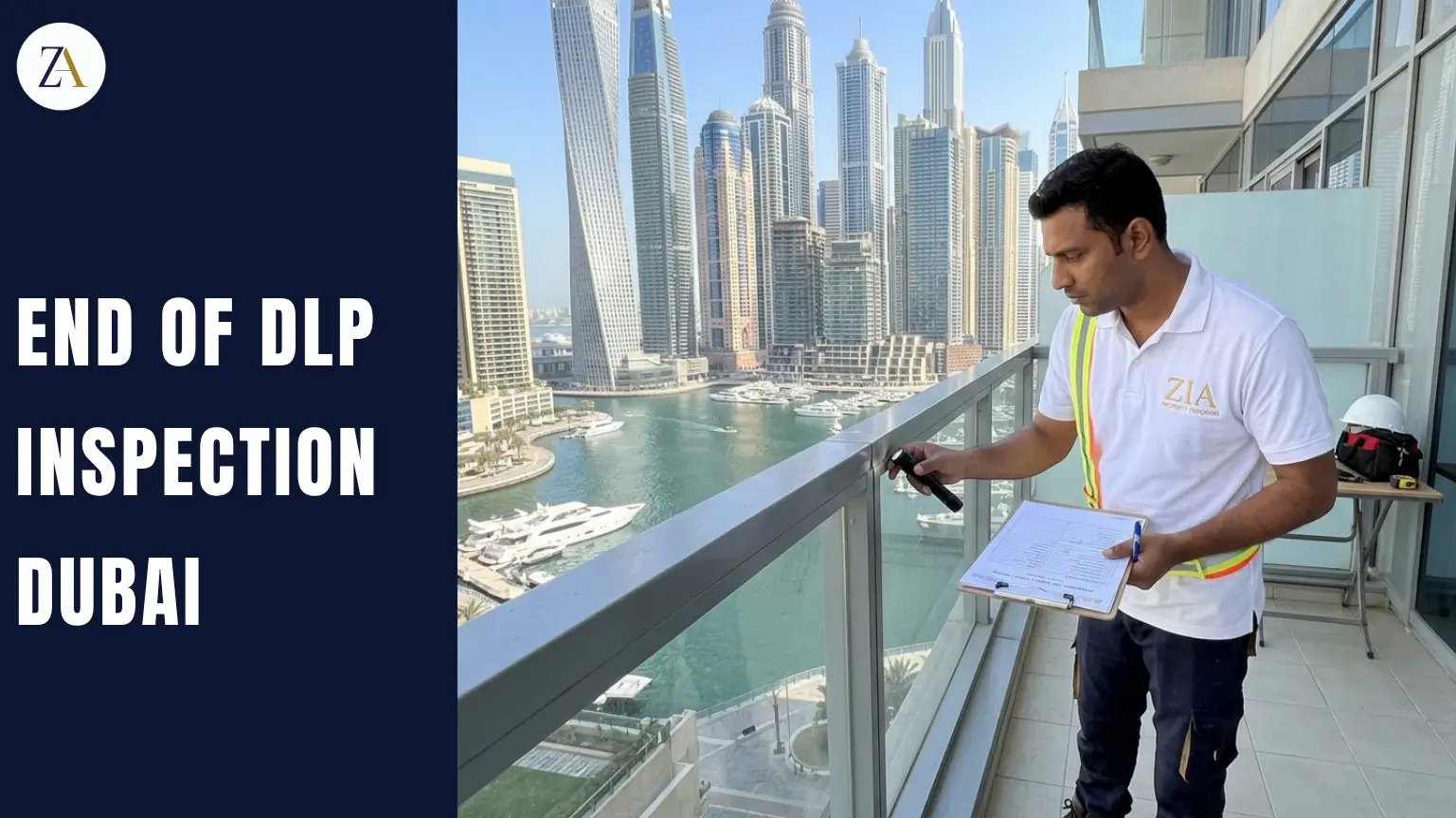
End of DLP Inspection Dubai Final Snagging Check Guide
Purchasing a property in Dubai is a significant transaction, whether for personal residence or foreign investment. But one essential procedure that many property owners forget about is the end-of-DLP inspection in Dubai – a process that can save you money on repairs and maintenance costs down the track.
With your property’s Defects Liability Period (DLP) ending in Dubai, this is the last chance to report property defects to the developer. Failing to do so may result in having to cover the costs of repairs that should be covered under the developers’ warranty.
Here, we will show you why you need an end-of-DLP inspection Dubai and how this can prevent you from losing your property investment in the UAE housing market.
What Is the Defects Liability Period (DLP) in Dubai?
The Defects Liability Period (DLP) is the period following the handover of the property for which the developer is liable to address construction defects and quality control issues.
In Dubai, this period is usually:
- Starts from the date of handover of the property
- Runs for 6 to 12 months (varies by developer and sale contract)
At this time, the owner of the property is able to notify the developer about the workmanship, installations, structure or system failures and the developer is expected to correct the defects without any further fee to the property owner.
Nonetheless, once the property has passed the DLP period in Dubai, the responsibility of repairing it falls upon the property owner, implying it is important to inspect and report the property as early as possible.
What Is an End-of-DLP Inspection?
An end-of-DLP inspection in Dubai is a thorough property inspection just before the expiry of the Defects Liability Period (DLP). The purpose is to detect latent defects, construction defects and system failures that may have arisen over time but were not evident at the time of the handover inspection.
Leave your phone, We’ll call you in 15 min
End-of-DLP vs Initial Snagging Inspection
Inspection Type | Timing | Purpose |
Initial Snagging | At handover | Identify visible defects |
End-of-DLP Inspection | Before expiry | Detect hidden and time-based issues |
While many owners perform a property snagging inspection in Dubai at handover, properties often develop new issues due to environmental exposure and usage—making this final inspection even more important for long-term property quality.
Why End-of-DLP Inspection Is Critical in Dubai
Dubai Climate Reveals Hidden Defects Over Time
Buildings in Dubai face harsh conditions. High temperatures, humidity and constant air conditioning use can gradually reveal hidden flaws in the building structure.
Air conditioning may work fine at first but becomes less efficient after prolonged use. Likewise, seals around windows and bathrooms may deteriorate due to temperature fluctuations, leading to leaks, condensation, and water ingress.
An end-of-DLP inspection Dubai helps identify these time-related property defects, and allows them to be repaired before they become a major problem.
Developers Are Only Liable Within the DLP Period
The key thing to think about when it comes to the Defects Liability Period in Dubai is liability. Throughout this period, the developer is legally responsible for repairing defects in the property’s construction as reported by the property owner.
But this ends at the end of the DLP. This is the case even if the defect was present before but not reported in time; the property owner will be responsible for the repair costs.
So the final end-of-DLP inspection is your last chance to hold the developer to account and address any snagging issues.
Protect Your Property Investment and Long-Term Value
Whether you live in the property, lease it out or use it as an investment, keeping it in good condition is crucial to its value in Dubai’s real estate market.
Neglecting minor problems like cracks, leaks, or fittings can lead to deterioration in the following areas:
- Property resale value
- Rental income potential
- Tenant satisfaction
By conducting a professional DLP inspection in Dubai, you ensure your property remains in excellent condition without unexpected financial burden.
Avoid Expensive Repairs After Warranty Expiry
Dubai’s homeowners often ignore the final DLP inspection and pay the price for it.
For example:
- Air conditioning repairs and replacements can cost thousands of dirhams
- Ceilings, walls and floors can be damaged by water leaks
- Electrical problems could mean rewiring
All of this should be covered during the warranty period of the developer in Dubai, provided it is reported promptly. Having the property assessed by a professional will ensure you get the repairs you need from the developer.
Key Signs Your Property Needs an End-of-DLP Inspection
These are signs that your home or property needs a snagging inspection in Dubai:
- Air conditioners take longer to cool rooms
- Musty smells that could be mold or dampness
- Cracks in walls or ceilings
- Water stains or damp patches
- Doors and windows are not closing properly
- Unexpected rises in utility bills
These are common signs of problems that should be investigated before the end of your DLP guarantee period.
When Should You Book an End-of-DLP Inspection in Dubai
Ideal Timing: 1–2 Months Before Expiry
Timing your end of DLP inspection Dubai is important. Ideally, this should be one to two months before your DLP expires.
This will give you time to:
- Thoroughly inspect the property
- Receive a snagging report
- Submit defects to the developer
- Give time for the work to be rectified
Why Early Booking Is Important
Leaving things to the last minute can be risky. It can leave developers insufficient time to follow up on issues before the warranty expires.
Early inspection ensures the following:
- Follow up with developers
- Better coordination and communication
- Resolution of all defects
Recommended Timeline for Property Owners
To stay on the safe side, follow this simple plan:
- Month 10 → Book inspection
- Month 11 → Submit snagging report
- Month 12 → Ensure repairs are completed
This structured approach ensures maximum benefit from your DLP period in Dubai.
Common Defects Found Before DLP Expiry in Dubai Properties
The following are among the most common findings during end-of-DLP inspections in Dubai:
- Poor AC cooling performance
- Ceiling and wall cracks
- Bathroom or kitchen leakage
- Loose or hollow tiles
- Lack of proper window and balcony sealant
- Door alignment problems
- Electrical faults
These issues may arise over time and can have a profound effect on your property if not addressed.
What Happens If You Miss the End-of-DLP Inspection?
It’s crucial to understand the risks involved in missing an end-of-DLP inspection in Dubai.
After the DLP, all problems you hadn’t addressed become your responsibility. These can develop into larger structural and system problems over time and cost more to repair.
And without an inspection report, you cannot:
- Demonstrate that defects were present in the DLP
- Request developer intervention
- Avoid disputes or delays
Owners often have to invest thousands of dollars in fixing subsequent repairs that should have been covered by the warranty. This can impact your budget and the quality, safety and property value of your home.
Why Choose Us?
At Snagging Inspection, we combine local experience with a meticulous process of providing precise and consistent end-of-DLP inspections in Dubai. We have certified inspectors who are aware of the most frequent malfunctions of a property in the UAE real estate – AC malfunctions, unnoticed problems with moisture, etc.—and provide sophisticated inspection equipment to make sure nothing has been missed.
We are result-oriented, fast and transparent. We are quick to book and quick to deliver reports; that is how we will make you act before you run out of DLP. You will be safe to report defects, obtain effective interaction with developers and invest in property without the needless hassles with our professional assistance.
Conduct Inspections Before Handover
The ideal time for snagging is immediately before handover. Inspecting too early can mean some defects are missed. Waiting until after handover can limit your options for warranty repairs.
Document Everything
A detailed snagging report with photographs, descriptions, and recommendations is essential. Documentation provides evidence for:
- Warranty claims
- Dispute resolution
- Future maintenance planning
Prioritize Safety and Structural Defects
While cosmetic issues are important, safety and structural defects should be addressed first. These defects pose the greatest risk to occupants and property value.
Follow Up After Repairs
After the developer fixes the snagging issues, a follow-up inspection makes sure everything is correct. This step completes the quality assurance cycle.
Frequently Asked Questions
What is a snagging list?
A snagging list is a detailed report of all the defects found during a property snagging inspection. It includes photos, defect descriptions, severity ratings, and recommendations for rectification.
How much does a property snagging inspection cost?
The cost varies depending on property size, complexity, and location. Typically, a professional inspection ranges from $300 to $1,000 for residential properties. Costs are an investment compared to potential repair expenses.
When should a snagging inspection be done?
The best time for a snagging inspection is immediately before handover of a new build or renovated property. This ensures defects are caught while the developer is still responsible.
Can I perform snagging myself?
Homeowners can do minor inspections themselves. But professional inspectors have the experience, tools, and knowledge to find hidden or complex defects. These are often missed by others.
Does snagging cover both cosmetic and structural defects?
Yes, snagging checks all types of defects. This includes structural, mechanical, electrical, and cosmetic issues. However, structural and safety defects are prioritized due to higher risk.
How long does a snagging inspection take?
Inspection duration depends on property size and complexity. A typical residential property inspection may take 2–4 hours. Larger commercial properties can take several days.
What happens after defects are identified?
After the defects are recorded, the snagging report is sent to the developer for fixing. Follow-up inspections ensure all issues are resolved before handover.
Are snagging inspections legally required?
Snagging is not required by law. However, snagging is highly recommended. It protects buyers from hidden defects and helps meet warranty requirements.
Conclusion
Property snagging is an important quality check. It helps protect homeowners, investors, and developers from construction defects. By spotting structural, safety, mechanical, and cosmetic issues early, snagging prevents expensive repairs. It also keeps property value high and ensures a safe, comfortable living environment.
A professional snagging inspection makes sure defects are fixed under warranty. It also keeps builders accountable. Plus, it makes sure the property meets regulations and buyer expectations. Snagging checks everything, from uneven floors and plumbing leaks to cosmetic issues. It acts as a full safeguard against construction defects.