
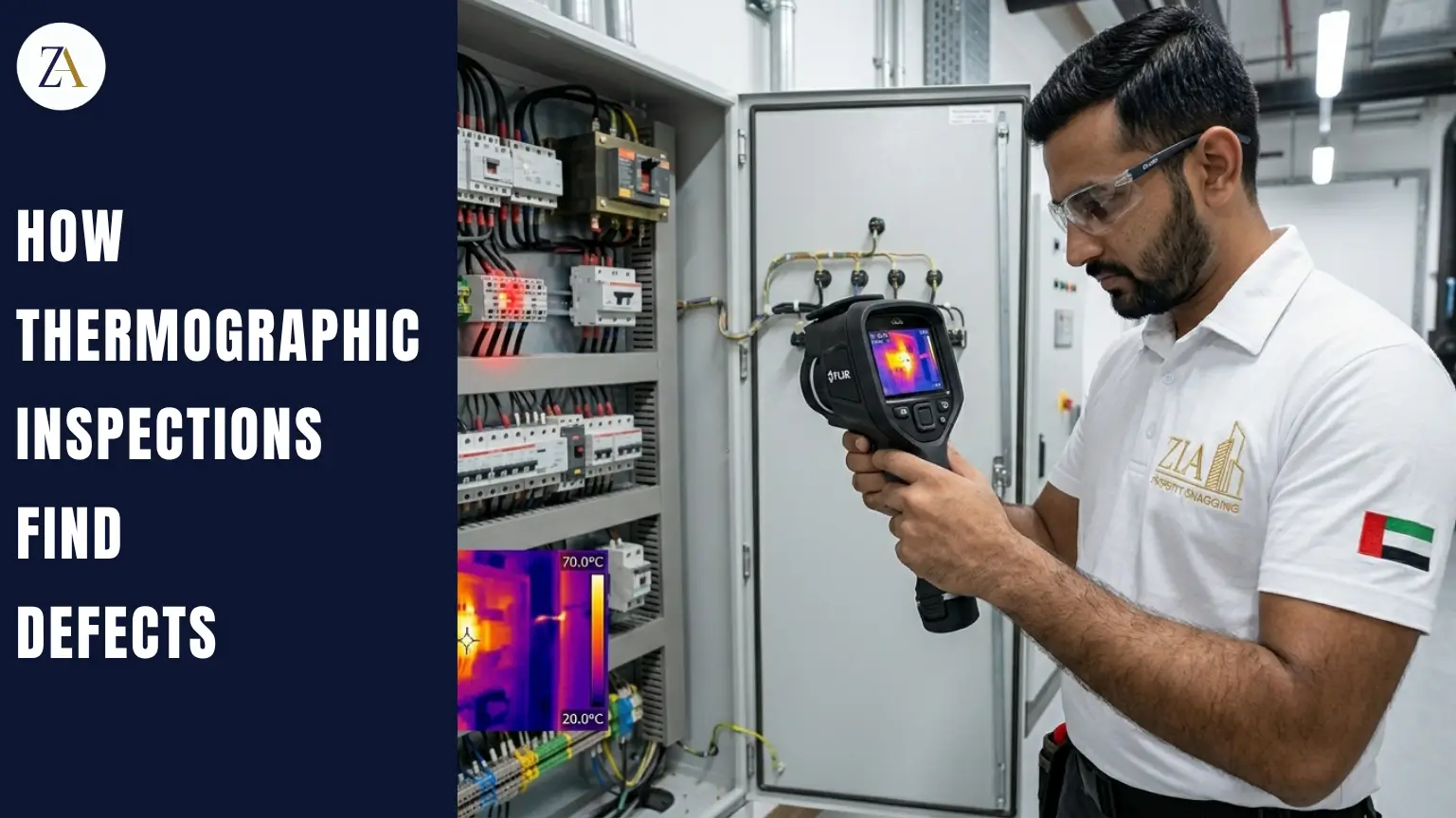
How Thermographic Inspections Find Defects Dubai 2026
Dubai’s real estate market is one of the most competitive and speedy around the globe. Whether you are thinking about purchasing a brand new apartment in Business Bay, a villa in Palm Jumeirah or an off-plan apartment in Dubai Hills, you want to make sure that you are paying the correct price for it. This is where thermographic inspections are needed, actually.
Most buyers want to see what they can get—the tiles, the paint, the view. However, the true worth of any property is never visible—it’s the pipes behind the walls, the wiring in the panels, and the insulation in the ceilings. Thermographic inspections can tell all of that and do so in a manner that not only can save you money on your investment but can also help you to become a stronger negotiator and really add value to your home in the long run.
What Is a Thermographic Inspection?
Thermographic inspection, or an infrared inspection or a thermal imaging inspection, is a noninvasive inspection that uses an infrared camera to detect temperature differences on a surface. These cameras not only can take a normal photograph, but they can also take heat signatures, which is the ability to detect every anomaly that could be invisible to the naked eye.
What Gets Scanned
Your inspection tech will inspect your walls, ceilings and floors, AC units, electrical panels, and plumbing, and then you will get a detailed report about any issues and the severity of the issues. If you have a water leak in a wall, you’ll experience a temperature change as a result of the water leak. An overloaded electrical connection produces heat. Without insulation, cold or hot air can flow through in obvious ways that are seen on a thermal image.
Leave your phone, We’ll call you in 15 min
Non-Invasive and Non-Destructive
Best of all, no drilling, cutting, or demolition is required. A complete view of your property without damaging it.
Why Dubai Properties Specifically Need This
The Climate Challenge
Dubai’s climate is a peculiar one, which most cities in the world do not have to face. The humidity in coastal areas is very high and temperatures are regularly above 45 degrees Celsius in the summer months. The blend of these makes ideal conditions for hidden damage to the property that occurs over time.
The impact of the building systems
Dubai’s air conditioning systems operate almost all year round, for 6 to 8 months. The ceaseless thermal operations will cause the ductwork to expand and contract, the insulation to lose its effectiveness, and seals to become less effective. Moisture can enter walls through small gaps and condensation, and once it’s in, it causes damage such as mould, structural damage, and electrical damage.
The New Construction Factor
In the past decade, Dubai has witnessed a tremendous amount of construction. In some cases, the property might be handed over with defects, which are not apparent at the time of delivery, because of the speed of delivery and market requirements. These are not the problems that will be discovered by a normal visual walkthrough, but they will be discovered during a thermal scan.
How Thermographic Inspections Directly Enhance Property Value
Early Detection Saves Serious Money
If detected early, a small water leak behind bathroom tiles can be repaired for a small price, but if it goes unnoticed and the tiles are removed, the wall surface is damaged, and mould is growing, it will cost a lot more to repair. Prevention is early detection; that is, addressing a small issue before it becomes a large issue.
Enhanced Negotiation Power at Handover & Resale
If you are purchasing a new build home and the inspection uncovers any concealed defects, you will have recorded proof to take back with you to the Defects Liability Period with the developer. According to Dubai law, the developers are responsible for rectifying the non-structural and structural problems within this period. With resale properties, there are definite reasons to renegotiate the price or to ask for repairs before transfer if there are identified issues.
Greetings, Tenants and Buyers
Buyers and landlords will find it far more convenient to sell or let a property that has a certified clean thermal inspection report than one that doesn’t. It communicates to prospective tenants or salespeople that the home has been well taken care of, and there are no unpleasant surprises in store. That transparency given on record is valuable in a market as competitive as Dubai.
Lower Energy Costs and Better Returns
Gaps in insulation or leaky ducting use up much more electricity to keep homes at a comfortable temperature. This can result in thousands of dirhams being paid for the annual cost of your AC in Dubai, which is already expensive. The energy-saving solutions identified as a result of the thermal scan will directly impact the energy consumption of the property and make it more attractive to tenants and more profitable for investors.
Insurance and Mortgage Benefits
In the UAE, certain insurance companies and lenders take the condition of a property into account when calculating insurance premiums or financing. When you have a professionally documented thermal inspection, it helps to make the property’s condition credible, which can help to make the process smoother.
What Does a Thermographic Inspection Actually Find?
Let’s take a look at some of the most common problems that thermal inspections reveal in Dubai homes:
Hidden Moisture and Water Infiltration
Water that accumulates inside walls or under floors, commonly as a result of plumbing leaks or inadequate waterproofing in damp environments, such as bathrooms and kitchens.
Electrical fires can start due to overloaded circuits, loose connections, and faulty wiring if not addressed. Thermal imaging detects these early in the process and before they may cause visible damage or pose a danger of failure.
AC Ductwork Inefficiency
Ducting with gaps, tears, or poorly connected sections allows cool air to leak into wall cavities and not into the rooms it’s meant to cool, causing a big energy bill.
Insulation Voids and Thermal Bridges
Place where insulation is missing, incorrectly installed, or damaged. These areas can let the heat into the building and make the AC systems more efficient.
Plumbing Leaks Behind Tiles And Walls
Water has been leaking silently for months and years from the supply lines or drainage system, which has caused structural damage and conditions conducive to mould growth.
Structural Anomalies
Unusual temperature changes may be signs of structural problems in the building, such as voids in the concrete or a section of a building with a material that has different characteristics than the rest.
Energy Loss Zones
Windows, doors, and unsealed exterior walls that allow heat to escape the building increase your utility costs.
Thermographic Inspection at Handover vs. Resale — Which Matters More?
At Handover — Use the Legal Window
At handover, timing is everything. Dubai developers are legally bound by the Defects Liability Period — one year for non-structural defects and ten years for structural ones under Dubai Law No. 6 of 2019. A thermal scan conducted before or right after handover gives you documented proof of any defects, so the developer fixes them at their own cost, not yours.
At Resale — Know What You Are Buying
For resale properties, thermal imaging removes the guesswork. A freshly painted apartment can hide years of moisture damage or a slow plumbing leak. The inspection tells you exactly what you are buying before you commit.
When You Are Selling
If you are selling, a pre-sale thermal inspection works in your favour too. It shows buyers you have nothing to hide, builds confidence, and removes the biggest barrier to closing a deal quickly at your asking price.
A Real Example from Dubai
The Hidden Defects No One Could See
One of the clearest illustrations of thermal imaging value comes from a handover inspection conducted in Dubai Hills. The unit looked immaculate — fresh finishes, no visible defects, nothing that a standard walkthrough would flag.
What the Thermal Scan Revealed
The thermal scan revealed hidden moisture behind the bathroom tiles, a significant AC duct gap losing cool air into the ceiling cavity, and a low-level electrical hotspot in one of the distribution panels. None of these issues were visible. All of them were real.
The Outcome
The buyer presented the thermal imaging report to the developer before accepting handover, and all three issues were repaired at the developer’s cost. The buyer avoided an estimated AED 18,000 in repair costs that would otherwise have been their responsibility entirely.
How Zia Property Snagging Thermographic Inspection Works
The Inspection Process
We use professional-grade infrared cameras to inspect all walls, ceilings, electrical panels, AC units, and plumbing systems without drilling or damaging your property. Each thermal detection is accompanied by a standard image for a clear comparison of eye vs. camera.
The Report
A detailed report with annotated findings, severity ratings, and actionable recommendations will be delivered to you within 24 hours, formatted to be easily read and understood by both you and your developers, if required.
Our Independence
We are InterNACHI-certified, fully independent, and have no ties to any repair companies. What we find is what we report — nothing more, nothing less.
Frequently Asked Questions
What does a thermographic inspection detect in Dubai properties?
It can uncover moisture, water leaks, electrical hotspots, insulation gaps, AC duct inefficiencies, plumbing leaks behind walls, and structural anomalies—things that you can’t see in a regular visual inspection.
What is the cost of the thermographic inspection in Dubai?
Depending on the size and type of property, costs will differ. Thermal Imaging is not an additional service provided; it is integrated into the normal inspection package at Zia Property. Give us a call, and we can provide a quote for your particular property.
Is thermographic inspection required before property handover in Dubai?
It is not required by law but highly recommended. By understanding the Defects Liability Period in Dubai, you can make the most of your rights to get your property repaired without having to pay anything. The best way to determine and document defects in that window is to have a thermal inspection.
How does thermal imaging increase property resale value?
It does so in two ways: firstly, it helps identify problems that you can resolve before you offer a house at the asking price, and secondly, it gives the buyer documented proof of the house’s condition, eliminating uncertainty and providing confidence to pay the full market price.
How long does a thermographic inspection take?
If you have a typical apartment, it will take around 2-3 hours. This can be longer for larger villas or commercial ones. A full report is submitted by us within 24 hours of the inspection.
Conclusion
Dubai’s Real Estate Market is a market that gives rewards to an informed buyer and active investor. One of the best ways to preserve the value of a property, either before you accept a handover, before you buy a resale home, or before you sell or lease, is to have a thermographic inspection.
What you cannot see can cost you significantly. Thermal imaging makes the invisible visible, and in a market where properties represent major financial decisions, that visibility is genuinely worth paying for.
If you are ready to book a thermographic inspection or want to learn more about what our inspection service covers, get in touch with the Zia Property Snagging team today. We inspect every property with the same level of care and precision we would want applied to our own.