

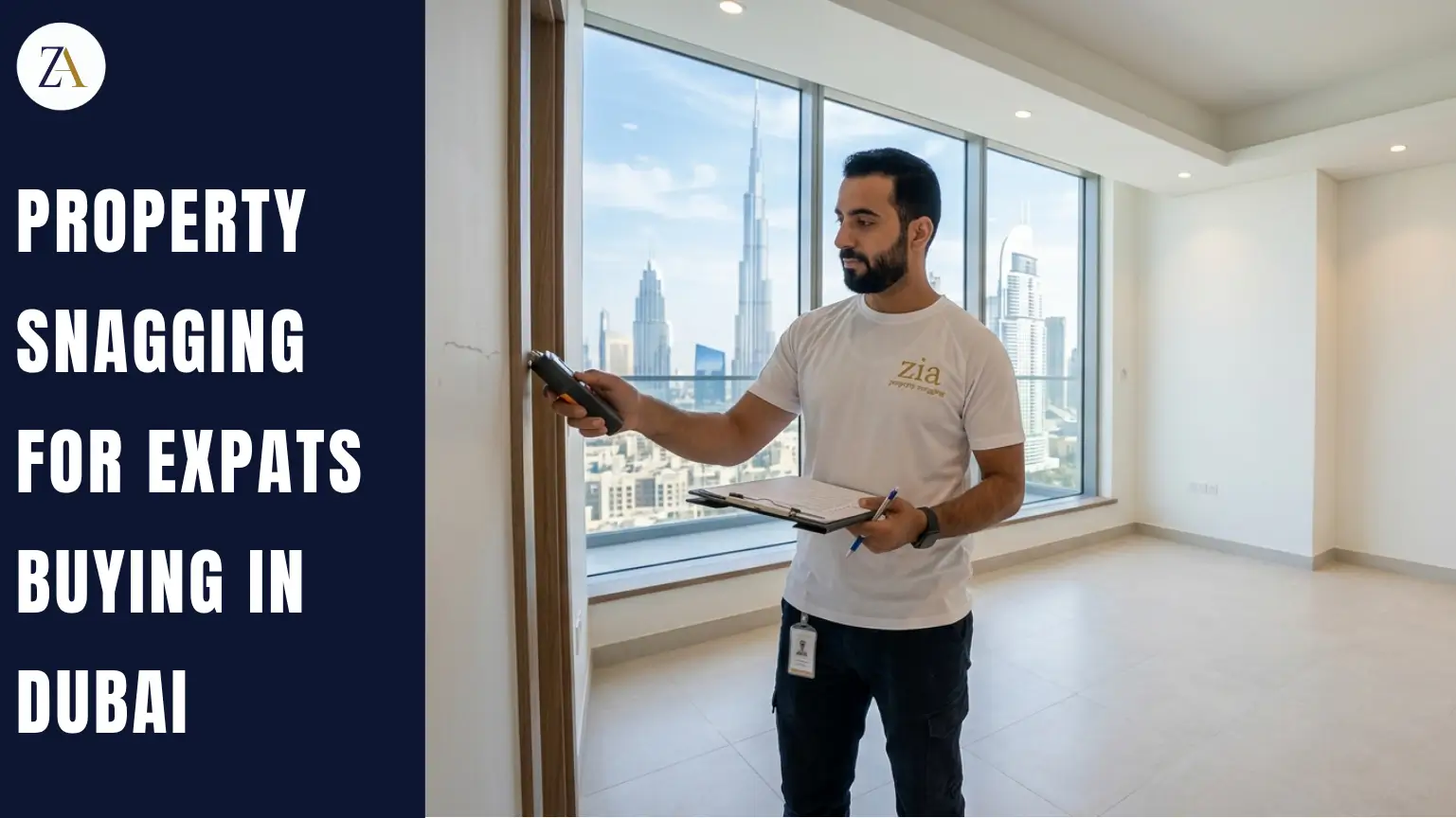
Property Snagging for Expats Buying in Dubai: Full Guide
If you are an expat looking to purchase a home in Dubai, it’s an exciting journey, but you will encounter several risks that are not common to local buyers. You might be entering into contracts from other countries, not having the opportunity to see the house in person, and being accustomed to a construction sector that differs from back home. That is why property snagging is of greater importance to expats than to almost anyone else in the Dubai market.
Whether you’re an overseas or recently arrived buyer who’s getting ready for handover in 2026, this guide covers all the bases: your legal obligations, how to get the keys to a property remotely, what you can expect at the inspections, what to expect in terms of costs, and the usual pitfalls that catch out second-time home buyers.
Why Snagging Matters More If You're an Expat
Local buyers might have people they know, people in their families, or colleagues who have gone through a Dubai handover before. Expats usually don’t. You’re learning UAE property law, developer practices, and construction terminology all at once—often under time pressure, since developers set fixed handover windows.
In addition, many expat buyers buy off-plan from overseas, which means that the first time they will see their unit could be the day they are expecting the keys. Many problems are apparent to a local expert who has seen many homes like this, but not to someone who has not. A problem that is apparent to a local expert who has seen a lot of properties like this is not noticed by someone who has not.
Property snagging closes that gap. A certified inspector checks the unit against build-quality standards on your behalf—regardless of where you are in the world—and gives you documented leverage to have issues fixed before you accept the property.
What Is Property Snagging?
Property snagging is a professional inspection carried out before or shortly after handover to identify construction defects, unfinished work, or substandard finishes. It covers structural elements, MEP systems (mechanical, electrical, and plumbing), waterproofing, and finishing details like tiling, paintwork, and fixtures.
For expat buyers specifically, snagging also serves a second purpose—residencynly detailed, independent record of your property’s actual condition at handover — something you can refer back to later if disputes arise, especially if you’re not living in Dubai full-time and can’t easily revisit the site.
Leave your phone, We’ll call you in 15 min
Your Legal Rights Under RERA as an Expat Buyer
One of the most reassuring facts for expat buyers is that RERA (the Real Estate Regulatory Agency, part of the Dubai Land Department) protects all buyers equally—residency status doesn’t reduce your rights.
Here’s what that means in practice:
- Developers are legally required to rectify reported defects during the Defects Liability Period (DLP), typically the first 12 months after handover
- You have the right to bring an independent snagging inspector before accepting keys—developers cannot legally block this
- Your snagging report becomes formal documentation you can submit directly to the developer to request repairs
- RERA approval on an inspection company means the report carries regulatory weight, making it harder for developers to dismiss your findings
Being based outside the UAE does not weaken any of these rights. What changes is how you exercise them, which is where remote snagging arrangements come in.
Buying Remotely: Snagging When You Can't Be There in Person
This is the part most general “how to buy property in Dubai” guides skip entirely—and it’s often the biggest practical concern for expat buyers.
A snagging inspection is not necessarily required to be carried out in Dubai physically. The typical scenario is as follows:
- Power of Attorney (POA): If you are an expat buyer, you can assign a POA holder (Attorney, relative, or trusted representative) to handle any tasks related to handover on your behalf, such as arranging the inspection.
- Deliver the report remotely: A reputable snagging company will come out and do their own inspection and email or WhatsApp the photos, the severity of the defects and the locations so you can review from anywhere.
- Additional video walkthroughs: Some home inspectors provide a video conference as a follow-up to the inspection, allowing you to view the issues that are being discussed in real time
- Direct developer correspondence: Your POA holder or the inspection company can submit the report to the developer on your behalf, keeping the rectification process moving even while you’re overseas
The key is booking your inspection before your POA holder or representative signs any handover acceptance documents—once accepted, your negotiating position weakens significantly.
When to Book: Off-Plan Handover Timeline for Expat Buyers
Timing is everything, and it’s easy to misjudge from abroad. As a rule:
- Book your snagging inspection as soon as you receive your official handover notice from the developer
- Complete the inspection before signing the handover paperwork or accepting keys
- Allow time in your schedule (or your POA holder’s) for the developer to rectify defects—this can take anywhere from a few days to several weeks, depending on severity
- Request a free re-inspection once repairs are reported complete to confirm the work was actually done properly
Developers sometimes push buyers — especially those unfamiliar with the local process—to sign quickly. Don’t let distance or time-zone pressure rush this step.
What a Snagging Inspection Actually Covers
A thorough inspection typically checks:
- Structural elements — wall cracks, ceiling issues, settlement problems
- MEP systems — electrical wiring and sockets, plumbing connections, AC performance and drainage
- Waterproofing — bathrooms, kitchens, balconies, and any wet areas
- Finishes — tiling alignment, paint quality, door and window alignment
- Fixtures — cabinetry, hardware, and fittings
Better inspection companies also use tools like thermal imaging cameras and moisture detectors to catch issues that aren’t visible to the naked eye—something particularly valuable for expat buyers who won’t be around to notice slow-developing problems like hidden leaks.
Common Defects Found in Dubai New Builds
Across thousands of inspections in the Dubai market, the same issues come up repeatedly:
- Hairline cracks in walls and ceilings
- Uneven or hollow floor tiles
- Poor paint finish or visible touch-up marks
- Incomplete grouting in bathrooms
- Misaligned doors and windows
- AC drainage issues
- Plumbing leaks under sinks
- Faulty electrical sockets or switches
- Inadequate waterproofing in wet areas
Off-plan properties in newer or fast-developing areas tend to show slightly higher defect rates than established, ready communities—something worth factoring in if you’re buying an off-plan unit from overseas without local eyes on the ground during construction.
Cost of Snagging Inspections in Dubai 2026
Snagging costs in Dubai vary by property type and size:
- Studios and one-bedroom apartments: typically start from AED 999–1,499
- Larger apartments and townhouses: priced based on square footage
- Villas and penthouses: custom quotation, generally higher due to size and complexity
- Express reports: available in some cases within 6–12 hours for an added fee, useful if your handover window is tight
For expat buyers, this cost is genuinely one of the smallest expenses in the entire purchase process—and arguably the one with the highest return, since it can save you from taking on repair costs that should legally be the developer’s responsibility.
Choosing an Independent Snagging Company as an Expat Buyer
Since you likely can’t personally vet a company through local word-of-mouth, look for these credentials before booking:
- RERA approval — confirms the company meets Dubai Land Department’s regulatory standards
- DED license — confirms it’s a legally registered business in Dubai
- InterNACHI certification — an internationally recognized inspection standard
- Full independence from developers — no commercial relationship with the builder, so findings aren’t softened
- Clear reporting turnaround — ideally a written report within 24 hours, with photos and severity ratings
Avoid any inspector recommended directly by the developer—a genuinely independent inspection only works for you if the inspector has zero financial relationship with the party whose work they’re checking.
Red Flags: Developer Pressure Tactics on Expat Buyers
Because expat buyers are often less familiar with local norms, some developers apply more pressure than they would with experienced local buyers. Watch for:
- Being told an inspection “isn’t necessary” or “isn’t allowed” before handover
- Pressure to sign acceptance documents immediately, before you’ve had time to arrange an inspection
- Vague or rushed responses when you ask about the Defects Liability Period
- Reluctance to provide handover notices in writing
None of these are legally valid reasons to skip snagging. If you encounter this, it’s worth treating it as a signal to move more carefully, not less.
Frequently Asked Questions
Can I book a snagging inspection in Dubai if I'm not physically in the country?
Yes. Most reputable snagging companies can inspect on behalf of a Power of Attorney holder and deliver the full report to you digitally, wherever you are.
Does my residency status affect my legal right to snag a property?
No. RERA protects all buyers equally, regardless of residency status or nationality—your rights as an expat buyer are the same as a local buyer’s.
What's the best time to book a snagging inspection as an overseas buyer?
Book immediately after receiving your handover notice, and complete the inspection before your POA holder signs any acceptance documents.
Will developers accept a snagging report submitted on my behalf by a POA holder?
Yes, provided the POA is properly authorized. Reports are typically accepted directly by major developers regardless of who submits them.
What happens if I'm overseas when repairs need to be verified?
A free re-inspection can usually be arranged and completed on your behalf, with results and photos sent to you before you formally accept handover.
Conclusion
Buying property in Dubai as an expat is a genuinely exciting step—but distance shouldn’t mean less protection. With the right POA arrangement, an RERA-approved independent inspector, and a clear understanding of your legal rights, you can go through handover with the same confidence as a local buyer, even from thousands of miles away.
If you’re preparing for handover and want a fully independent, RERA-approved snagging inspection—with reports delivered digitally wherever you are—get in touch with Zia Property Snagging for a free quote and same-day booking.
