

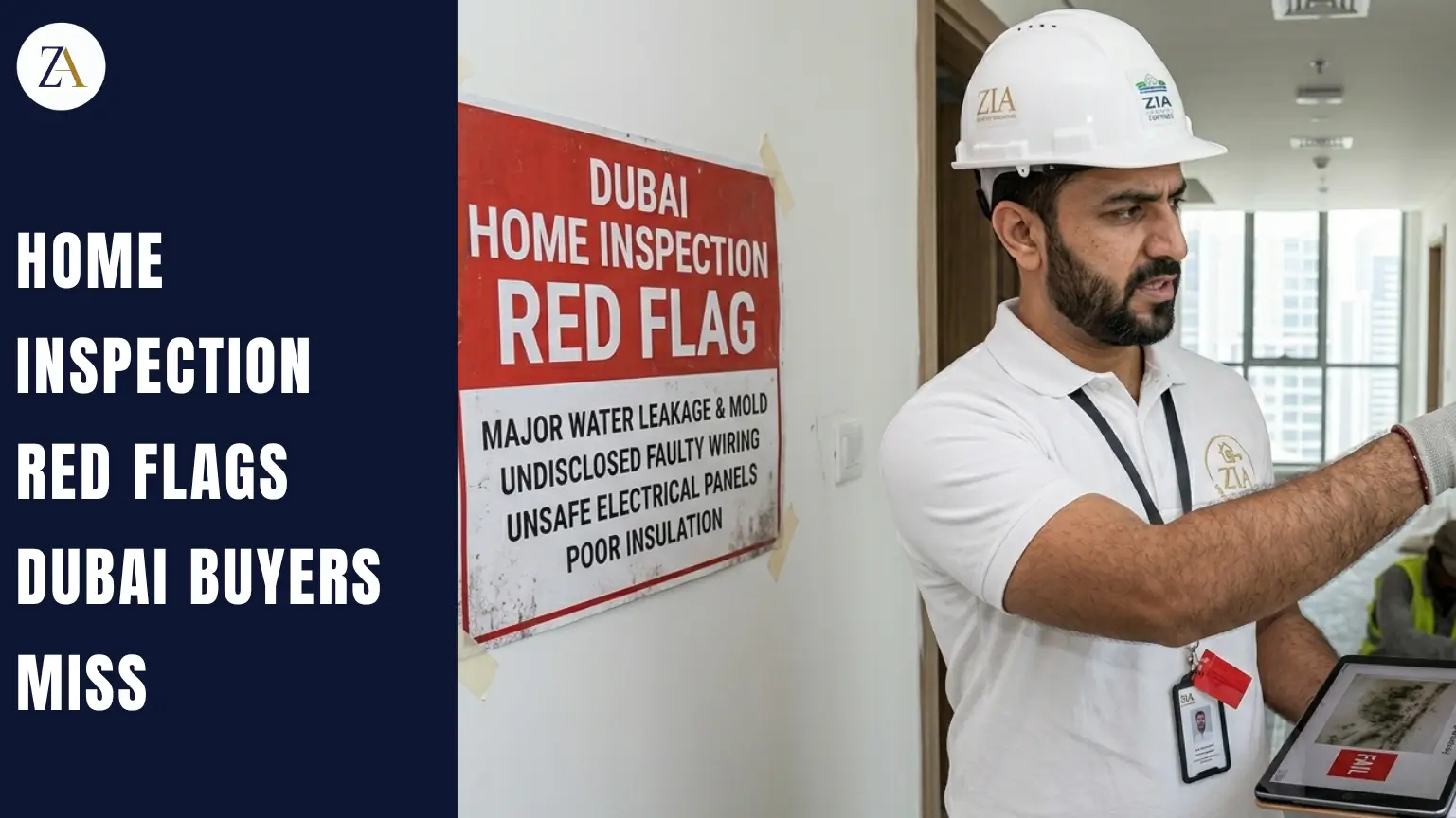
Home Inspection Red Flag Dubai Buyers Miss in 2026
Dubai has thousands of buyers annually in its real estate industry, whether they are locals or foreign investors buying dream homes in Downtown Dubai, Palm Jumeirah, Dubai Marina and Business Bay. One of the best moments of life is getting your keys.
However, that is the truth many buyers will learn too late: many of those dream properties come with latent flaws. Cracks in the structure, hidden with new paint. Leaks in plumbing behind tiles in bathrooms. Electrical wiring that does not meet UAE safety requirements. The quality of AC systems is not properly controlled.
At ZIA Property Snagging, our InterNACHI-accredited civil engineers have done more than 1200 inspections throughout Dubai. In our experience, most of our properties have some defects that are easily overlooked by buyers, not because the buyers are irresponsible but rather because they are not aware of what to look at.
This guide discloses all the red flags of home inspections that Dubai buyers disregard. Read it and then put away your handover papers.
Why Home Inspection Red Flags Matter More in Dubai
The property market in Dubai is characterized in its own way, and therefore, inspection is more important in this city than in almost any other.
The speed of construction is amazing. Whole communities are developed in a few months to satisfy high demand, and there is a risk that quality control measures are overlooked or omitted. Off-plan purchases (extremely popular in Dubai) imply that buyers can get their property several years after the signing, having no experience of the construction process.
Dubai’s climate also creates specific building challenges that simply do not exist in other markets:
- The very hot summer temperatures above 45°C make the materials wear out more rapidly than standard material ratings by manufacturers.
- The presence of high humidity in the coastal areas such as Marina and Palm Jumeirah enhances the growth of molds.
- Villa communities have sandy soils that result in gradual movements of the foundation over time.
- Pipes are corroded much faster when they are supplied with hard water and the water is rich in minerals.
The financial consequences are serious. It has been found that the average cost of repairing defects that are hidden is AED 5,000, with the most significant problems costing over AED 52,000. The developers are liable to rectify defects under the Defect Liability Period (DLP) of Dubai; however, you have to report the defects promptly. After the DLP lapse, such repair expenses are all on you.
Critical Home Inspection Red Flags Dubai Buyers Commonly Miss
Structural Cracks — Not All Cracks Are Normal
Most buyers will not think much of a wall crack but think it is normal settling. This is one of the assumptions that is the most expensive in Dubai real estate.
Plaster hairline surface cracks are not typically serious. Nonetheless, the next ones are real structural red flags, which have to be evaluated by professional means:
- Diagonal cracks appearing near the window and door corners
- Cracks running continuously from floor to ceiling
- Wide cracks at column-to-wall joints
- Any cracks on balcony slabs or load-bearing walls
The sandy soil of Dubai leads to a displacement of the foundations of villas over time especially in reclaimed or desert areas. This movement causes structural stress cracks that are a sign that the building is moving under you—not a cosmetic problem.
Cracks are evaluated by certified civil engineers at ZIA who use professional tools. A visual inspection is never sufficient.
Leave your phone, We’ll call you in 15 min
Water Leakage and Moisture Damage
The most prevalent and serious issue of Dubai properties is water-related defects, a problem that is the most difficult to detect by untrained buyers. In some cases, developers put fresh paint on top of water-stained walls just before handing them over to cover the damage temporarily.
Red flag signs to look for:
- Yellowish or brownish stains on walls or ceilings
- Bubbling or peeling paint anywhere in the property
- Persistent damp or musty smell in bathrooms and utility areas
- Soft or spongy spots in the walls when gently pressed
- Dark discoloration around bathroom grout lines
The moisture that gets trapped in the humid coastal areas of Dubai develops mold within a relatively short period of time, posing severe health threats as well as structural damage. ZIA also employs the use of thermal imaging technology which is able to detect moisture that is fully concealed within the walls that the naked eye cannot detect, yet in a few months of occupancy, this can cause severe damage.
Faulty Plumbing Installations
Plumbing is generally done in the last and time-strained phase of the construction process. Consequently, plumbing malfunctions are incredibly prevalent in the new-build residential area in Dubai.
Leaks within the waterline under the kitchen and bathroom sinks are the most common. These drip unobtrusively in cabinets where water slowly deteriorates the flooring and structure without any noticeable effect until severe damage has already taken place.
Other plumbing red flags that buyers commonly miss include:
- Low water pressure throughout the property
- Slow or blocked drainage in showers and bathtubs
- Visible corrosion or discoloration around pipe connections
- Water pools on bathroom floors after use
The hard water of Dubai causes the corrosion and the deposition of scales to form much more rapidly than in European or North American climates, so that even the slightest defects in installation cause severe difficulties much earlier than the purchaser thinks possible.
Electrical Wiring Red Flags
Electrical defects are potentially the most dangerous home inspection red flag — creating real fire and electrocution hazards. The most serious problems are hidden inside walls, completely invisible during a standard walkthrough.
Visible warning signs to check during your visit:
- Loose or wobbly sockets that move when plugged into
- Light switches that spark when operated
- Flickering lights are not caused by a faulty bulb
- Circuit breakers that trip repeatedly for no clear reason
- Burning or plastic smell near electrical panels or outlet areas
Beyond the visible, non-compliance with UAE electrical safety standards is a serious legal issue. Properties with non-compliant wiring fail insurance inspections and create ongoing liability for the owner. Missing or non-functioning smoke detectors are a critical red flag — Dubai Civil Defence regulations require functioning smoke detectors in all residential properties.
AC System Problems — Dubai's Number One Missed Red Flag
No home inspection red flag is more uniquely critical in Dubai than a faulty AC system. With outdoor temperatures regularly exceeding 45°C, air conditioning is not a comfort feature — it is essential for habitation.
Yet AC defects are consistently underreported at handover because many buyers visit during mild spring or autumn weather and never run the AC long enough to identify problems. By the time the first serious summer arrives, the DLP may be nearing expiry.
Key AC red flags to check before handover:
- Rooms that do not cool evenly despite the system running at full capacity
- Unusual rattling, vibrating, or grinding noises from indoor or outdoor units
- Water dripping or condensation from indoor AC units
- Visible gaps or poor insulation in ductwork
- Ice formation on the outdoor unit indicates a refrigerant leak
In Dubai’s new-build properties, AC systems are often installed last, receiving the least quality control attention of any building system. ZIA’s comprehensive AC inspection covers all indoor and outdoor units, ductwork, ventilation, and thermostat functionality.
Poor Finishing, Windows, and Door Defects
Finishing defects are the category buyers most often dismiss as minor, but they are direct indicators of overall construction quality and frequently conceal deeper issues beneath the surface.
Common finishing red flags include:
- Uneven paint application, visible brush marks, or already bubbling and peeling surfaces
- Misaligned tiles and cracked or unfilled grout lines in bathrooms and kitchens
- Hollow-sounding tiles are detectable by tapping gently with a coin
- Scratched or chipped flooring delivered as new
Windows and doors deserve equal attention. Gaps in window seals allow hot, dusty outside air to enter the property continuously—forcing your AC system to work far harder and dramatically increasing electricity bills. Doors that do not close properly, swing open independently, or require force to shut indicate frame alignment failures from poor installation or building movement.
Always bring your Sales Purchase Agreement to your inspection and verify that all materials and finishes match exactly what was specified in your contract.
The Biggest Red Flag of All — Developer Blocking Your Inspection
If any developer or representative tells you that you cannot bring an independent inspector to your handover or pressures you to sign documents before inspection is complete, treat this as the most serious red flag of all.
Under RERA’s framework, buyers have legal rights during the handover process. Restricting independent inspection almost always signals that the developer is aware of significant defects they do not want professionally documented. Never sign handover acceptance documents under pressure. Once signed, establishing developer liability becomes significantly harder and legally more complex.
How ZIA Catches Every Red Flag Before You Sign
ZIA Property Snagging protects Dubai buyers with a process built specifically for this market:
- Every inspection conducted by an InterNACHI-certified civil engineer — not a contractor or trainee
- 400-point checklist covering all structural, MEP, finishing, waterproofing, and safety systems
- Thermal imaging is used as a standard to reveal hidden moisture inside walls
- Professional report delivered within 24 hours in a legally defensible format
- Free re-inspection to confirm every defect is properly resolved before formal acceptance
- Inspections from AED 999 with full coverage across all 7 UAE Emirates
Book your ZIA inspection before your handover appointment — not after. The earlier you inspect, the stronger your legal and practical position with the developer.
Frequently Asked Questions
What are the most common home inspection red flags in Dubai?
Water leaks, structural cracks, plumbing issues, electrical faults, and AC problems are the most common defects across all property types.
Can I bring an independent inspector to my Dubai property handover?
Yes, buyers can hire a third-party inspector. If a developer refuses, it’s a red flag and can be reported to RERA.
How much does a professional home inspection cost in Dubai?
It typically starts from AED 999 for apartments, which is far less than potential repair costs after handover.
What should I do if the developer refuses my inspection request?
Do not sign handover documents. Record the refusal and file a complaint with RERA or consult a property lawyer.
Is a snagging inspection only for new off-plan properties in Dubai?
No, it’s also important for resale properties to identify defects and support price negotiation.
Conclusion
Dubai’s real estate market offers extraordinary opportunities — but buying without professional inspection is one of the most expensive risks you can take. The home inspection red flags covered in this article appear regularly across every community and price range in Dubai. The buyers who protect their investment are those who insist on certified, independent inspection before signing anything.
ZIA’s InterNACHI-certified engineers, thermal imaging technology, and 400-point inspection checklist give you the professional protection and complete confidence you need to take handover of your property the right way.
