

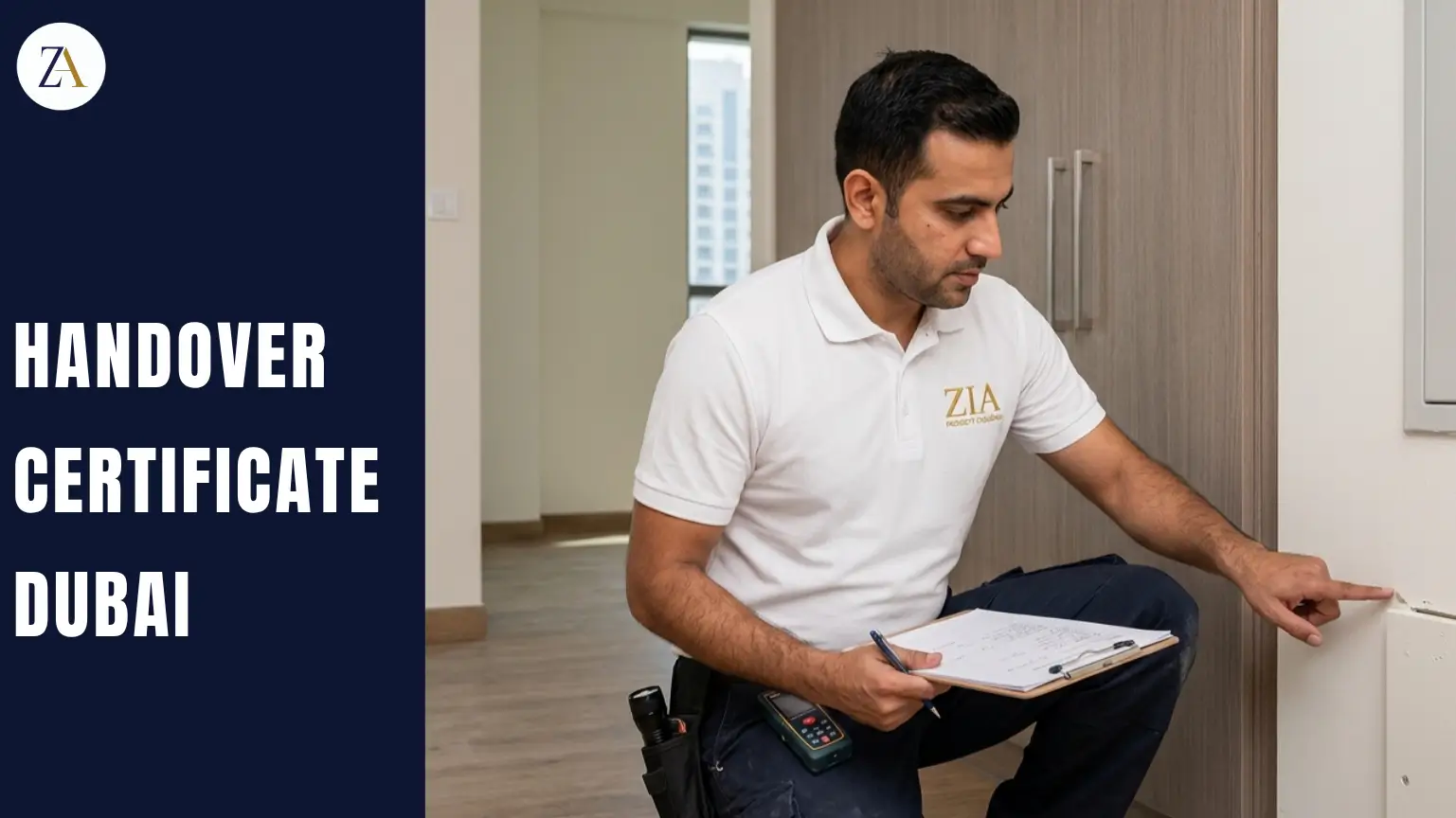
Handover Certificate Dubai: What It Really Means for Owners
For any new homeowner with a property in Dubai soon to be theirs, the term “handover certificate” has likely cropped up in your mind and sparked confusion about what it entails. To sum it up, a handover certificate is the legal document you have that will state that you have taken physical possession of your property from the developer. Signing it is more important than you may think, as it is the official transfer point in your ownership story, but it does not mean that you will be barred from insisting on corrections for any defects. What it actually means and what to look out for before signing it.
What Is a Handover Certificate in Dubai?
The developer will provide you with a handover certificate as your unit is complete and ready for occupation. You sign this document at the handover appointment when you are certain you have received the property, it has been inspected (or you had the chance to inspect it), and you are taking over the property.
In real terms, it’s when you arrive from being in the “buyer waiting on construction” category to the “owner in possession” category. This is a certificate that the developer will not give you the keys to, access cards to, or parking permits until it is signed.
It’s issued after a few things have already happened:
- The building has received its Completion Certificate from Dubai Municipality
- A completion notice was sent, and you have a time limit (typically 14-30 days) to respond to it.
- All outstanding payments, service charges, or fees have been settled.
When it comes to the point of signing the certificate, the developer provides timetables for one of your handover dates and the certificate is presented for your signature.
Handover Certificate vs Title Deed vs Oqood—What's the Difference?
This is where many owners get confused, and it’s quite a simple mix-up. These documents each have a distinct legal function, are from separate origins, and have different legal ownership statuses.
Document | Issued By | What It Proves | When You Get It |
Oqood Certificate | Dubai Land Department (via developer) | Interim registration proving you’re the buyer during construction | At purchase, for off-plan units |
Handover Certificate | Developer | You’ve taken physical possession of the completed unit. | At the handover appointment |
Title Deed | Dubai Land Department (DLD) | Permanent, legal proof of ownership | After handover, once DLD registration completes |
The key distinction to remember: the handover certificate is about possession, not ownership. Your title deed is the document that legally proves you own the property. Some buyers assume signing the handover certificate means their ownership is finalized—it isn’t. That happens separately, when the DLD converts your Oqood into a title deed.
Leave your phone, We’ll call you in 15 min
What Signing the Handover Certificate Actually Means for You
Signing this document confirms a few specific things, and it’s worth being clear-eyed about each one:
- You’re accepting physical possession of the unit—you’re now responsible for it, including service charges from that date forward
- You’re confirming you’ve had the opportunity to inspect the property (this is why timing your snagging inspection before signing matters so much)
- You’re not waiving your right to defect repairs. This is the part many owners get wrong. Signing the handover certificate does not mean you’re accepting the property “as is” forever. Developers are still obligated to fix defects reported within the Defect Liability Period (DLP)—typically 12 months for finishing and mechanical issues, longer for structural elements
In other words, the certificate hands you the keys and the responsibility—but it doesn’t erase your legal protections. If you signed the certificate and then discovered defects, you can still report them, provided you’re within the DLP window.
What You Should Check Before You Sign
Before you put pen to paper, a few things are worth confirming first:
- Snagging is complete — you’ve had an independent inspection done, and any defects are documented with photos
- NOC is issued — confirms there are no outstanding dues that could hold up your title deed later
- Final payment is cleared — including service charges and any milestone balances
- Keys, access cards, and parking allocation are ready to be handed over alongside the certificate
- Appliance warranties and manuals are included, if applicable
If a developer is pushing you to sign before snagging is done—or telling you defects will “be fixed later” without anything in writing—that’s a signal to slow down, not speed up. Get any repair commitment documented before you sign, not after.
Can You Refuse to Sign or Delay It?
Yes, and this is a right many buyers don’t realize they have. Under RERA regulations, you’re entitled to inspect your property before accepting it, and developers cannot legally force you to sign a handover certificate without giving you that opportunity.
You can reasonably delay signing if:
- Snagging hasn’t been completed yet
- Reported defects haven’t been acknowledged or scheduled for repair
- The property differs materially from what was agreed in your Sales and Purchase Agreement (SPA)
That said, delaying indefinitely isn’t usually in your interest either—until you sign, you can’t move in, activate utilities, or begin the title deed process. The goal isn’t to stall forever; it’s to make sure you’re not signing away your leverage before defects are addressed.
What Happens After You Sign
Once the handover certificate is signed, a few things move forward:
- You receive your keys, access cards, and parking permits
- You can register your utilities (DEWA) and, for rental purposes, Ejari
- The developer typically begins the process of converting your Oqood into a title deed with the DLD
- Service charges officially begin accruing from your side, not the developer’s
- Your Defect Liability Period clock starts running from the handover date
This is also the point where many owners start planning their move-in—but it’s worth remembering that the handover certificate is a milestone, not the finish line. Your title deed registration still needs to be completed separately.
Common Mistakes Owners Make With the Handover Certificate
A few patterns show up again and again with buyers going through handover in Dubai:
- Signing under time pressure. Developers sometimes create urgency around handover day. Take the time you need—rushing is how defects get missed.
- Skipping the inspection. Some owners accept the property without an independent snagging inspection, assuming everything is fine because it “looks new.” Hidden issues—plumbing leaks, electrical faults, waterproofing gaps—often aren’t visible on a casual walkthrough.
- Not getting repair promises in writing. A verbal assurance that something “will be fixed” means very little without documentation and a timeline attached to it.
- Confusing the handover certificate with the title deed. As covered above, these are not the same document, and assuming otherwise can create confusion later during resale or mortgage applications.
- Not keeping a copy. Always retain a signed copy of the handover certificate for your records—you may need it for future reference, resale, or disputes.
Frequently Asked Questions
Is the handover certificate the same as the title deed?
No. The handover certificate confirms physical possession, while the title deed is your legal proof of ownership issued separately by the DLD.
Can I sign the handover certificate before snagging is done?
You can, but it’s not advisable. It’s better to complete snagging first and get any defects documented and acknowledged before signing.
What if the developer refuses to issue the handover certificate?
This is uncommon once the unit is complete and payments are cleared. If it happens, raise it with the developer in writing and, if unresolved, escalate to RERA.
Is the handover certificate legally binding?
Yes, it confirms your acceptance of possession, but it doesn’t waive your rights to defect repairs during the Defect Liability Period.
Do I need a lawyer to review the handover certificate?
It’s not mandatory for most standard residential purchases, but for high-value properties or if terms seem unclear, an independent legal review can add peace of mind.
Conclusion
The handover certificate is a bigger moment than it might seem on paper—it’s the formal point where responsibility for the property shifts to you. Understanding what it does and doesn’t commit you to helps you walk into your handover appointment prepared, not just excited. The best protection before you sign is a clear, documented picture of your property’s actual condition.
If you’re approaching handover soon, an independent snagging inspection before you sign gives you exactly that—a certified engineer’s report on your property’s condition, so you know what you’re accepting before you accept it. Book your inspection with Zia Property Snagging before your handover appointment.
