

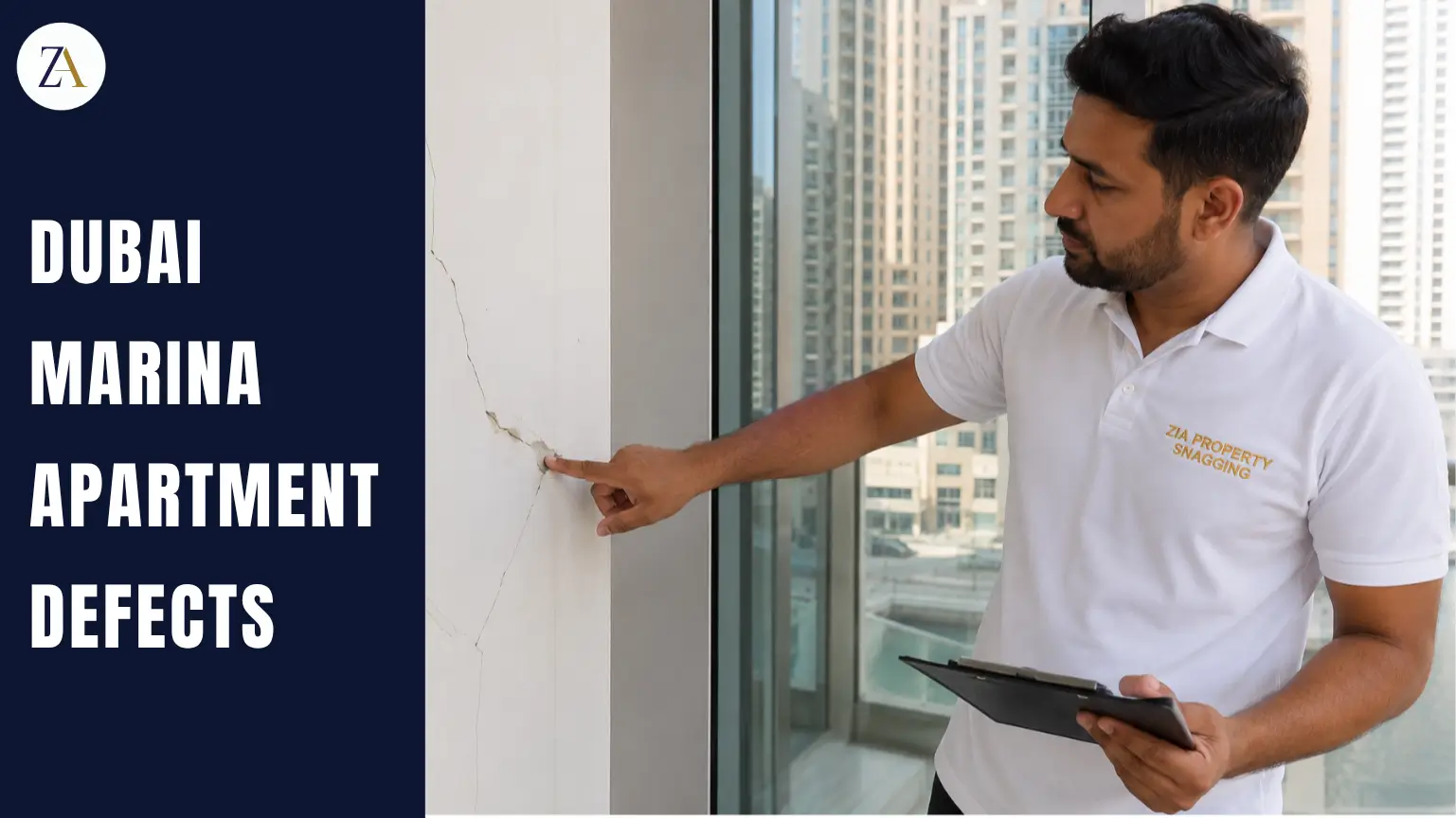
Dubai Marina Apartment Defects: A Complete Inspection Guide
Dubai Marina is one of the most popular waterfront communities in Dubai, with some high-rise towers and thousands of apartments ranging from studios to penthouses. Dubai Marina apartments come with a different set of defect risks that are not common among those buying apartments in inland communities. There is more to wear than a checklist can identify, especially in the coastal environment, with high humidity, salty air and ample high-rise building construction.
When planning to purchase off-plan, when you are handed over, or when you buy on the secondary market, without knowing about these defects, you may end up spending thousands of dirhams on repairs after you have bought the property. This guide will help you understand what to look for, the reasons why Dubai Marina apartments are unique, and the benefits of having a certified inspection that will ensure you have a valuable investment.
Why Dubai Marina Apartments Have Unique Defect Risks
Dubai Marina isn’t a typical Dubai community. It is a concentrated area of high-rise towers situated along a man-made watercourse, which doesn’t result in defect patterns found in villa communities or lower-rise developments.
Dubai Marina apartments are unique in three ways:
- Coastal exposure — Sea breezes are saltier than land breezes, and the salt speeds up the rusting of metal railings, window frames, and any other metal fixtures on the exterior of your home.
- High-rise MEP complexity — Taller buildings mean longer plumbing risers, more complex AC ducting, and higher pressure demands on water systems
- A mix of building ages – Marina has towers that are aging and a new handover, which means defect types vary from old equipment to new shortcuts in construction.
There are many different stress points in a one-bedroom apartment on the 40th floor from those at JVC or Business Bay. This is why an inspection approach that is specific to Dubai Marina is important.
Most Common Defects Found in Dubai Marina Apartments
Across our inspections in Dubai Marina towers, certain defect categories appear again and again. Here’s what typically shows up.
Leave your phone, We’ll call you in 15 min
Structural and Civil Defects
- Hairline cracks in walls near window frames, often from building settlement in older towers
- Uneven or hollow-sounding floor tiles, especially near balcony thresholds
- Poor grouting in bathrooms and kitchens, leading to early water seepage
- Misaligned doors and wardrobes, common in units handed over under tight developer deadlines
MEP (Mechanical, Electrical, Plumbing) Defects
- AC performance issues — uneven cooling across rooms, weak airflow at supply vents, and condensation drainage problems, particularly on higher floors where duct runs are longer
- Plumbing faults — low water pressure at higher floors, leaks under kitchen and bathroom sinks, and slow drainage at floor traps
- Electrical faults — sockets without proper earthing, mislabeled distribution boards, and circuits that trip under normal load
Finishing and Cosmetic Defects
- Paint touch-up marks and uneven coverage near skirting boards
- Missing or incomplete silicone sealant around bathtubs and sinks
- Scratched countertops and chipped cabinetry, especially in kitchens, rushed to meet handover dates
If this sounds familiar, it’s because these issues cluster in nearly every high-rise inspection across Dubai—but Dubai Marina adds one more layer that buyers often overlook.
Sea-Facing & High-Floor Specific Issues
This is where Dubai Marina truly differs from inland communities, and it’s the part most generic snagging guides miss entirely.
Balcony and Window Seal Failures
Rain and salt spray from the sea can batter sea-facing balconies. The life of waterproofing membranes below balcony tiles is shorter here, and window seals that will last decades inland can fail in a Marina tower in 12-18 months. Be alert for spots of water below lower balcony doors and soft spots in ceiling gypsum on lower levels.
Salt Corrosion on Metal Fixtures
In the coastal microclimate of Marina, the lower-quality metal balconies, window frames, and external door hinges corrode more visibly. A thermal imaging inspection can detect early signs of corrosion behind the cladding before the corrosion is visible.
Wind Load on High Floors
Wind pressure is greater on window seals and balcony doors of apartments above the 30th floor. This causes wear in rubber gaskets and is why sometimes higher floor units experience problems (like draft and dust leakage) not seen on the lower floors.
Humidity-Driven Mold Risk
The air level is slightly higher than in the desert, as the water is close to Dubai Marina, so the air needs to be dried. This, along with the AC condensation problems, makes perfect conditions for the mould to form behind walls in bathrooms and kitchens, which a moisture meter and thermal camera can identify before it is seen.
The Dubai Marina Inspection Process
A proper inspection in a Dubai Marina apartment should go beyond a visual walkthrough. Here’s what a thorough process covers:
- Structural and civil check — walls, ceilings, flooring, and tile alignment across every room
- MEP testing — AC performance per room, water pressure at every outlet, electrical socket polarity and earthing
- Moisture and thermal imaging — behind walls near wet areas and balcony junctions, where sea-facing units are most vulnerable
- Balcony and window seal inspection — a step we weight heavily for Marina properties given the coastal exposure
- Fixture and finishing review — cabinetry, doors, paint, and sealant across the full unit
At Zia Property Snagging, each inspection in Dubai Marina includes 400+ checkpoints, conducted by an RERA-approved, InterNACHI-certified civil engineer. We use thermal imaging cameras, moisture meters, and voltage testers to pick up on the things that can’t be seen from a walk-over, and we provide a comprehensive photographic report in 1 day flat.
RERA Rights & DLP for Dubai Marina Buyers
Like all buyers in Dubai, a buyer in Dubai Marina has the same legal rights, but it’s important to know the scope of these rights.
- Defect Liability Period (DLP): Defects that are not structural are required to be fixed by the developer at no extra cost within the first 12 months of handover.
- Decennial liability: Structural defects—like major cracks or foundation issues—remain the developer’s responsibility for 10 years under the UAE Civil Code
- RERA-backed reports: An independent snagging report carries regulatory weight, making it harder for developers to dismiss findings
- Right to inspect before signing: Developers cannot legally prevent you from bringing an independent inspector before you accept handover
Booking your inspection before you sign the handover certificate — not after — is the single most important step in protecting these rights.
Cost & Timeline for Dubai Marina Snagging
Snagging inspection costs in Dubai Marina depend on unit size and type:
- Studio and 1-bedroom apartments: From AED 999
- 2–3 bedroom apartments: Priced based on square footage
- Penthouses: Custom quotation due to larger floor plans and additional balconies
The time required for a standard apartment inspection is 2–4 hours in the apartment, and the report is issued within 24 hours. All inspections come with a complimentary re-inspection upon completion of repairs by the developer to ensure that the repairs are effective before final acceptance.
Frequently Asked Questions
What are the most common defects in Dubai Marina apartments?
Common problems include issues with the AC system, water leaks, faults in the tiles and grouts, and waterproofing of balconies. Window seal and draft problems are also more prevalent in high floors than on low floors.
Why do Dubai Marina apartments need a different inspection approach?
MEP systems in coastal areas experience higher corrosion rates and pressure demands in their ducts, while those in high-rise structures have longer duct runs. These factors are more significant for a Marina-specific inspection than for a standard inspection.
How much does a snagging inspection cost in Dubai Marina?
The prices begin at AED 999 for studios and one-bedroom and go up according to the size of the apartment or penthouse.
Can I inspect a Dubai Marina apartment before accepting handover?
Yes. According to RERA rules, before handing over the documents, buyers are allowed to have their homes checked, which the developers cannot refuse.
How long does a Dubai Marina apartment inspection take?
The process takes from 2 to 4 hours in the field, and the detailed photographic report is sent within 24 hours.
Conclusion
Dubai Marina’s waterfront lifestyle comes with a defect profile all its own—from salt-accelerated corrosion to high-floor seal wear that inland communities simply don’t face. A generic inspection checklist won’t catch these issues; you need engineers who understand what coastal, high-rise living does to a building over time.
Before you accept your keys or finalize a purchase in Dubai Marina, book an RERA-approved snagging inspection with Zia Property Snagging. With 400+ checkpoints, certified engineers, a 24-hour report, and a free re-inspection included, you’ll know exactly what you’re signing up for—from AED 999.
