

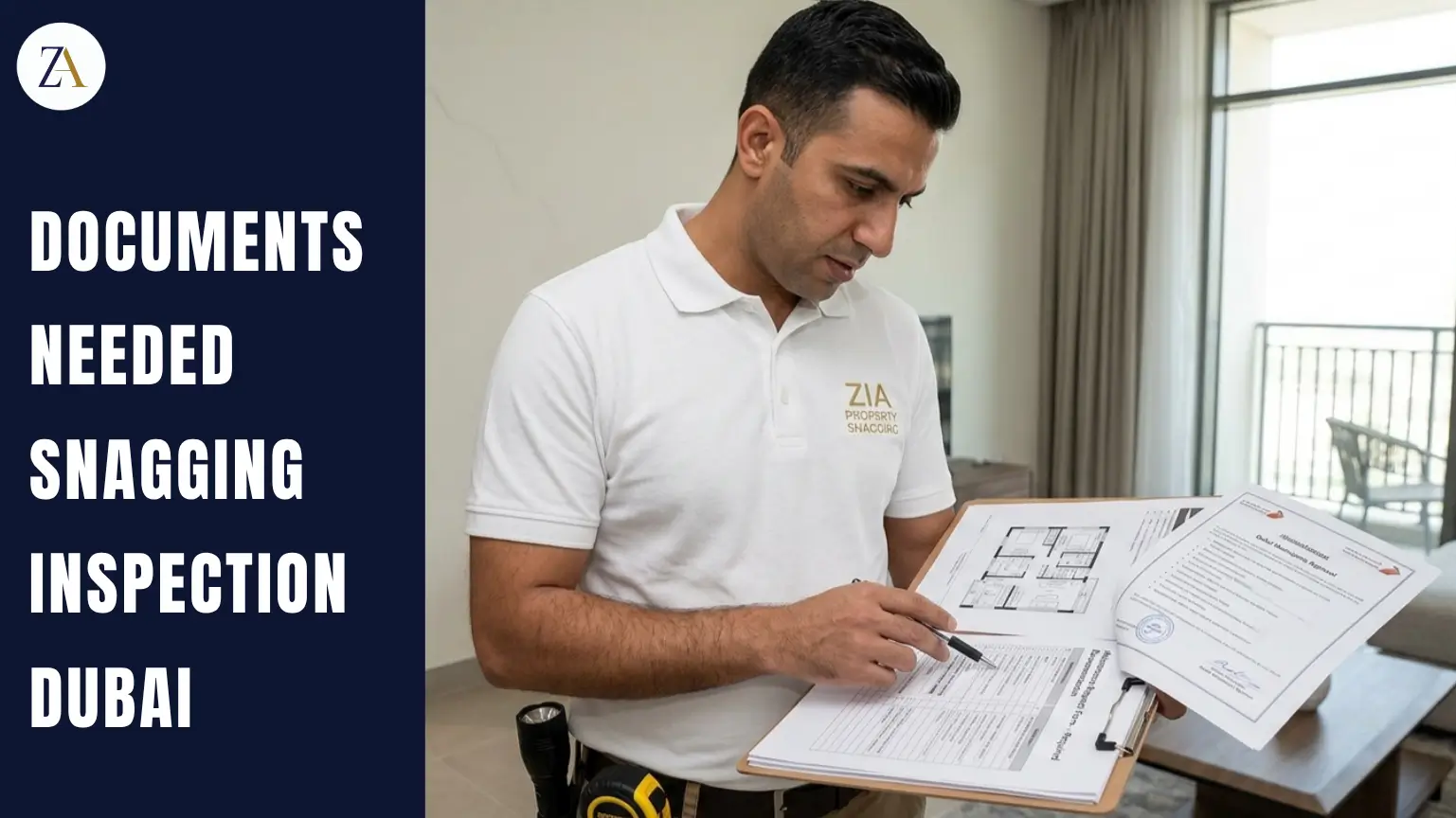
Documents Needed Snagging Inspection Dubai | Full Guide
One of the best things you can do before you take over the keys on a Dubai Property is to book a snagging inspection. Unfortunately, this is one thing that many buyers forget: if they arrive without the proper documentation, they may not be able to obtain their inspection, or they may weaken their position with the developer or be unable to substantiate their claims after closing. From collecting keys to an off-plan apartment in JVC to a villa in Dubai Hills, there’s never a more streamlined and effective way to complete the process than when you have the necessary paperwork handy.
This guide helps you understand exactly what paperwork is required before, during, and after a property snagging inspection in Dubai and why each document is important.
Why Preparing Documents in Advance Matters
A snagging inspection isn’t just a walkthrough with a checklist. It is a formal procedure with the potential of deciding if a developer is responsible for defects or can shift the blame to you. The proper documents are available:
- Your inspector can access the property without delays
- You have proof of what you were promised versus what was delivered
- Any disputes with the developer are backed by paperwork, not just verbal claims
- Your snagging report carries more weight when submitted for repairs
Under RERA regulations, developers are legally required to rectify defects reported before or shortly after handover. But that legal protection only works in your favor if you can show clear documentation of the property’s condition and your ownership rights.
Documents Checklist for Your Snagging Inspection
Here’s what you should have on hand before your inspector arrives:
- Sale and Purchase Agreement (SPA)
- Handover notice or letter from the developer
- Title deed (if the property has already been transferred to your name)
- Emirates ID or passport copy (yours, for verification purposes)
- Floor plan or unit layout provided by the developer
- No Objection Certificate (NOC) granting access to the property
- Proof of utility activation — DEWA electricity and water connection
- Any prior emails or messages from the developer regarding handover, promised finishes, or special requests
Not every document applies to every buyer — a resale property inspection, for example, has slightly different requirements than a brand-new off-plan handover. We’ll cover that shortly.
Leave your phone, We’ll call you in 15 min
Why Each Document Matters
Knowing what each one does will help you appreciate why this is important.
Sale and Purchase Agreement (SPA): This should be your master reference. It describes the nature of the specifications, finishes and fittings that the developer had committed to. If any part does not comply with the SPA (for example, a different type of floor material is used or a fixture is missing), this document will be used as evidence for your inspector.
Handover notice: This is to confirm that the developer has now officially declared that the unit is ready and you will now have a window to check it out before you sign off. Booking your snagging inspection right after receiving this notice and before signing the handover certificate keeps you in the strongest legal position.
Title deed: If ownership has already transferred to you, this confirms your legal right to the property and may be requested by building security or the developer’s handover team before granting site access.
Emirates ID or passport: Your developer staff will usually require ID to be shown in the unit before anyone, including your inspector, can enter the unit.
Floor plan or unit layout: Your inspector will check to ensure that the walls, room sizes and fixtures are exactly as planned. Any deviation from the plan is a fair snag.
NOC from the developer: Many developments require a formal access permission before an independent inspector can enter, especially in buildings still under developer management.
Utility activation proof: Testing AC units, lighting, sockets, water heaters, and plumbing properly requires active DEWA connections. Without power and running water, a large part of the inspection simply can’t happen.
Prior correspondence: Emails or WhatsApp messages about promised upgrades, delayed handover, or agreed fixes serve as a paper trail if the developer later disputes what was originally agreed.
What Happens If You're Missing a Document
Missing one or two documents doesn’t necessarily stop your inspection, but it can create complications:
- No NOC: Some developments won’t allow site access without it, forcing a rescheduled visit
- No SPA on hand: Your inspector can still assess visible defects, but comparing against promised specifications becomes harder
- Utilities not activated: Functional testing of electrical, plumbing, and AC systems will be incomplete, and you may need a follow-up visit
- No handover notice: You may lose track of your RERA-protected inspection window before signing the handover certificate
If you are not sure if you have all the required items, you should call your inspection company ahead of the date of the inspection to make sure.
Documents You'll Receive After the Inspection
After completing your snagging inspection, you should receive:
- A complete snagging report with all defects identified, with severity coded (critical, major & minor).
- Photographs of each of the issues identified, at high resolution.
- The exact location of every defect within the property
- A summary page formatted for direct submission to your developer
- Confirmation of your free re-inspection once repairs are completed
This report becomes your primary tool for holding the developer accountable—so it’s worth confirming your inspection company delivers it in a format developers actually accept.
How Zia Property Snagging Simplifies This Process
At Zia Property Snagging, we know that paperwork shouldn’t be the hardest part of protecting your investment. Our RERA-approved, InterNACHI-certified civil engineers guide you through exactly what’s needed before your appointment, so there are no surprises on inspection day.
Here’s what sets our process apart:
- 400+ checkpoint inspection covering structural, MEP, and finishing elements
- Full report delivered within 24 hours, formatted for direct developer submission
- Free re-inspection once your developer completes repairs
- Independent and unbiased — we work exclusively for buyers, never developers
- Pricing from AED 999, with transparent quotes for villas and commercial units
Whether it’s your first handover or you’re adding another property to your portfolio, our team makes sure your documentation and inspection process goes smoothly from start to finish.
Frequently Asked Questions
Do I need the SPA for a snagging inspection?
Yes, your SPA outlines promised specifications and finishes. It helps your inspector confirm the developer delivered exactly what was agreed.
Can I do a snagging inspection without a handover notice?
It’s possible, but the handover notice marks your official inspection window under RERA protection. Booking without it risks losing that legal advantage.
What if the developer hasn't given me an NOC?
Some developments require it for site access, so your visit may need rescheduling. Confirm with your inspection company beforehand to avoid delays.
Do I need documents for a resale property snagging inspection?
Yes, though requirements differ slightly—a title deed and seller’s permission typically replace the developer’s handover notice and NOC.
What documents do I get after the inspection?
You’ll receive a detailed snagging report with photos, defect locations, and severity ratings, plus confirmation of your free re-inspection.
Conclusion
Having documents prepared before a snagging inspection is not merely best practice; it is what makes your defect claims “real” and legally and practically weighty. Every document serves a specific purpose throughout the SPA process and the handover notice process, both of which ensure nothing is missed, and there will be no future claims. Combine that with a certified, independent inspection team, and you’re not going into handover with uncertainty.
