

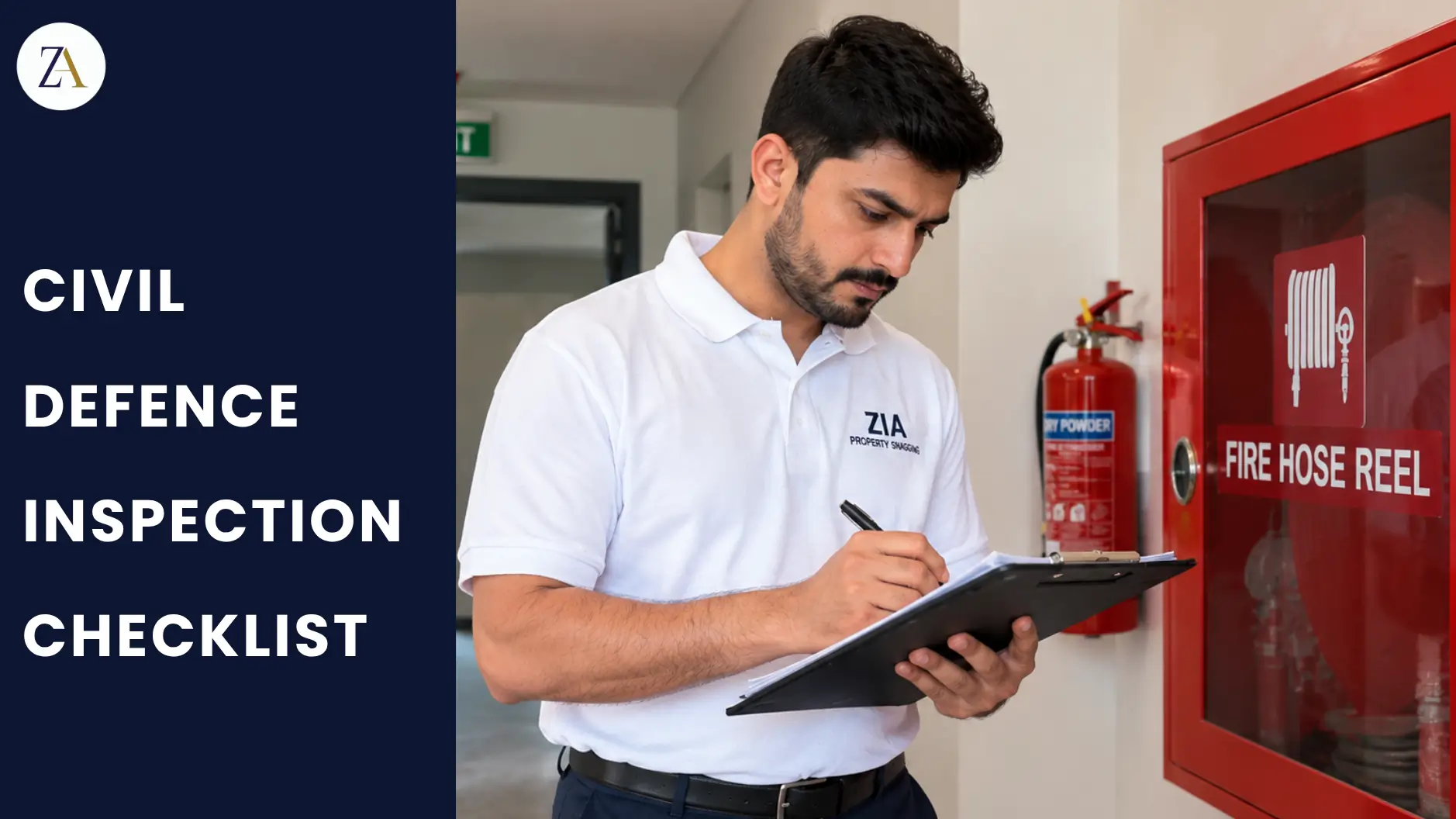
Civil Defence Inspection Checklist for Dubai Warehouses
A failed Civil Defence inspection can hold up your licence, your insurance, and your operations. Most failures are small: a blocked exit, an out-of-date extinguisher, a sprinkler head covered by stock. This is a practical civil defence inspection checklist for warehouse Dubai owners and operators, covering fire alarms, sprinklers, exits, racking, and storage, so you can fix problems before the inspector finds them.
Quick answer: to pass a Dubai Civil Defence (DCD) inspection, a warehouse needs working fire alarms and detection, sprinkler and firefighting systems that are serviced and tested, clear and marked exits with emergency lighting, safe storage and racking with clear aisles, hazardous goods kept apart, and up-to-date records and certificates. Do a full check yourself first, fix what you find, and have the documents ready.
One note before the list. Requirements depend on the warehouse’s size, use, and the goods stored, and they’re set by Civil Defence and the UAE Fire and Life Safety Code of Practice. This is general guidance, not a substitute for the code or for advice from a DCD-approved consultant.
What Does a Civil Defence Inspection Check in a Warehouse?
Inspectors are looking at one thing: will people get out safely, and will a fire be detected and controlled? Here’s an overview of what that means in a warehouse:
System | What is checked | Common failures |
|---|---|---|
Fire alarm and detection | Panel, detectors, call points, sounders, test records | Faults, covered detectors |
Sprinklers and firefighting | Sprinkler coverage, extinguishers, hose reels, hydrants, pumps | Blocked heads, expired extinguishers |
Exits and lighting | Exit doors, escape routes, exit signs, emergency lighting | Blocked or locked exits, dead lights |
Storage and aisles | Aisle width, stacking, separation, housekeeping | Crowded aisles, stock near sprinklers |
Hazardous goods | Segregation, ventilation, labels, safety data sheets | Mixed storage, missing labels |
Racking | Uprights, beams, pins, guards, load notices | Impact damage, wrong load signs |
Electrical | Panels, wiring, charging areas | Exposed wiring, blocked panels |
Records | Certificates, service, and test logs | Missing or expired paperwork |
Leave your phone, We’ll call you in 15 min
The Warehouse Checklist, System by System
1. Fire Alarm and Detection
- The alarm panel is working with no fault lights.
- Smoke or heat detectors are installed, clean, and not covered.
- Manual call points are visible and reachable.
- Alarms sound in all areas, including offices and mezzanines.
- Test and maintenance records are up to date.
2. Sprinklers and Firefighting Equipment
- Sprinklers cover the storage and office areas, with no heads blocked or painted over.
- Stock is kept clear of sprinkler heads.
- Fire extinguishers are the right type, placed at regular intervals, and serviced and tagged.
- Hose reels and hydrants are accessible at all times.
- Fire pumps and tanks, if fitted, are tested and certified.
Maintenance matters as much as installation. Guides to the approval process commonly recommend regular testing of alarms, sprinklers, and hydrants, and fire drills at least twice a year. Check your own certificate and DCD guidance for the exact intervals that apply.
3. Exits, Escape Routes, and Emergency Lighting
- Exit doors open easily in the direction of escape and are never locked or chained during operations.
- Exit routes are clear of pallets, equipment, and rubbish.
- Illuminated exit signs work and point the right way.
- Emergency lighting comes on when the main power is cut.
- Escape plans are displayed.
4. Storage, Aisles, and Housekeeping
Most warehouse fires spread because storage was crowded or untidy, and that was a common finding even in early Dubai Civil Defence campaigns. Look for:
- Aisles wide enough for staff and firefighters, and kept clear.
- Stock stacked within safe heights and well away from sprinklers, lights, and electrical panels.
- Different materials separated where required.
- Rubbish and packaging cleared regularly.
- No living or sleeping in the warehouse. Illegal accommodation in warehouses has long been a fire-safety target.
5. Hazardous and Flammable Goods
Flammable liquids, gas cylinders, batteries, and chemicals have stricter rules. They should be stored apart from other goods, in ventilated, secured areas, with correct labels, and with safety data sheets available. Fire-rated partitions are normally expected between hazardous and non-hazardous zones. If you store dangerous goods, ask your consultant what the code requires for your category.
6. Racking and Structure
A collapsed rack is a fire and injury risk, and it can block exits and sprinklers. Racking guidance in the region suggests three levels of checks: daily visual checks by operators, monthly supervisor checks, and an independent expert inspection at least once a year, plus a check after any impact or change of layout.
- Uprights are straight, with no dents, twists, or missing base plates.
- Beams are seated, with locking pins in place.
- End guards and upright protectors are fitted.
- Load notices are readable and match the current layout.
- Pallets are in good condition and not overhanging.
- Mezzanines and racks are certified for their loads.
7. Electrical Safety
Electrical faults are a common cause of fires. Panels should be labelled, closed, and in good condition, with no exposed wiring, overloaded extension leads, or storage against them. Forklift charging areas need particular care.
How Does Approval Work?
In Dubai, Civil Defence issues the compliance certificate that allows a warehouse to operate, and it can carry out inspections after approval. Based on the process described by approval consultants, the route usually looks like this:
- Risk assessment: The warehouse’s hazards are classified.
- Drawings submitted: Architectural, MEP, and fire system drawings go to DCD, usually through a licensed consultant.
- Plan approval: DCD reviews fire prevention, evacuation routes, and access.
- Installation: Only DCD-approved contractors fit the systems, using approved equipment.
- Site inspection: Inspectors test alarms, sprinklers, smoke detection, lighting, and signage.
- Certificate: If everything passes, DCD issues the compliance certificate.
Fire safety is also part of building handover. Our guide on fire safety compliance at handover covers what to check when a new building is handed over, before any warehouse fit-out starts.
Documents to Have Ready
- Architectural and MEP drawings, with as-built drawings.
- Fire system layouts for sprinklers, hydrants, and pump rooms.
- Fire load calculations, where required.
- Safety data sheets for chemicals.
- Equipment compliance certificates.
- Maintenance and test records for alarms, sprinklers, extinguishers, and racking.
- Previous inspection reports and proof that earlier defects were fixed.
A Simple Maintenance Routine to Stay Ready
Passing once isn’t enough, because inspections can happen after approval. A routine keeps you ready all year:
- Daily: walk the exits and aisles before work starts, and keep them clear. Check for damaged racking or leaking containers.
- Weekly: check extinguisher gauges and tags, the alarm panel for fault lights, and emergency lighting indicators.
- Monthly: a supervisor walks every aisle against the checklist and records it. Check load notices and sprinkler clearance.
- Quarterly or as advised: test alarms, sprinklers, and hydrants through your maintenance contractor and file the reports.
- Yearly: book an independent racking inspection and a full fire-safety review. Fire drills should be held at least twice a year.
- After any change: if you change layout, storage type, or racking, update the fire plan and check that sprinklers and exits are still clear.
What to Do on Inspection Day
- Have a responsible person on site who knows the building and who can open every area.
- Keep the documents folder ready: certificates, drawings, test records, and the last report.
- Let the inspector see everything. Don’t hide problem areas, because that can make things worse.
- Take notes of each finding, and ask for the requirements in writing if anything is unclear.
- Fix the findings quickly, keep proof of each fix, and arrange the re-inspection.
How Can a Pre-Inspection Help?
A mock inspection before the official one gives you time to fix problems calmly. The inspector walks the warehouse with your checklist, notes what’s missing or unsafe, photographs it, and gives you a report you can hand to your maintenance team or contractor. Building inspections for warehouses cover the structure, the building services, and the finishes, so fire-safety findings sit alongside everything else.
Our team at Zia Property Snagging is RERA-approved, DED-licensed, and InterNACHI-certified. We deliver a photo report within 24 hours. We’re not Civil Defence, and we don’t issue the Civil Defence certificate. What we do is help you find and fix problems before the real inspection.
Common Reasons Warehouses Fail
- Blocked exits, aisles, or sprinkler heads.
- Expired extinguishers or missing service tags.
- Alarm or emergency lighting faults.
- Damaged or overloaded racking.
- Hazardous goods stored with ordinary stock.
- Missing records or certificates.
- Changes to layout or storage with no update to the fire plan.
Most of these are housekeeping and maintenance, which is good news. They cost little to fix if you find them early.
Frequently Asked Questions
What does a civil defence inspection checklist for a warehouse in Dubai include?
Fire alarms and detection, sprinklers and extinguishers, exits and emergency lighting, storage and aisles, hazardous goods, racking, electrical safety, and up-to-date records and certificates.
Who approves a warehouse for fire safety in Dubai?
Dubai Civil Defence reviews the plans, inspects the site and issues the compliance certificate. Applications usually go through licensed consultants.
How often should fire systems be tested?
It depends on the system and the code. Approval guides commonly recommend regular testing, such as quarterly checks and drills at least twice a year. Check your own certificate and DCD guidance.
Can Zia issue the Civil Defence certificate?
No. Only Dubai Civil Defence does. We carry out a pre-inspection and give you a report so you can fix problems first.
Can Civil Defence inspect after approval?
Yes. Approval consultants note that inspections can happen after the certificate is issued, so keep your systems and records in order all year.
Want to Check Your Warehouse Before Civil Defence Does?
Tell us the size of the warehouse, what you store, and when your inspection is due, and we’ll explain how a pre-inspection against a civil defence inspection checklist for warehouse Dubai owners can be used. Get in touch, and we’ll take it from there.
