
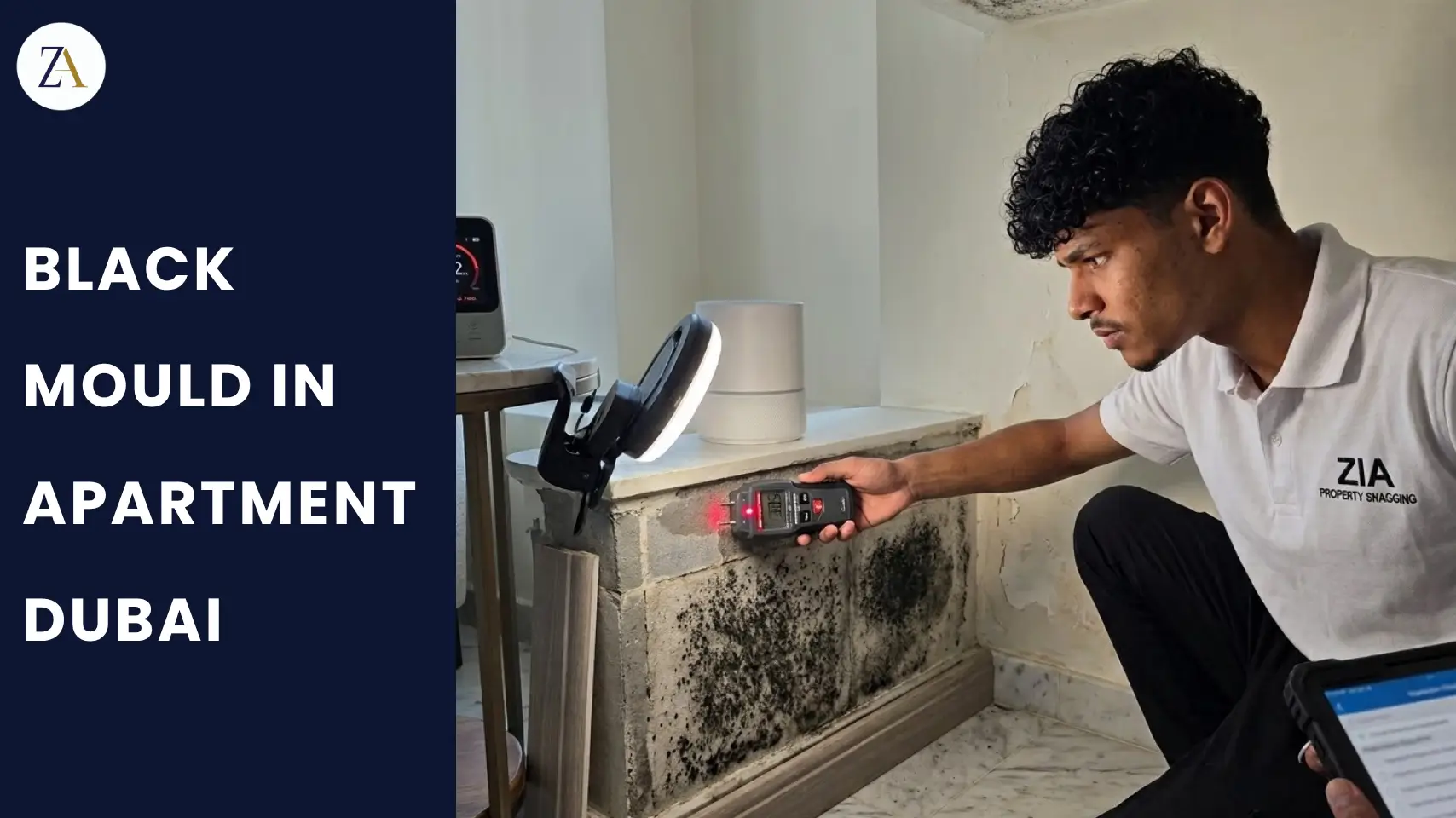
Black Mould in Apartment Dubai Who Is Responsible?
Black mould in apartment Dubai: who is responsible, the landlord or the tenant? The honest answer is that it depends on what caused it. Dubai’s tenancy law doesn’t mention mould by name, but it does say who looks after defects and who looks after the home day to day. This guide explains how that works, how the cause usually decides the question, and what to do if you’re stuck in a dispute.
One note first. This is general information, not legal advice. We’ve worked from the official English text of the law, but the Arabic text prevails, so check the details with the Rental Dispute Settlement Centre or a lawyer before you act.
Quick answer: under Dubai’s tenancy law (Law No. 26 of 2007), the landlord is responsible for maintenance and for repairing defects or damage during the lease, unless the contract says otherwise and unless the tenant caused it. So, black mould in apartment Dubai tenants find after a leak, a building defect, or a failing system is usually the landlord’s to fix. Mould that comes from how the home is used, such as no ventilation or laundry dried indoors, can fall on the tenant. Written notice and an inspection report settle most disputes.
Black Mould in Apartment Dubai: What Does the Law Say?
The tenancy law is Dubai Law No. 26 of 2007, and a few of its articles matter here. We’ve put them in plain words:
- Article 15: the landlord must hand over the property in good condition.
- Article 16: During the lease, the landlord is responsible for maintenance and for repairing any defect or damage, unless the parties agree otherwise.
- Article 17: The landlord is responsible for defects, damage, and wear and tear that aren’t caused by the tenant’s fault.
- Article 19: the tenant must look after the property the way an ordinary person would look after their own. Changes and repairs need the landlord’s permission.
- Article 21: at the end of the tenancy, the tenant returns the property in the condition they received it, apart from ordinary wear and tear.
Put together, the pattern is simple. If the mould comes from a defect, the landlord pays. If it comes from the tenant’s own use or neglect, the tenant does. Our guide to Dubai rental inspection laws covers the wider rules on inspections in rentals.
What can the contract change?
Article 16 starts with “unless the parties agree otherwise,” so check your tenancy contract. Many contracts include a minor maintenance clause that puts small repairs on the tenant, often below a set amount such as AED 500. That figure is a contract term, not part of the law. A clause like that covers small jobs, and it’s hard to see it covering a leak or a building defect.
Leave your phone, We’ll call you in 15 min
Landlord or Tenant? How the Cause Decides It
Because the law says nothing about mould itself, the cause does the work. This table shows who is usually responsible in each case:
Likely cause | Usually responsible | Why |
|---|---|---|
Leak from a pipe, the roof or the flat above | Landlord | A defect or damage not caused by the tenant (Articles 16 and 17) |
Building defect, such as cracks or failed waterproofing around windows or bathrooms | Landlord | Maintenance and defects during the lease (Article 16) |
Blocked AC drain or faulty AC system | Usually the landlord | Check the contract, because filter cleaning may be the tenant’s job |
Broken extractor fan or poor ventilation built into the unit | Landlord | A fault in the property, not in how it’s used |
No ventilation, laundry dried indoors, AC off for long periods, blocked vents | Tenant | Looking after the property as an ordinary person would (Article 19) |
Damage caused by the tenant, such as a hose left running | Tenant | The tenant’s own fault (Article 17) |
Several of these overlap, and the facts matter. A flat with a weak extractor fan and a tenant who dries laundry indoors might share the blame. That’s why a clear record of the cause is so useful.
What Causes Black Mould in Dubai Apartments?
Dubai homes have a particular recipe for mould. The air outside is humid, the AC makes some surfaces cold, and the building is often sealed. When warm, damp air meets a cold wall or ceiling, water condenses on it, and mould follows if the area stays damp. Leaks from pipes, roofs, and neighbouring flats are the other big cause, along with poor ventilation in bathrooms and kitchens.
Flats left shut up for weeks with the AC off are another common case. The air turns stale and damp, and mould can bloom in a corner nobody sees.
Where you find it also gives clues. Mould around a window frame often points to condensation. A patch on a ceiling below a bathroom suggests a leak from the flat above. Black spots behind wardrobes on an outside wall usually mean cold, damp air trapped against the surface. Mould that keeps returning to the same spot after cleaning usually means the source of moisture hasn’t been fixed.
Seasons play a part too. Humidity peaks in the summer months, and many flats see mould in the autumn when the AC is turned down and windows stay shut. Knowing the pattern helps you describe the problem accurately when you report it.
What Should a Tenant Do First?
- Photograph it and date the photos: Show the mould, the surrounding area, and anything that might explain it, such as a stain from a leak.
- Tell the landlord or agent in writing: Email or a messaging app is fine. The law doesn’t set a formal notice rule, but a written, dated message is your proof that you told them.
- Ventilate and wipe small patches: Open windows, run the extractor fan, and wipe small areas. Leave large patches alone. If anyone at home has breathing problems, speak to a doctor.
- Give a reasonable time to respond: then follow up in writing with a deadline.
- Get an independent inspection report: if the landlord disputes the cause or doesn’t act.
- Escalate if needed: The usual route is to try to settle things first, then file a case with the Rental Dispute Settlement Centre. You’ll typically need your Ejari certificate, the lease, ID documents, photos and your written correspondence.
There are also things not to do:
- Don’t stop paying rent: or deduct the cost of repairs. The law gives no express right to do that, and you could end up the one in the wrong.
- Don’t make repairs or changes without permission: Article 19 requires the landlord’s approval.
- Don’t just move out: The law doesn’t allow one side to end a tenancy unilaterally, and it gives no express right to leave over non-repair. Take advice first.
What Should a Landlord Do?
Respond quickly and in writing. Find out where the moisture is coming from, because painting over mould only hides it, and it comes back. Fix the source, whether that’s a leak, a drain or a ventilation fault, and keep records of what was found and what was done. If the cause turns out to be how the home was used, a report shows that too, and it protects you in a dispute just as much as it protects the tenant.
Landlords, a quick note on tone. A tenant who reports mould early is helping you catch a problem before it spreads into the walls or the neighbour’s flat. Replying within a few days, even just to book a visit, shows good faith and keeps small repairs from becoming expensive ones.
How an Inspection Report Helps Settle It
Most mould disputes come down to one question: what caused it? An independent inspection answers that with facts instead of opinions. A good report includes moisture readings, photos of the affected areas, the pattern of the damage, and the most likely cause, along with the repair that’s recommended.
A report is evidence, not a ruling. The Rental Dispute Settlement Centre decides who is responsible, but a clear, dated report from an independent inspector makes the case much easier to put together. Zia’s engineers are RERA-approved, DED-licensed, and InterNACHI-certified, and every report comes with photos.
Keep your own file as well. Save photos with dates, copies of messages, the lease, the Ejari registration, and any repair invoices in one folder. If a dispute reaches the Rental Dispute Settlement Centre, these documents are the first things you will be asked for, and having them ready saves weeks.
Protect Yourself Before the Next Tenancy
The easiest mould dispute to win is one that never starts. A move-in and move-out inspections service records the condition of the property, including any damp or stains, before you move in and again when you leave. If mould appears later, you have proof of the starting point.
Frequently Asked Questions
Is the landlord always responsible for mould in Dubai?
No. The landlord is responsible for defects and maintenance unless the contract says otherwise or the tenant caused the problem. The cause of the mould decides it.
Does Dubai's tenancy law mention mould?
No, not by name. Law No. 26 of 2007 covers maintenance, defects, and wear and tear in general, and mould is treated under those rules.
Can I stop paying rent if the landlord ignores mould?
No. The law gives no express right to withhold rent or deduct repair costs. Report in writing, then escalate to the Rental Dispute Settlement Centre.
Can I break my lease because of mould?
The law doesn’t give an express right to leave over non-repair, and it doesn’t allow unilateral termination. Raise it with the Rental Dispute Settlement Centre or a lawyer before you move.
Where do I complain if my landlord won't act?
Try to settle it in writing first. If that fails, file a case with the Rental Dispute Settlement Centre at the Dubai Land Department.
Need Proof of What Caused the Mould?
Tell us about the apartment and where the mould is, and we’ll explain what an inspection would cover before you commit to anything. Sorting out black mould in apartment Dubai disputes starts with knowing the real cause. Request a quote and we’ll take it from there.