

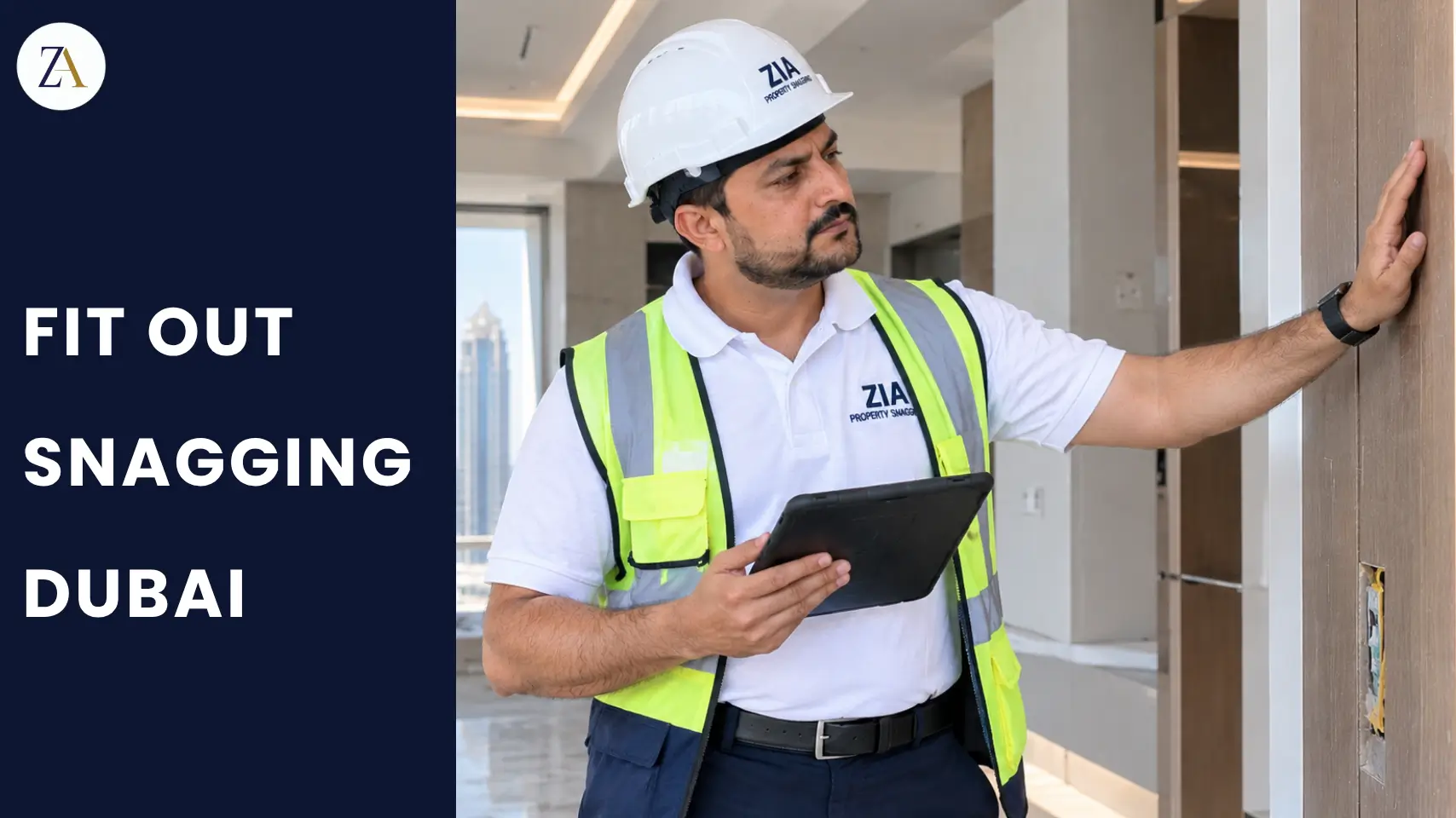
Fit Out Snagging Dubai: Checklist for Shops & Restaurants
Your lease is signed, the contractor says the unit is finished, and your opening date is fixed. This is when fit out snagging Dubai tenants can save a lot of money. A shop with a dead socket or a restaurant with a hood that doesn’t extract can’t open on time, and fixing things after you’ve paid and trained staff is slow and stressful. This checklist covers what to check in shops and restaurants before you take the keys and pay the final invoice.
Quick answer: fit-out snagging is a detailed inspection of a finished commercial fit-out against the drawings, the contract, and the approvals. It checks MEP (electrical, plumbing, AC, and ventilation), fire and life safety, finishes, joinery, signage, and for restaurants, the kitchen systems such as extraction, grease trap, gas, and drainage. Do it before final payment and before opening; give the contractor a written snag list, and re-check each fix.
What Is Fit Out Snagging in Dubai?
Snagging is the process of finding defects and unfinished work. In a fit-out, it’s done on the interior works that you or your contractor have built inside a shell unit: partitions, ceilings, floors, lighting, power, AC, plumbing, joinery, and finishes. It also covers the fixed equipment that goes in with them.
It’s different from the authorities’ inspections. Dubai Municipality, DEWA, Civil Defence, and your landlord or mall management check that the unit meets their rules and give approvals. Snagging checks that the work is built properly and matches what you paid for. You need both, and doing your snagging first makes the official ones easier to pass.
Fit Out Snagging Checklist by Area
Area | What is checked | Typical defects |
|---|---|---|
Electrical and lighting | Sockets, switches, board, RCDs, load, emergency lighting | Dead circuits, undersized supply |
AC and ventilation | Cooling, fresh air, drains, kitchen extraction | Uneven cooling, hood not extracting |
Plumbing and drainage | Taps, drains, gullies, grease trap, backflow | Slow drains, no trap access |
Fire and life safety | Sprinklers, alarms, exits, suppression, gas safety | Blocked heads, missing tags |
Finishes | Floors, walls, ceilings, paint, waterproofing | Hollow tiles, patchy paint |
Joinery and fixtures | Counters, shelves, cabinets, doors, glass | Misaligned units, loose fixings |
Signage and shopfront | Fixing, lighting, weatherproofing, mall rules | Leaks, wrong signage |
Drawings and records | Measurements, as-builts, certificates, logbooks | Missing paperwork |
Here’s more detail on the areas that cause the most problems.
Leave your phone, We’ll call you in 15 min
Electrical and Lighting
- Every socket, switch, and light works, and the circuits match the drawings.
- The distribution board is neat, labelled and closed, and RCDs trip.
- The connected load fits the unit’s DEWA supply. Typical retail units need around 10 to 20 kW, while restaurant units can need 50 to 150 kW or more, so a kitchen can need a power upgrade.
- Emergency lighting and exit signs work, and emergency power-off buttons are fitted where required in kitchens.
- Display lighting is aimed correctly and has no flicker.
AC, Ventilation and Extraction
- Cooling is even across the whole unit, with no hot spots, and condensate drains run clear.
- Fresh air is supplied. Without it, doors become hard to open, smells escape, and the AC works harder.
- In restaurants, the kitchen hood extracts properly, ducts are sealed and wrapped where required, and the exhaust discharges in the approved place.
- An ecology (odour control) unit is fitted where the exhaust is close to windows or low-level, and its filters are accessible.
Plumbing, Drainage and Grease Management
- Taps, sinks, and toilets work with good pressure and no leaks.
- Floor gullies drain freely and have removable gratings for hosing down.
- A grease trap, where fatty water goes to the sewer, is sized for the kitchen, installed to Dubai Municipality requirements, and easy to reach for cleaning.
- Backflow prevention is fitted on main water lines, and drains can take hot dishwasher water.
- Keep the cleaning contractor’s receipts and service logs. Inspectors commonly ask for grease trap and filter logbooks.
Fire and Life Safety
- Sprinklers, smoke detectors, and alarms are connected and not blocked by new ceilings or signage.
- Exit routes are clear, doors open the right way and signs are lit.
- Kitchens have a fire suppression system in the hood, and gas has detectors and an automatic shut-off valve.
- Fire extinguishers are the right type and tagged.
Civil Defence has its own approval process for fire systems, so keep your approval papers with your snagging records.
Finishes, Flooring and Ceilings
- Floors are level, with no hollow tiles, lippage, or cracked grout. Anti-slip finishes in wet areas.
- Walls and ceilings have even paint, tight joints, and no patching or dust.
- Ceiling access panels are fitted where services need maintenance.
- Waterproofing in toilets and wet kitchens was done and tested.
Joinery, Counters, and Fixtures
- Counters, shelves, display units, and cabinets are level, fixed, and match the drawings.
- Doors, drawers, and hinges work, and finishes are consistent.
- Glass, mirrors, and shopfront doors are secure and undamaged.
- Locks and access control work.
Signage and Shopfront
- Fascia and projecting signs are fixed, lit and match the approved design.
- The shopfront is weatherproof and doesn’t leak or rattle.
- The unit follows the landlord’s or mall’s fit-out guidelines, which often cover materials, hoarding, and signage.
Measurements and Drawings
Check key dimensions against the approved drawings: counters, aisle widths, door openings, ceiling heights and equipment spaces. A kitchen line that’s 5 cm too short can mean new equipment that doesn’t fit.
Restaurants and Cafés: Extra Checks
Kitchens are where fit-outs most often go wrong, because they need more systems and approvals. Industry guides describe a typical sequence: MEP design, Dubai Municipality food safety review, DEWA approvals, Civil Defence approval for fire, alarm and gas, a fit-out permit and final inspections by each authority. Your consultant should confirm exactly what applies to your unit.
- Grease trap, ecology unit and extraction logbooks are in place.
- Hood, duct and fan are sized for the cooking equipment.
- Wet chemical suppression is fitted and tagged.
- Gas piping, detectors, and the shut-off valve are tested.
- Hand wash stations, sinks, and food-safe surfaces are in the locations shown on the layout.
- Cold rooms and refrigeration drain properly and hold temperature.
- If a retail unit was converted to food use, change-of-use approval, extra power, and a suitable exhaust route were arranged.
Shops: Extra Checks
- Lighting levels and display lighting suit the products.
- The power layout suits tills, screens, charging, and display units.
- Fitting rooms, stockrooms, and back-of-house doors lock and function.
- Security, CCTV, and alarm points are in place.
- The shopfront meets the mall or landlord rules, including hoarding and opening-date requirements.
When Should You Do Fit Out Snagging?
Ideally twice: when the contractor says the works are substantially finished, and again after the first set of fixes. Both should happen before you pay the final invoice and before opening. Commercial snagging in Dubai gives you an independent view of the whole unit, which is hard to get from the contractor or your own team.
Zia Property Snagging experts are RERA-approved, DED-licensed, and InterNACHI-certified. We deliver a photo report within 24 hours. We inspect and report. We don’t build, and we don’t give authority approvals, so our findings stay independent.
Turn Findings Into a Snag List
A good snag list is specific: the location, a photo, what’s wrong, how serious it is, who fixes it, and the date it must be fixed by. Group items by trade so the contractor can assign them. Our guide on how to format a snag list shows a simple layout you can copy.
- Walk the unit with the drawings and contract in hand.
- Test everything that can be tested: power, lighting, AC, water, drains, doors, and kitchen systems.
- Photograph and number each defect.
- Give the contractor the list in writing with a deadline.
- Re-inspect each fix, not just the contractor’s word.
- Agree on the final payment only when the list is closed, and keep the report and records.
What to Have Ready Before the Inspection
- The signed fit-out contract and the scope of works, including any variations.
- Approved drawings, including MEP and as-built drawings if they exist.
- Landlord or mall approvals, and any authority approvals received so far.
- Equipment lists and supplier certificates, especially for kitchen equipment.
- Power, water, and AC switched on, so every system can be tested.
- Access to every area, including ceilings, plant spaces, and storerooms.
Mistakes Tenants Make With Fit-Out Handover
- Paying the final invoice before checking: Once it’s paid, your leverage is gone.
- Letting staff or stock in first: It makes damage hard to trace and slows repairs.
- Accepting verbal promises: Put every defect and every date in writing.
- Assuming approvals mean the work is good: An authority can pass a unit that still has poor finishes or uneven AC.
- Leaving the paperwork to later: Logbooks, certificates, and as-built are far easier to collect at handover.
Common Fit Out Defects
- Sockets or circuits that don’t work, or a power supply too small for the equipment.
- AC that cools unevenly or drips.
- Kitchen hoods that don’t extract, or no fresh air supply.
- Missing or inaccessible grease traps.
- Blocked sprinklers or exits after ceilings and signage went in.
- Uneven floors, hollow tiles, and poor paintwork.
- Joinery that doesn’t match the drawings.
- Missing paperwork: logbooks, certificates, and as-built drawings.
FAQ's About Fit Out Snagging Dubai
What is fit out snagging in Dubai?
An independent inspection of a finished commercial fit-out to find defects and unfinished work, checked against the drawings and contract, before final payment and opening.
When should I do fit out snagging Dubai tenants need before opening?
When the contractor says the works are substantially complete, and again after the fixes. Do it before the final payment and before you open.
Does snagging replace Civil Defence, DEWA or Dubai Municipality approvals?
No. They give their own approvals. Snagging checks the quality of the work and helps you pass their inspections.
What do you check in a restaurant fit-out?
Extraction, makeup air, grease trap, gas and fire suppression, drainage, electrical load, hygiene surfaces and finishes, along with the usual MEP and joinery.
Who should do the snagging, me or the contractor?
Do your own check, but also use an independent inspector. A contractor checking their own work can miss defects.
Opening Soon? Check the Fit-Out First
A fit-out that looks finished can still hide a dead circuit, a weak extractor, or a blocked sprinkler, and each one can delay your opening day. Tell us the type of unit, its size, who built it, and when you plan to open, and we’ll explain how fit-out snagging Dubai shops and restaurants relies on what would work for you, what we’d test, and how soon you’d have the report. The earlier we look, the more time your contractor has to fix things. Book an inspection and we’ll take it from there.
