
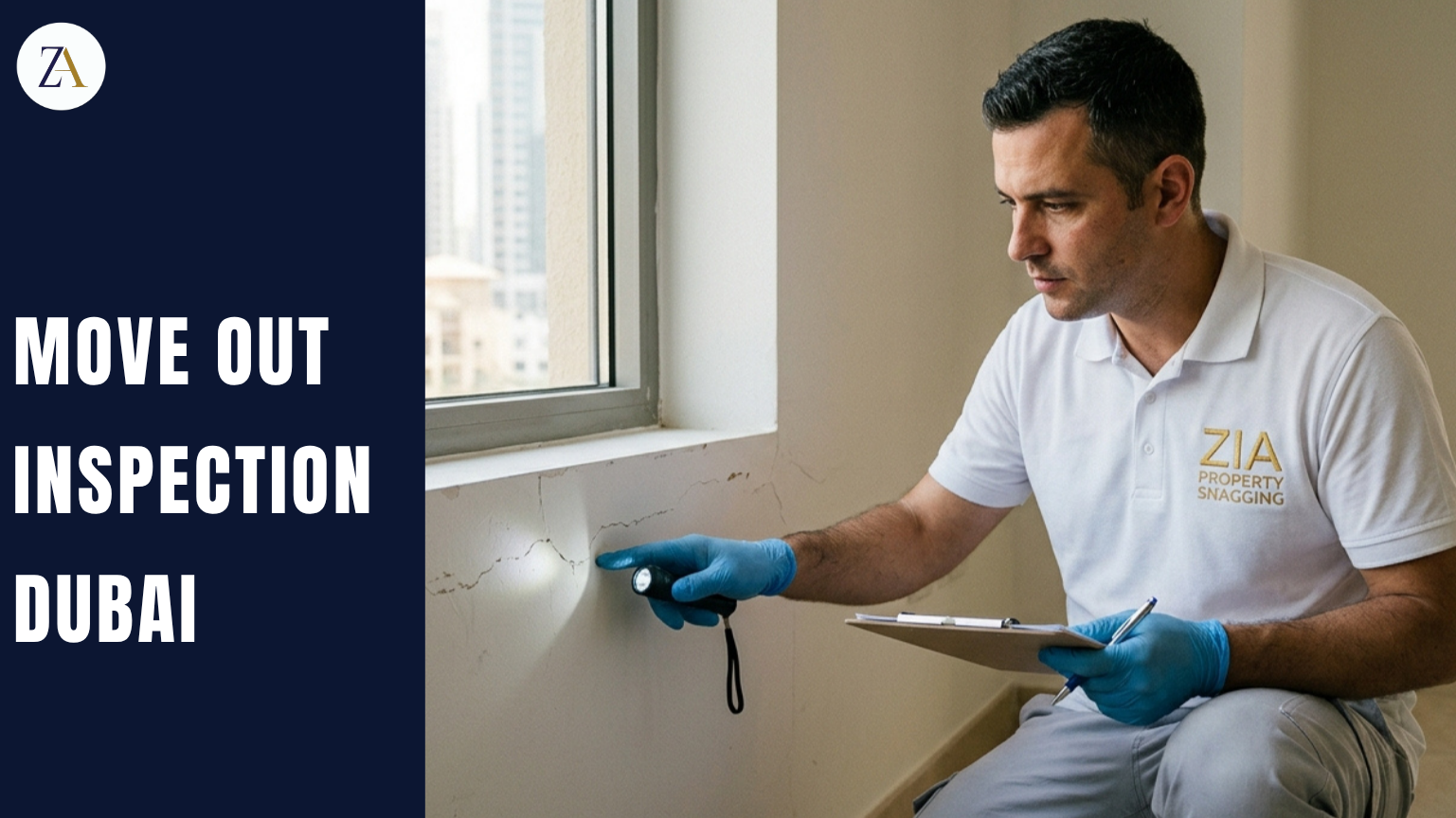
Move Out Inspection Dubai | Snagging Inspection Experts
When it comes to the end of a tenancy, there is one question that is of paramount importance to most tenants and landlords in Dubai: will the security deposit be returned in full? The answer usually depends on what happens during the move-out inspection that many people do without actually knowing what it really entails.
A move-out inspection is not just a “walk-around.” It is a step-by-step procedure; it employs special tools to identify problems that might not be seen by the unaided eye, and it creates a report that is of real value if there is any later controversy. This knowledge in advance ensures that tenants and landlords can approach the handover with confidence, rather than uncertainty.
Here is a detailed, step-by-step breakdown of what actually happens, based on how these inspections are carried out across Dubai by Zia Property Snagging.
What Is a Move-Out Inspection in Dubai?
A move-out inspection is a move-out condition inspection that is performed at the end of a tenancy and documented. Before the tenant hands over the keys, walls, floors, fixtures, appliances, and systems will be inspected by an independent inspector. It leaves a neutral, photo-supported record that can be used by the landlord and/or tenant in case there is ever an issue regarding the amount of the security deposit. Zia offers this as a dedicated move-in/move-out inspection service across Dubai and the wider UAE.
Who Attends, and When Is It Scheduled?
A move-out inspection occurs most typically during the last week before the end of the tenancy, around the time of the actual move-out, when the property is completely vacated with all belongings removed. It is important to time, a floor or wall state behind furniture that has not been moved cannot be checked by an inspector.
The ideal situation is three parties:
- The tenant (or their representative), to see the findings first-hand
- The landlord or their property manager, to agree on the recorded condition
- The inspector, who documents everything independently
If you’re a tenant, never hand over your keys without attending this inspection yourself. Whatever’s recorded in your absence becomes very hard to dispute later.
Leave your phone, We’ll call you in 15 min
Step-by-Step: What Actually Happens During the Visit
This is the actual process that a typical residential move-out inspection goes through in Dubai:
- Briefing on arrival & walkthrough. The inspector then verifies at a designated time that the unit is clear and provides a short description of what will happen next.
- Room-by-room assessment begins. The inspector will typically start at the front door and then proceed through the rooms, from the living rooms to the bedrooms and, last but not least, to the wet rooms (baths and kitchens), as these are usually the longest.
- Inspection of walls, ceilings, and floors. All walls are inspected for cracks/scuffs/nail holes as well as for paint damage (excluding fading), and all floors are inspected for scratches, stains and/or damaged tile.
- All fixtures and fittings have been tested. Doors and windows are opened and closed to check for correct function; cabinet hinges, handles, and locks are opened and closed to make sure they are functional.
- Electrical testing is carried out on points. All switches, sockets, and light fittings are individually checked—some with a voltage tester—to be sure that they are working properly.
- Operates and tests the plumbing systems. Taps, showers, and toilets are inspected for leaks, water pressure and any drainage issues, and under-sink locations are inspected for water leaks.
- AC performance is checked. Cooling efficiency, filter condition, and any drainage issues around AC units are noted, since AC problems are one of the most common move-out flags in Dubai.
- Every issue is photographed on the spot. Each defect is photographed with location notes, and both tenant and landlord can see it being recorded in real time—nothing is added later, off-site.
- Findings are discussed before anyone leaves. Before the inspector packs up, both parties get a chance to flag anything they disagree with. This is your moment to speak up, not after the report is emailed.
- The report is compiled and delivered. A digital report with timestamped photos, room-by-room notes, and a defect summary is typically issued within 24 hours, sometimes faster for standard units. This is essentially the same process behind our snagging report service, adapted for end-of-tenancy handovers.
Wear and Tear vs. Tenant Damage: How Inspectors Decide
This is the part that decides whether something comes out of your deposit or not. A good inspector doesn’t just list “issues”—they categorize each one, because Dubai tenancy practice treats normal wear and tear very differently from tenant-caused damage.
Category | What It Looks Like | Usually Deposit-Deductible |
Normal wear and tear | Light fading on paint, minor carpet flattening, small marks from daily use | No |
Accidental damage | Cracked tile from a dropped object, a burn mark on a counter | Usually yes |
Neglect-related damage | Mould from unreported leaks, heavily stained grout from lack of cleaning | Usually yes |
Pre-existing damage | Anything already noted on the move-in report | No — not the current tenant’s responsibility. |
This is exactly why having a move-in report to compare against matters so much. Without one, it’s much harder to prove what was already there before you moved in.
What Happens After the Inspection
After the report is given, the landlord will look at the report and determine what, if anything, will be deducted from the deposit. The deposit is usually returned within 30-60 days of the end of the lease and key handover, but Dubai law does not have a specific number of days for this.
When you are unhappy with the deductions, the first place to start is with the landlord, with the evidence of the inspection report and pictures. If this is not possible, one party may lodge a case with the Rental Disputes Settlement Centre, where the fee is normally based on a percentage of the annual rent. This is neutral evidence and not a he-said-she-said situation, as there’s an independent, photo-documented report from the inspection.
Cost of a Move-Out Inspection in Dubai
The price varies according to size and type of property. Studio and 1-bedroom apartments are typically in the range of AED 999–1,499 and are slightly more expensive depending on the size of the units, two- or three-bedroom. Villas and townhouses are normally priced per square foot, with commercial properties sold by fit-out. Very often, the full report and a re-inspection will be part of the base price of the best inspection companies, but not those that charge less, so check before booking.
Common Mistakes Tenants and Landlords Make
- Choosing not to conduct a move-in assessment and having no baseline to compare with at a later time
- Failure to attend the move-out inspection in person
- Only disagreeing once the report is received via email, not on-site
- Assuming all wall marks or fading count as “damage” when much of it is normal wear
- Not requesting a re-inspection after repairs are completed, before formally closing out the deposit conversation
How to Prepare Before Your Move-Out Inspection
Very little preparation is required. Do a thorough cleaning of the unit because a dirty unit can also be flagged even if there are no real damages, and take care of small, inexpensive problems before they appear as deductions. Keep your move-in inspection report and any maintenance receipts on hand as backup evidence, and take your own photos of the property before the inspector arrives.
It also helps to walk through our RERA-standard rental inspection checklist beforehand, so nothing catches you off guard on the day. And block out enough time to attend the full inspection yourself—don’t rush it, and don’t send someone unfamiliar with the unit’s history.
FAQ's About Move Out Inspection Dubai
How long does a move-out inspection take in Dubai?
Most apartment inspections take 60–90 minutes, depending on unit size. Villas and larger units can take 2–4 hours.
Can I refuse to attend the inspection?
You can, but it’s not advisable—whatever is recorded in your absence is much harder to dispute afterward.
Does normal wear and tear affect my deposit?
No. Landlords in Dubai cannot deduct for reasonable wear and tear that comes from normal daily use of the property.
What if I disagree with something in the report?
Raise it on the spot with the inspector and landlord. If it’s still unresolved, you can escalate to the Rental Disputes Settlement Centre.
Is a professional inspection worth it over a landlord's own walkthrough?
Yes—an independent inspector has no stake in the outcome, which makes the report far harder to dispute than a landlord’s personal assessment.
Conclusion
A move-out inspection isn’t just a formality—it’s the one thing standing between you and a clean, dispute-free deposit return. Book a certified, independent inspection and walk into your handover with photo-backed proof of exactly where you stand.