

Hollow Tile Tap Test: How to Check Hidden Defects in Dubai
One of the most neglected defects in Dubai properties is hollow tiles. They appear completely normal, flat, and crack-free, but there’s a crack between the tile and the substrate that is silently waiting to fail. Whether you are purchasing a new apartment, accepting an off-plan villa, or simply viewing your current home, it is important to understand the tap test so you don’t end up paying thousands of dirhams for repair work in the future.
This guide will take you through what a hollow tile tap test is all about, why it is even more important in Dubai’s climate than any other place, how to perform it in your own home, and when it’s time to call in the certified snagging inspector.
What Is a Hollow Tile Tap Test?
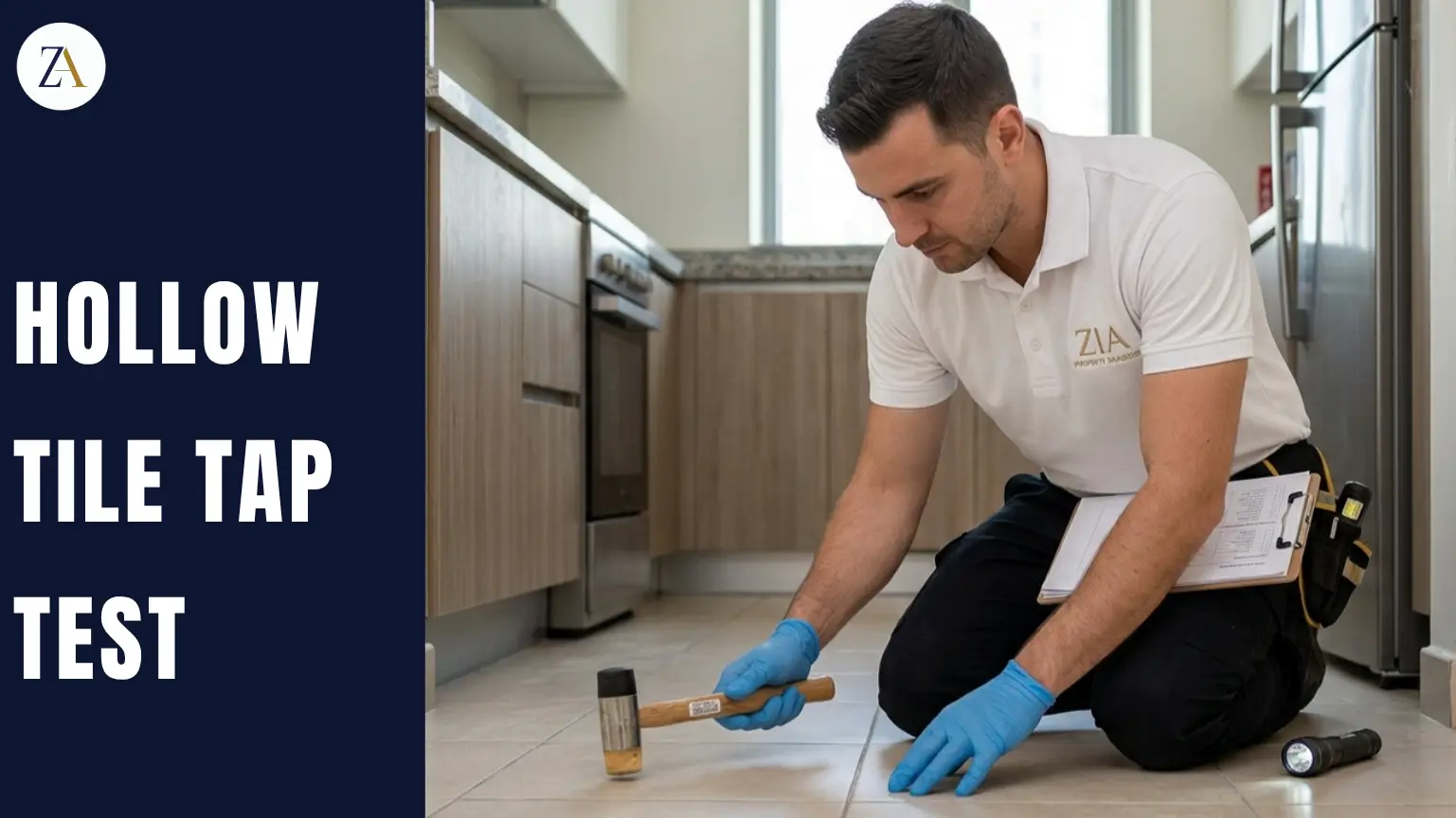
The hollow tile tap test is a simple diagnostic test that involves striking the surface of a tile with a coin, knuckle, or special device to identify differences in sound. The tile is well bonded if it produces a good, sharp “tink” when struck. If the echo is dull and drum-like, then you have a void (air pocket) between the tile and the floor underneath it.
As one of the quickest methods to detect tile problems before they become cracked floors or lifted corners or retiling costs, it’s beneficial.
Why Do Tiles Sound Hollow in Dubai Properties?
Hollow tiles aren’t random. In almost every case, one of these factors is responsible:
- Not applying the adhesive properly: contractors can sometimes be pressured to hand over the job on time, so they may not apply the adhesive fully and apply it only in spots, particularly during high-volume off-plan installations
- Extreme heat and thermal cycling: The surface temperatures in Dubai’s summertime regularly surpass 50°C on exposed tiled surfaces, such as balconies and terraces. The repeated expansion and contraction places a much greater test on the bond than in temperate regions.
- Humidity-driven adhesive breakdown: high ambient humidity, especially near the coast, can prevent adhesive from curing properly if tiling was rushed during construction
- Fast-paced construction timelines: Dubai’s tight project handover schedules sometimes mean adhesive isn’t given adequate curing time before tiles are walked on or furniture is moved in
- Substrate movement: new buildings settle in their first 1–2 years, and this natural movement can crack the bond between tile and screed
In our experience inspecting properties across JVC, Dubai South, and Arjan—where off-plan handover volumes are highest—hollow tiles are consistently among the top five defects flagged in pre-handover snagging reports.
Leave your phone, We’ll call you in 15 min
How to Do a Hollow Tile Tap Test Yourself
You don’t need professional equipment to do a basic check. Here’s how:
- Choose your tool — a coin, a bunch of keys, or your knuckle works for a basic check. Professional inspectors use a hollow drum detector for precision.
- Start in one corner and work systematically across the room in a grid pattern — don’t tap randomly.
- Tap each tile in 3–5 spots — center, edges, and corners — since partial voids can leave part of a tile solid and part hollow.
- Listen carefully — a high, sharp sound means solid bonding. A low, hollow, echoing sound signals a void underneath.
- Mark affected tiles with tape or chalk so you can track the pattern.
- Check the surrounding area, not just the obvious spot — hollow zones often spread to neighboring tiles.
What to look out for while testing:
- Grout cracks tracing the outline of a specific tile
- Slight rocking or springiness when you stand on a tile
- Small height differences (lippage) between adjacent tiles
- Fine dust reappearing from grout lines after cleaning
DIY Tap Test vs. Professional Snagging Inspection
A basic tap test is a good starting point, but it has limits. Here’s how it compares to a certified inspection:
Factor | DIY Tap Test | Professional Snagging Inspection |
Accuracy | Depends on user’s ear and consistency | Hollow drum detector + trained engineer judgment |
Documentation | None, unless you note it yourself | Photographed, severity-rated, included in formal report |
Developer Acceptance | Often dismissed as anecdotal | RERA-recognised reports accepted by major developers |
Scope Covered | Only tiles you personally test | Tiles plus 400+ other structural, MEP, and finishing checkpoints |
Cost | Free | From AED 999 |
If you’re preparing for handover or a resale purchase, a documented professional report carries far more weight with developers than a verbal complaint—especially when defects need to be formally logged and rectified.
Common Areas Where Hollow Tiles Occur in Dubai Homes
Hollow tiles can appear anywhere, but certain zones are more prone to it:
- Bathrooms and wet areas — moisture exposure accelerates adhesive breakdown
- Kitchens — near sinks and dishwashers, where water splashing is frequent
- Balconies and terraces — direct sun exposure causes the most extreme thermal cycling in the property
- Large-format tiles anywhere in the home — these need back-buttering during installation, and skipping this step is a common shortcut in rushed builds
Off-plan handovers tend to show more hollow tiles than resale properties with tiles that have already “settled” over a few years, simply because installation shortcuts surface faster under real-world use.
Who Is Responsible for Fixing Hollow Tiles — Owner or Developer?
This is where Dubai’s regulatory framework works in the buyer’s favor. Under RERA regulations, developers are required to rectify all reported defects—including hollow or defective tiling—during the Defects Liability Period (DLP), which typically runs for 12 months from handover.
- Before handover: any hollow tiles found are the developer’s responsibility to fix, at no cost to you, before you accept the keys
- During the DLP: defects reported within this window must still be fixed by the developer free of charge
- After the DLP expires: repair costs generally shift to the owner, which is exactly why a documented snagging inspection before or shortly after handover is so valuable
A professional snagging report timestamps and documents every hollow tile found, giving you leverage to hold the developer accountable within the legally protected window.
What Happens If Hollow Tiles Are Ignored?
Hollow tiles don’t stay hollow forever—they’re a progressive problem, not a static one:
- Weeks to months: micro-cracks develop at tile edges from repeated foot traffic
- A few months in: grout around the affected tile starts cracking, letting in dirt and moisture
- Beyond that: tiles begin to crack, lift at corners, or shift visibly underfoot
- Long-term neglect: what could’ve been a simple re-adhesion job becomes a full re-tiling project — and if the original tiles are discontinued, matching replacements can be difficult or impossible
For anyone planning to sell, visible tile defects during a buyer’s own inspection can also affect negotiating power and property value.
How Zia Property Snagging Detects Hollow Tiles
At Zia Property Snagging, hollow tile detection is one of over 400 checkpoints covered in every inspection. Our RERA-approved civil engineers use a professional hollow drum detector alongside moisture meters and thermal imaging cameras to identify not just hollow tiles, but the underlying cause—whether it’s adhesive failure, substrate moisture, or installation shortcuts.
Every defect we find is photographed, severity-rated, and compiled into a full report—accepted by major developers including Emaar, Damac, Nakheel, and Sobha. If the developer rectifies the issue, we return for a free re-inspection to confirm it’s genuinely fixed, not just patched over.
Frequently Asked Questions
Is a hollow tile always a defect that needs fixing?
Not always—some flooring systems intentionally separate tile from substrate, which can sound hollow without being a problem. A professional inspection confirms which is which.
Can I do a tap test before signing handover papers?
Yes, and you should. Any defects found before handover are the developer’s responsibility to fix at no cost under RERA rules.
How much does a professional snagging inspection cost in Dubai?
The cost of the inspection is AED 999, and the full report will be provided within 24 hours, depending on the size and type of the property and the type of services requested.
Can hollow tiles be fixed without removing them?
Rarely. It is not a reliable way to glue a tile back in place, as the best way to repair a tile is to get rid of it, clean the substrate and put it back down with the full amount of adhesive.
Does the developer have to fix hollow tiles for free?
Yes, provided that the defect is reported prior to handover or within the Defects Liability Period, the developer will need to fix the defect free of charge to the buyer.
Conclusion
A hollow sound under your tiles might seem minor, but in Dubai’s climate — and within a regulatory system that protects buyers during the DLP — catching it early is one of the smartest, lowest-cost decisions you can make. Whether you do a basic tap test yourself or bring in certified engineers for a full 400+ point inspection, don’t wait until the crack shows up.
Book a professional snagging inspection with Zia Property Snagging today — from AED 999, with a full report in 24 hours and a free re-inspection included.
