

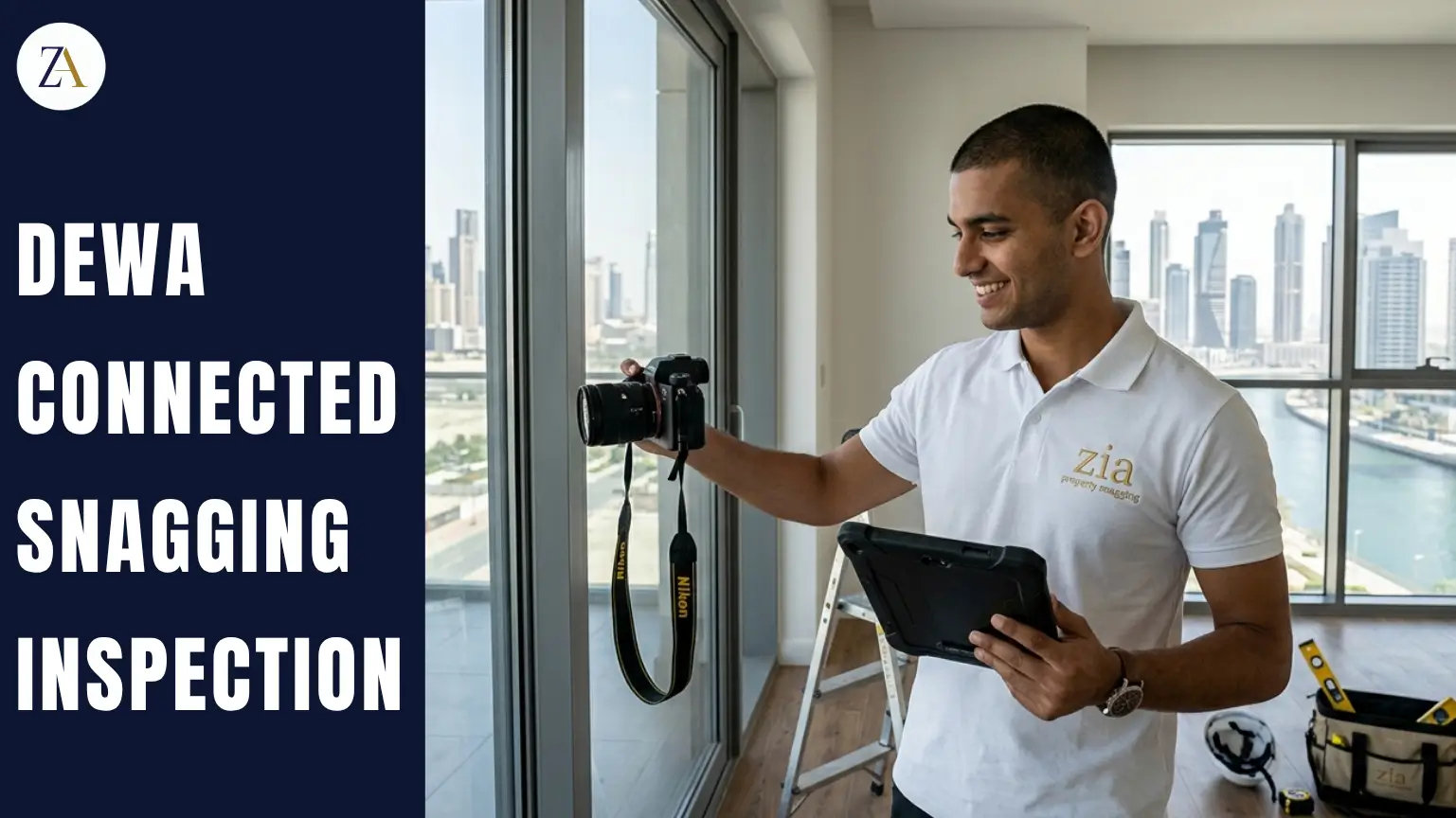
Dewa Connected Snagging Inspection for New Properties
Did you receive the call that your DEWA connection is now live? That’s not just an administrative update—it’s the real starting point for your snagging inspection. Most buyers think that the handover of paperwork or the keys is the trigger to check for defects. It isn’t. Until your electricity and water are actually flowing, half the property can’t be tested properly at all.
This is where many Dubai buyers lose their advantage. They go through a unit unawired, enjoy the interior, sign the handover and only find out the real problems when it doesn’t cool the air, a socket sparkles, or the shower has insufficient water pressure weeks later. By that time, it’s more difficult to prove the defect existed at handover, and the Defect Liability Period (DLP) is already up.
This guide provides you with a step-by-step process of what to look for after DEWA is connected, why it’s important to do it at the right time to benefit you, and how a certified snagging inspection can help you to become a powerful negotiating tool for the developer.
What "DEWA Connected" Actually Means for Your Snagging Timeline
DEWA activation isn’t just a box ticked on a checklist. It’s the moment several important clocks start running simultaneously.
Once your unit is connected, your Ejari registration process can move forward, your DLP countdown effectively becomes active from a practical standpoint, and—critically—some developers begin charging service fees once the completion notice is issued, regardless of whether you’ve moved in yet. This means that any delay between DEWA connection and your snagging inspection is time working against you, not for you.
It also means your property is now testable in a way it wasn’t before. Wiring that looked fine on a visual inspection can fail the moment real current runs through it. Waterproofing that seemed adequate can reveal leaks only once water is actually flowing through the pipes. The DEWA connection is the switch that turns a cosmetic walkthrough into a genuine functional inspection.
Why You Should Snag After DEWA Activation, Not Before
A pre-DEWA walkthrough can catch obvious issues—cracked tiles, paint touch-ups, misaligned doors. But it cannot catch the defects that actually cost the most money to fix later, because those defects only show up under load.
- Electrical faults only appear when current runs through the system—a socket can look perfectly installed and still fail a live test
- AC performance issues can’t be assessed without power—you need the compressor running to check cooling output and drainage
- Water pressure and leak points stay hidden until water is actually flowing through every pipe and fixture
- Appliance function — ovens, washing machines, and water heaters—simply cannot be verified without a live connection
This is exactly why timing your snagging inspection for after DEWA connection, not before, gives you a complete picture instead of a partial one. It’s also why an inspection booked too early often needs to be repeated, costing time and, in some cases, money.
Leave your phone, We’ll call you in 15 min
The DEWA-Connected Snagging Checklist
Once power and water are live, a proper inspection should cover every system that depends on that connection. Here’s what a thorough, RERA-standard inspection checks:
Electrical systems
- Every socket and switch is tested under live current
- Distribution board (DB) load testing for capacity and safety
- Circuit breakers checked for correct tripping response
- Lighting fixtures tested for flicker, dimming faults, and consistent output
Air conditioning
- Cooling performance measured against the expected output for the room size
- Drainage checked to confirm no pooling or leaks near the AC unit
- Thermostat response time and accuracy
- Noise levels checked against the normal operating range
Plumbing
- Water pressure is tested at every tap and shower point
- Water heater function and temperature consistency
- Leak checks under real flow—not just visual inspection of pipes
- Drainage speed in sinks, showers, and floor traps
Appliances and fixtures
- Kitchen appliances (oven, hob, extractor) tested for function
- Washing machine and dryer connections checked
- Water quality and flow at all outlets
Rectification and Follow-Up
Once the snagging list is submitted, the developer addresses each defect. After repairs, a follow-up inspection is done to make sure all issues are fixed.
This step helps maintain quality. It also makes sure the property meets the required standards before handover.
How Property Snagging Prevents Construction Defects
Early Identification of Faults
The primary way snagging prevents defects is by identifying them early. Finding issues before handover allows them to be fixed immediately under warranty. This reduces the risk of long-term damage.
For example:
- Detecting a leaking pipe before it causes water damage to walls and flooring
- Identifying uneven flooring before furniture installation highlights the imperfections
- Noticing cracks in plaster that could worsen over time
By addressing these problems proactively, homeowners avoid expensive repairs and maintain property value.
Smart home, intercom, and access systems
- Video intercom and access control tested for connectivity
- Smart switches or automation systems are checked for responsiveness
- Building access cards or fobs was tested where applicable
Each of these checks depends entirely on DEWA being connected. Skip the timing, and you skip the accuracy.
Villa-Specific Additions
If you’re taking handover of a villa rather than an apartment, the DEWA connection unlocks a few extra checks that apartment buyers won’t need to worry about.
- External DEWA meter: location, accessibility, and correct labeling
- Pool pump and filtration: tested under real power for consistent operation
- External AC compressor units: checked for correct mounting, vibration, and drainage
- Garden lighting and irrigation systems: tested for function once power is live
Villas carry more systems that rely on utility connection than apartments do, which is exactly why a room-by-room—and area-by-area—inspection matters even more once the property is fully connected.
Common Defects Found After DEWA Connection
Across thousands of inspections, certain patterns show up consistently once power and water are switched on.
Electrical issues
Sockets and switches that pass a visual check often fail once real current runs through them—loose wiring, incorrect polarity, or weak connections only surface under load.
AC performance problems
Units that look properly installed frequently cool unevenly, drain poorly, or take longer than expected to reach the set temperature once actually running.
Weak water pressure
Pressure that’s noticeably lower than expected on one or more floors is one of the most common post-connection findings, especially in mid- to high-rise buildings.
Untested appliances
Ovens, water heaters, and built-in appliances are often “installed” but never actually switched on or tested by the developer’s team before handover.
Higher rates in off-plan units
Off-plan properties tend to show more functional defects than resale units, simply because their systems have never operated under real conditions until the buyer moves in.
This is precisely why waiting for DEWA connection before your snagging inspection isn’t optional—it’s the only way to catch these issues while the developer is still obligated to fix them for free.
What Happens If You Skip This Step
Skipping a DEWA-connected inspection—or rushing through one before power is fully live—puts you in a weaker position than most buyers realize.
Any defect not documented and submitted within your DLP window becomes your responsibility to repair, at your own cost. Electrical or plumbing issues that are not identified at handover become much more difficult to establish that they occurred on day one, months after they’ve occurred. After you sign the handover certificate, the leverage you have with the developer declines markedly—verbal agreements to “fix it later” are not usually backed by a dated report of snags attached to the agreement.
The cost of a proper inspection is a fraction of what a single overlooked AC or electrical fault can cost to repair independently once the DLP has closed.
Why an Independent RERA-Approved Inspection Matters Here
This is where working with an independent, certified inspector—rather than relying on the developer’s own handover team—makes the real difference.
- Zero conflict of interest: Zia Property Snagging is RERA-approved, DED-licensed, and InterNACHI-certified and works exclusively for buyers, never developers
- 400+ checkpoints covering structural, electrical, plumbing, and finishing elements
- 24-hour report delivery: fast enough to act while your DLP window is still fully open
- Free re-inspection is included once the developer completes repairs, so you get confirmation that the fix actually worked
- Pricing from AED 999, with coverage across 40+ Dubai communities and all seven UAE emirates
Frequently Asked Questions
How soon after DEWA connection should I book a snagging inspection?
Book as soon as power and water are confirmed live, ideally before signing the handover certificate. This ensures all electrical, AC, and plumbing systems can be tested under real conditions while your DLP window is still fully open.
Can I do a snagging inspection before DEWA is connected?
You can, but it will only catch cosmetic and structural issues, not functional faults. Electrical, AC, and plumbing defects only surface once the property has an active power and water connection.
Does the developer have to fix defects found after DEWA connection?
Yes, under RERA regulations, developers must rectify all documented defects reported within the Defect Liability Period. This applies whether the defect is cosmetic, structural, or functional.
What if my AC or electrical sockets fail the test after DEWA connection?
These are reported as active defects in your snagging report and must be rectified by the developer at no cost to you. A free re-inspection confirms the fix once repairs are complete.
Is a DEWA-connected inspection different for villas versus apartments?
Yes, villas require additional checks like external AC compressors, pool pumps, and outdoor DEWA meters. Apartments focus mainly on indoor electrical, AC, and plumbing systems.
Conclusion
If your DEWA connection just went live, this is the moment to book—not after you’ve settled in and started living with the property’s problems. A certified snagging inspection now, while the developer is still obligated to fix everything for free, protects both your investment and your peace of mind.
Book Your Inspection Today or WhatsApp Zia Property Snagging for same-day scheduling.
