
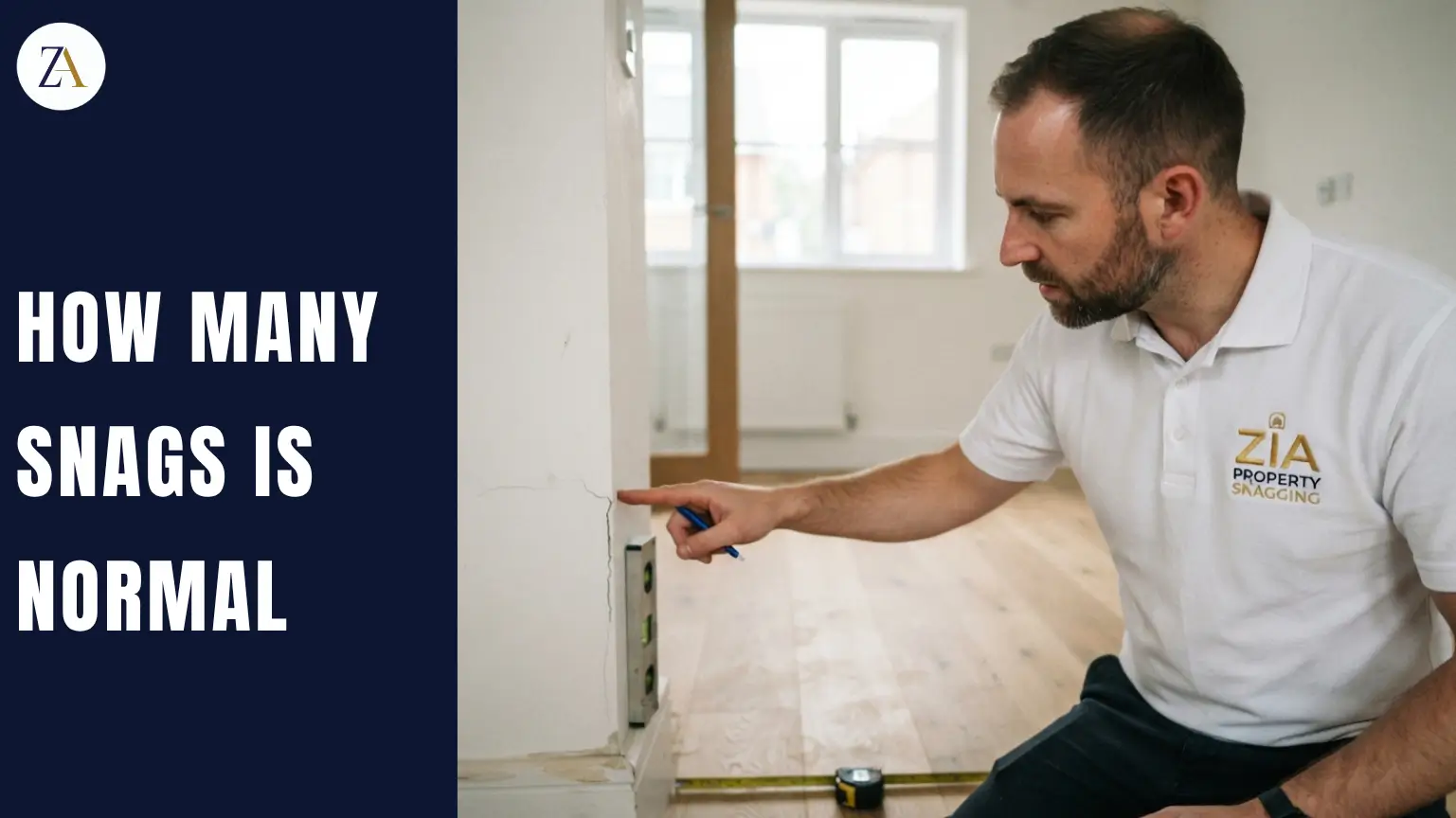
How Many Snags Is Normal? Real Numbers From Our Dubai Inspections
If you’ve just received your snagging report and counted 68 defects, take a breath. You’re probably not looking at a bad handover. You’re looking at a normal one.
We say this to nervous buyers almost every week. Someone picks up their keys, hires us for a pre-handover inspection, and then calls us in a mild panic because the report lists dozens of issues on a brand-new property they paid millions of dirhams for. It feels wrong. It isn’t. After conducting over a thousand inspections across Dubai’s new-build and secondary markets, we can confidently tell you that a certain number of snags isn’t a sign of a bad building. It’s a sign of a normal one. What matters isn’t the total count — it’s what’s actually on that list.
This post breaks down real snag count ranges by property type, explains why the numbers swing so widely, and tells you exactly when a high count should worry you and when it shouldn’t.
What Counts as a "Snag," Exactly?
A snag is any defect, finishing error, or functional fault found in a property before or shortly after handover. That covers a huge range—from a scuffed skirting board to a mis-wired socket to a leaking shower mixer. Not all snags are created equal, which is the whole reason this article exists.
Snagging inspections typically happen at one of three points:
- Pre-handover, before you accept the keys
- Within the first 30–60 days after handover, while it’s easiest to hold the developer accountable
- Toward the end of the Defects Liability Period (DLP), to catch anything that surfaced later
The earlier you snag it, the more leverage you have with the developer.
The Real Numbers: Snag Counts by Property Type
Based on our own inspection data across Dubai communities, here’s what “normal” actually looks like by property type:
- Studio and 1-bedroom apartments: typically 25–60 snags. Smaller footprint, fewer wet areas, fewer MEP connections to inspect.
- 2–3 bedroom apartments: typically 50–100 snags. More bathrooms, more AC zones, more joinery — more surface area for something to go wrong.
- Townhouses and villas: typically 100–200+ snags. Multiple floors, private pools, gardens, and standalone MEP systems all add up quickly.
- Penthouses and luxury units: often on the higher end of their category, sometimes exceeding 150, simply because of the sheer volume of custom finishes, smart-home integrations, and larger glazing areas.
These ranges hold up whether the developer is a major master developer or a smaller boutique one — quality varies, but volume tends to scale with size and complexity, not brand name.
Leave your phone, We’ll call you in 15 min
Why the Range Is So Wide
Two identical-sized units in the same building can come back with very different snag counts. A few things drive that variation:
- Off-plan vs. ready property. Off-plan handovers, especially in newly completed towers, tend to run higher because trades are finishing under deadline pressure.
- Developer and contractor quality control. Some developers run stricter internal QC before handover than others, which shows up directly in your snag count.
- Community delivery pace. When a developer hands over hundreds of units in the same community within a short window, quality control gets stretched thin.
- Finishing tier. Higher-spec finishes (natural stone, custom joinery, integrated smart systems) simply have more components that can be misaligned or defective.
None of this means you should expect a flawless unit anywhere in Dubai. It means the number alone tells you very little without context.
Cosmetic vs. Critical: The Split That Actually Matters
Here’s the part most snagging reports — and most articles about snagging — gloss over. The total count is far less important than the breakdown.
Across our inspections, the split typically looks like this:
- 80–90% are cosmetic or minor. Paint touch-ups, small tile chips, scuff marks, misaligned cabinet doors, minor grout gaps.
- 10–15% are functional issues. Doors that don’t close properly, taps with poor water pressure, drawers that stick.
- A small remainder are critical MEP or safety defects. Incorrect socket polarity, AC units not cooling to spec, drainage slope errors, water leaks behind walls.
A unit with 90 snags where 85 are cosmetic paint issues is in far better shape than a unit with 40 snags where 8 are electrical or structural. If you only look at the headline number, you’ll miss this entirely — which is exactly why we categorize every defect by severity, not just by count.
When Should You Actually Worry?
Most buyers ask the wrong question. Instead of “is 70 snags too many,” ask these instead:
- Are more than 20% of your snags MEP or structural? That’s above what we’d consider a normal ratio.
- Do you see repeated instances of the same defect across multiple rooms? One misinstalled socket is an oversight. Five is a pattern, possibly signaling a wider contractor error.
- Are there active leaks, water ingress, or visible cracking? These need immediate escalation, regardless of your total count.
- Is your count dramatically higher than similar units in your building? If neighbors with the same layout report half your snag count, it’s worth flagging directly with the developer.
If any of these apply, the total number becomes secondary. The category and pattern of defects is what should actually drive your next step.
What Happens After You Get Your Snag List
Once your report is finalized, it becomes your evidence for the Defects Liability Period — the window during which the developer is legally required to fix defects at no cost to you, typically 12 months from handover under UAE regulations, with structural issues covered separately for up to 10 years.
- Submit your report to the developer through their official snagging or customer care channel
- Most reputable developers respond and schedule rectification within 2–4 weeks
- Keep a copy of your dated report; it’s your reference point if anything is disputed later
- If a developer refuses to act, RERA and the Dubai Land Department accept certified snagging reports as supporting evidence in formal complaints
A well-documented report with clear severity ratings moves through this process far faster than a vague list of complaints.
How Zia Property Snagging's 400+ Checkpoint Process Finds More
The difference between inspections often comes down to process, not luck. Every Zia Property Snagging inspection runs through 400+ checkpoints across four categories: structural and civil, MEP systems, finishing and joinery, and safety compliance. This ensures the critical 10–15% of defects don’t get missed because a checklist wasn’t thorough enough.
A few things back this up:
- Inspectors are InterNACHI-certified, working under a RERA-approved, DED-licensed company
- Thermal imaging catches insulation gaps and hidden moisture a visual check would miss
- Reports delivered within 24 hours
- Free re-inspection once the developer claims fixes are complete
The goal isn’t finding the most snags — it’s finding the ones that actually matter for your DLP claim and long-term ownership costs.
Frequently Asked Questions
Is 100 snags on a new apartment normal?
For a 2–3 bedroom unit, yes — that’s within the typical range we see. What matters more is the ratio of critical to cosmetic defects.
Do villas always have more snags than apartments?
Generally yes, since they have more floors, more MEP systems, and outdoor areas like pools and gardens to inspect.
Should I worry if my snag count is much higher than my neighbor's?
It’s worth a closer look, especially if the units share the same layout and finishing package. A large gap can point to inconsistent contractor work.
Can I still get defects fixed if I didn't snag before handover?
Yes, as long as you’re within your Defects Liability Period. It’s easier the earlier you inspect, but the DLP protects you regardless.
Does a high snag count mean I should reject handover?
Not necessarily. Focus on whether critical MEP or structural defects are present, not the raw total — most high counts are cosmetic and don’t justify delaying handover.
Conclusion
A high snag count isn’t a red flag on its own — it’s often just a sign that your inspection was thorough. What actually matters is the mix: how many issues are cosmetic versus critical, and whether any patterns point to a bigger contractor problem. The only way to know that for sure is a detailed, category-based inspection rather than a quick walkthrough.
If you’re approaching handover or already past it and want real numbers instead of guesswork, book a certified snagging inspection with our team — RERA-approved, InterNACHI-certified, with reports delivered within 24 hours and pricing starting from AED 999.