

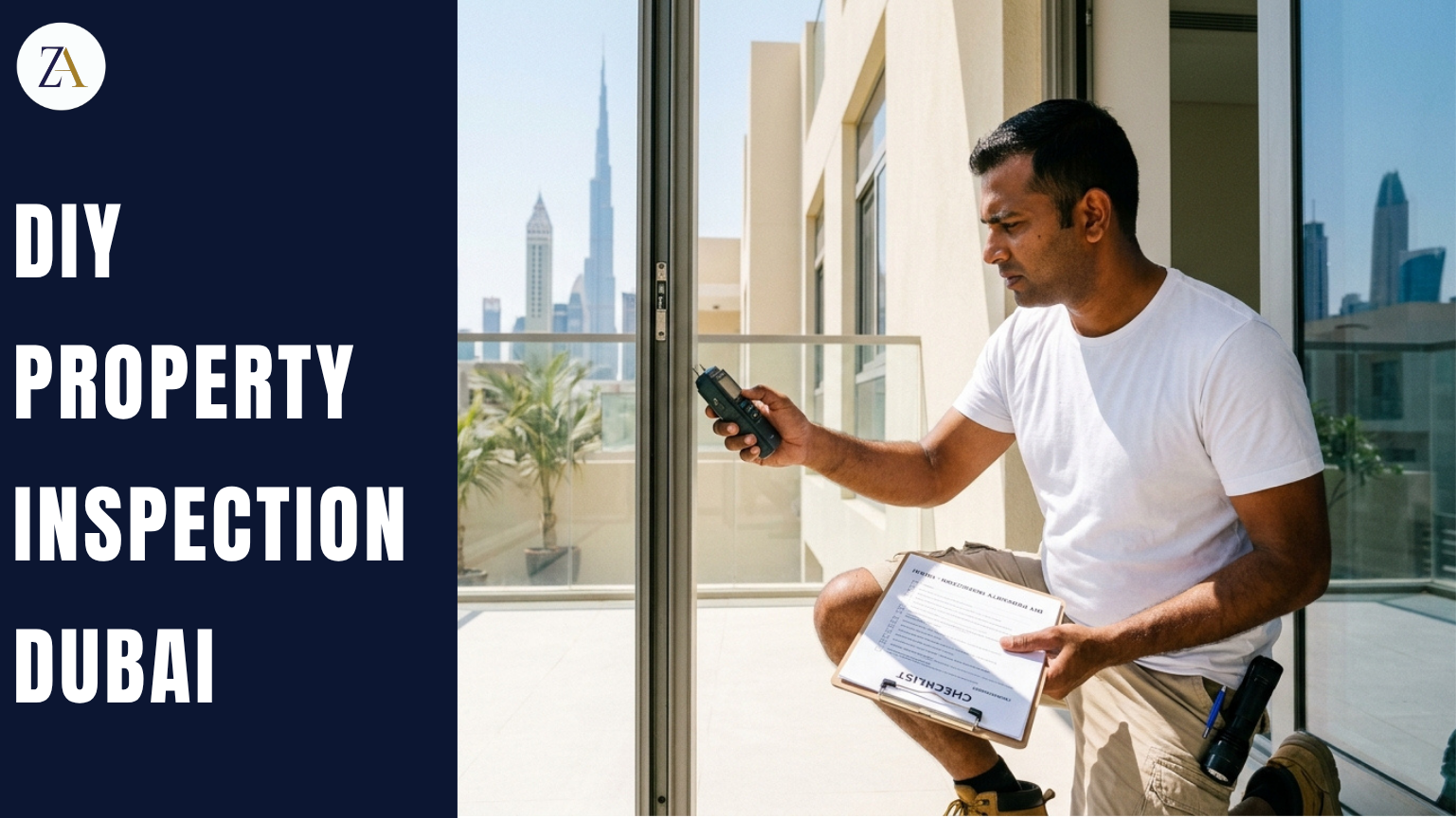
How to Do DIY Property Inspection Dubai 2026 | Full Guide
Buying a property in Dubai is one of the biggest financial decisions of your life. And still, most buyers walk in with no inspection plan at all—assuming everything is fine until something goes wrong.
A DIY property inspection is your first line of defence. It does not replace a professional snagging engineer, but it gives you the confidence to walk in with open eyes before you sign anything or accept keys. This guide is written specifically for Dubai—covering RERA handover rules, AC systems, sandstorm damage, and your Defect Liability Period rights.
What Is a DIY Property Inspection in Dubai?
A DIY property inspection is basically you walking through a property yourself to spot any visible defects or quality issues before you buy or accept handover. You are not breaking walls or lifting floors — you are looking, noting, and asking questions about what you see.
In Dubai this usually happens at two points — before you make an offer on a resale property, or when your developer calls you in for handover on an off-plan unit. It is not the same as hiring a professional snagging engineer, but it is the smartest thing you can do before that step.
When Should You Do a DIY Property Inspection?
Before making an offer on a resale property
Do not show up to the developer’s handover appointment without doing your own check first. Go through every room yourself. Write down every crack, every paint drip, every broken fixture, every door that does not close right. You are fully within your rights to refuse the keys until those things are fixed.
Leave your phone, We’ll call you in 15 min
Before your Defect Liability Period runs out
UAE law gives you one year after handover to report construction defects — and the developer has to fix them for free. Structural defects are covered for ten years. A huge number of owners miss this window simply because they never went back and properly checked their property. Do not let that be you.
What You Will Need Before You Start
Things to bring:
- Your phone—camera, torch, and notes all in one
- A marble or small ball—roll it on the floor to check for uneven surfaces
- A tape measure—compare actual room sizes against the floor plan
- A bottle of water—pour it near drains to see how fast they clear
Documents to ask for:
- Sale and Purchase Agreement or Title Deed
- Floor plan and unit layout
- DEWA connection confirmation
- AC and chiller system details
- Past maintenance records if it is a resale property
- Service charge payment history
Get these before you walk in. They help you check whether what was promised actually matches what has been built and installed.
DIY Property Inspection Checklist — Room by Room
Exterior and Building Common Areas
Start outside before you even enter your unit. How the common areas look tells you a lot about how the building is being managed.
- Look at the building facade for cracks, staining, or peeling paint
- Check ground-level walls and the parking area for damp patches or water stains
- Walk through the lobby, corridors, and stairwells — note the general cleanliness and condition
- Push on fire doors and emergency exits to make sure they actually open properly
- If you can access the rooftop or podium level, go up — waterproofing failures in Dubai usually show up there first
- Check your parking spot for cracks, oil stains, or signs of water coming through
Front Door and Entry
- Open and close the front door — it should move smoothly without dragging or sticking
- Test the lock properly, both the latch and the deadbolt
- Look at the door frame for any gaps or cracks
- Check the seal at the bottom of the door — a bad seal means sand and dust will come straight in
Living Room and Bedrooms
- Go over every wall for cracks — small hairline ones near corners are usually fine, but anything wide or diagonal is a concern
- Look up at the ceiling for any staining, bubbling paint, or discolouration — these point to a leak somewhere above
- Flip every light switch and make sure it works
- Plug your phone charger into every socket and check it powers up
- Roll your marble across the floor in a few spots — if it rolls heavily in one direction the floor is not level
- Press down on floor tiles and listen for a hollow sound underneath — hollow tiles will eventually crack or lift
- Open and close every wardrobe and drawer
- Check every window frame and seal — even small gaps let sand in, and this is very common across Dubai
- Open and close every window and make sure the locks work
- Look between the panes of double-glazed windows for any fogging or condensation trapped inside
Kitchen
- Turn on every tap and check the pressure and how long hot water takes to come through
- Get under the sink and look for any damp, staining, or dripping pipes
- Open every cabinet door and check the hinges — doors should sit flush when closed
- Look over the countertop for any chips, cracks, or gaps where the edge meets the wall
- Test every appliance that comes with the property — oven, hob, extractor, dishwasher
- Run water down the kitchen drain and watch how fast it clears
- Check the silicone line where the worktop meets the wall tiles — any gaps there will eventually cause water damage
- Look at the grout between tiles for cracks or missing sections
Bathrooms
- Flush every toilet and watch that it fills back up properly without keep running
- Put your hand on the toilet and check it does not rock — it should be solid on the floor
- Turn on the shower and check the pressure, test both hot and cold, and watch the drain
- Look carefully at the silicone seal around the bath, shower tray, and basin for any gaps
- Knock on the wall tiles and listen — a hollow sound means the waterproofing behind them may have failed
- Check under every vanity unit for moisture or dripping pipes
- Turn on the extractor fan — ventilation matters a lot in Dubai’s humidity
- Make sure mirrors and towel rails are properly fixed and not pulling away from the wall
Electrical Systems
- Go through every single switch and socket in the property and test them all
- Find the DB board and check it is clearly labelled
- Look around every socket and around the board itself for any burn marks, scorch signs, or exposed wiring
- Test the doorbell, intercom system, and any smart panels if they are installed
If anything here looks wrong, do not ignore it. Electrical problems are dangerous and almost impossible to spot fully without professional equipment — flag it straight away.
- Run every tap in the property and check the pressure feels the same throughout
- Hot water should come through in a reasonable time — note if it takes unusually long anywhere
- Get under every sink, check behind toilets, and look at washing machine connections for any drips or staining
- Pour water near every floor drain and confirm it flows away cleanly
- Check the water heater or boiler for rust, corrosion, or any sign of leaking
In a villa, check the outdoor taps and any garden irrigation connections too
HVAC and Air Conditioning
This is the most important thing to check in Dubai. When it is 45 degrees outside in summer, a faulty AC system does not just make life uncomfortable — it makes the property impossible to live in.
- Switch on the AC in every single room and check that cold air is coming through within a minute or two
- Make sure all the vents are clean and nothing is blocking or damaging them
- Listen carefully for any rattling, humming, or vibrating coming from the unit
- Check the thermostat or control panel and make sure it responds properly
- Look at any visible ducts and grilles for heavy dust or discolouration
- Find out whether the property is on district cooling or has individual split units — this makes a big difference to your monthly bills
- For a resale property, ask when the AC was last serviced
Windows, Doors, and Finishes
- Go through every door in the property — open it, close it, check for sticking, squeaking, or gaps
- Check every door frame where it meets the wall
- Pay particular attention to balcony doors — they need to seal properly against Dubai’s dust and wind
- Stand at the balcony railing and give it a firm push — there should be zero movement
- Look at skirting boards and cornices for any separation from walls
- Check the paint throughout — bubbling or cracking almost always means moisture is sitting behind it
- Make sure every handle, hinge, and lock is properly fitted and working
Dubai-Specific Red Flags to Look Out For
These are things that simply will not be on any generic checklist but are very real issues in Dubai properties.
Sand getting inside: After a windy day or sandstorm, check window ledges and door frames inside your property. If you are finding fine dust coming in, the seals are not doing their job.
AC water stains: Look at ceilings near AC units and walls below the vents. Any staining or discolouration there usually means condensation has been dripping into the structure.
Terrace and rooftop waterproofing: Dubai’s heat puts enormous stress on flat roof waterproofing. Look for bubbling, cracking, or any area where water has been sitting and pooling.
Tiles cracking from heat: The temperature changes in Dubai cause tiles to expand and contract constantly. Check large tiles carefully for cracks at the edges and press down to find any that have come loose underneath.
Wet room waterproofing behind tiles: If bathroom walls next to wet areas are discoloured or there is a damp smell you cannot explain, the waterproofing membrane behind the tiles has likely failed. This is one of the most common defects in Dubai properties.
Window sealant cracking: The sun here breaks down silicone sealant much faster than in other countries. Yellow, cracked, or missing sealant around window frames lets in water during rain and moisture during humid periods.
What You Will Miss Without a Professional
A DIY walkthrough gets you far, but there are things you simply cannot find on your own.
What is inside the walls: Structural cracks, failing connections, and foundation problems do not show on the surface. A professional snagging engineer knows exactly where to probe and what signs to look for.
Hidden moisture: Damp behind tiles and inside walls does not always show as a stain. Professionals use moisture meters and thermal cameras to find it before it causes visible damage.
How the systems are actually performing: Testing whether a tap runs or a light turns on is not the same as testing whether the plumbing, electrical, and ventilation systems are performing properly and safely. That requires equipment and training.
A proper report: A professional snagging report is formatted specifically to present to a developer. It has annotated photos, categorized defects, and the kind of documentation that actually gets things fixed under the DLP.
Inside the ducts: Mould growth, blockages, and poor AC installation are not visible from the vent grilles. Endoscopic cameras go inside and show you what is actually there.
When to Bring In a Professional
For most new properties in Dubai, the answer is straightforward—get a professional snagging inspection done. Specifically, do not skip it in these situations:
- You are about to accept a handover on a new off-plan property
- Your one-year DLP is getting close and you need a formal report for the developer
- Your own walkthrough flagged something with the AC, plumbing, or structure that you could not fully assess
- You are buying a resale property in an older community and want the real picture before committing
- The property is a villa, penthouse, or anything larger, where repair costs could be very high
Snagging inspections in Dubai generally run between AED 1,500 and AED 5,000, depending on the size of the property. When you consider that a good inspector routinely finds defects worth AED 40,000 or more in developer obligations, it is rarely money wasted.
Frequently Asked Questions
Can I refuse to take handover if I find defects?
Yes, you can. UAE law does not require you to accept keys if there are significant defects present. You can document what you found and push the developer to fix things before handover happens. Smaller snags can go through the DLP process, but anything serious gives you the right to hold off.
How long will a DIY inspection take?
A one-bed apartment done properly takes around an hour to an hour and a half. A villa will take two to three hours. Take your time and photograph everything — even areas that look completely fine.
What is the difference between snagging and a standard property inspection?
Snagging is specifically about construction quality and finish defects — it is what you want for a new build or recently handed over property. A general property inspection looks at the overall condition of an older property including wear, maintenance, and systems. For new handovers in Dubai, snagging is the right service.
Does RERA require buyers to do an inspection?
No, it is not a legal requirement. But RERA holds developers to strict standards and your snagging report is the document that lets you enforce those standards if something is wrong.
How many defects usually come up in a new Dubai property?
Anywhere between 50 and 200 items at handover is genuinely normal. Some are minor like a paint scuff or a loose handle. Others are more serious like waterproofing failures or AC installation problems. On average, professional inspectors find defects worth between AED 30,000 and AED 80,000 that the developer is responsible for fixing.
Conclusion
Dubai moves fast and it is easy to get caught up in completing and moving in. But rushing through or skipping the inspection stage is where a lot of buyers quietly lose a lot of money.
Do your own walkthrough first. It costs nothing and it changes how you see the property. Then if you want a proper report that can actually be used to hold your developer accountable, that is where Zia Property Snagging comes in. Our engineers handle pre-handover snagging, DLP inspections, and resale assessments across Dubai and the UAE.
Book your inspection at Zia Property Snagging and go into your handover knowing exactly what you are dealing with.
